EditorialCreativeSportsCollectionsVideos
Prices
0Log in

Visual content for professionals.
800M+ images and videos.

Content Hub

  • Current Events
  • Pictures of the Year
  • Sports
  • Editorial
  • Creative
  • Collections
  • Videos

Offers

  • Prices & Packages
  • Promotions
  • Enterprise
  • Newsletter
  • Blog
  • The Game Magazine

Services

  • Content Research
  • Contract Photography
  • API & FTP Push
  • my-picturemaxx
  • Become a Partner

Company

  • About IMAGO
  • Careers
  • News

Help Center

  • FAQ
  • Contact Us
Legal NoticeTerms & ConditionsLicense InformationData PrivacyPrivacy Settings
© 2026 IMAGO
CEPICBAPLABVPA
  1. IMAGO International History, Arctic Expeditions, Soviet Union establishes drifting polar station North Pole 1 1937-1938

IMAGO International History, Arctic Expeditions, Soviet Union establishes drifting polar station North Pole 1 1937-1938

Sep 15, 2020

The following photos have been selected for you by the IMAGO picture desk on this topic. For more pictures please use the search function.

Images in this collection
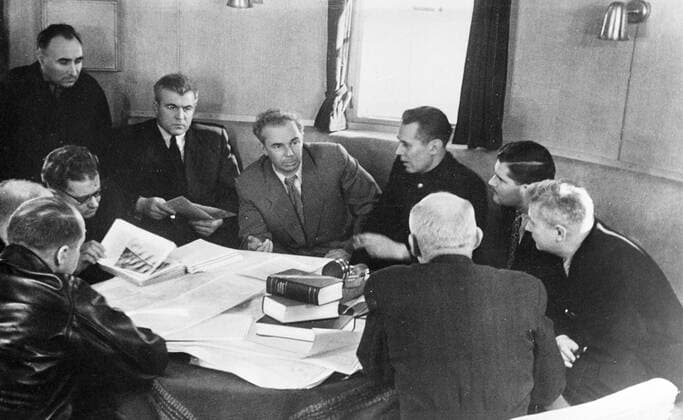
  • The Scientific Council meets onboard the diesel electric ship OB left to right: Capt I.A.Man, E.M.Suziumov - The Expedition Scientific Secretary, I.I. cherevichny - Chief of the Expedition Airgroup, Professors P.A. Shumsky, S.S. Vyalov and G.A.Avsiuk. When a Soviet expedition established the world s first research station on a drifting ice - floe, marked the beginning of a new era in the conquest of the North Pole. Flying laboratories systematically investigate natural conditions of the central Poland basin. The Soviet scientists have conducted researchers at more than 600 points in the central Arctic. 1937 Supplied By: SCRSS - Society for Co-operation in Russian & Soviet Studies, Russia Federation Copyright: Topfoto  !ACHTUNG AUFNAHMEDATUM GESCHÄTZT! UnitedArchivesScrss000997

    The Scientific Council meets onboard the diesel electric ship OB left to right: Capt I.A.Man, E.M.Suziumov - The Expedition Scientific Secretary, I.I. cherevichny - Chief of the Expedition Airgroup, Professors P.A. Shumsky, S.S. Vyalov and G.A.Avsiuk. When a Soviet expedition established the world s first research station on a drifting ice - floe, marked the beginning of a new era in the conquest of the North Pole. Flying laboratories systematically investigate natural conditions of the central Poland basin. The Soviet scientists have conducted researchers at more than 600 points in the central Arctic. 1937 Supplied By: SCRSS - Society for Co-operation in Russian & Soviet Studies, Russia Federation Copyright: Topfoto !ACHTUNG AUFNAHMEDATUM GESCHÄTZT! UnitedArchivesScrss000997

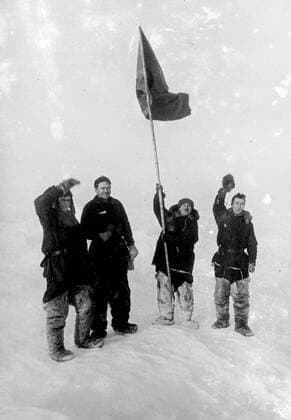
  • New pictures of Soviet scientist on ice floe, expedition rescued after drifting in Polar Seas. These pictures, just received in London, show the Soviet polar expedition on the North pole ice floe, in which they lived for nine months. Rescue expeditions succeeded in reaching the scientists as the ice crumbled beneath them and they are now on their way home. The expedition consisted of Ivan Papanin, (leader), Ernest Krenkel, radio operator, Pyotr Shirshov and Eugene Federov. Photo shows,Ivan Papanin, leader of the expedition, wasting the Soviet flag when he claimed the North Pole in the name of Soviet Russia. 3 March 1938, Arctic Copyright: Topfoto  UnitedArchivesEU053706

    New pictures of Soviet scientist on ice floe, expedition rescued after drifting in Polar Seas. These pictures, just received in London, show the Soviet polar expedition on the North pole ice floe, in which they lived for nine months. Rescue expeditions succeeded in reaching the scientists as the ice crumbled beneath them and they are now on their way home. The expedition consisted of Ivan Papanin, (leader), Ernest Krenkel, radio operator, Pyotr Shirshov and Eugene Federov. Photo shows,Ivan Papanin, leader of the expedition, wasting the Soviet flag when he claimed the North Pole in the name of Soviet Russia. 3 March 1938, Arctic Copyright: Topfoto UnitedArchivesEU053706
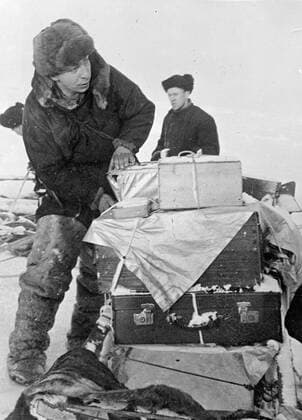
  • First, an exclusive pictures of the rescue of the North Pole expedition from their ice floe. These pictures, which had just arrived in London, the first (and exclusive) pictures of the rescue of the four Russian scientists and their dog, Jolly, from the small ice floe after they had drifted for nine months from the North Pole towards the coast of Greenland. The scientists, Ivan Papanin (leader), Ernest Krenkel (radio operator), Pyotr Shirshov (Marine biologist), Eugene Federov (astronomer), were taken from the ice camp by the Soviet icebreakers Taimir and Murman as the ice was crumbling beneath them and they were in grave danger. The first to reach the camp was Gennady Vlasov, the airman of the rescue expedition, who landed his plane on the ice. As these pictures show, the scientists seem to be in excellent physical condition and  UnitedArchivesEU053594

    First, an exclusive pictures of the rescue of the North Pole expedition from their ice floe. These pictures, which had just arrived in London, the first (and exclusive) pictures of the rescue of the four Russian scientists and their dog, Jolly, from the small ice floe after they had drifted for nine months from the North Pole towards the coast of Greenland. The scientists, Ivan Papanin (leader), Ernest Krenkel (radio operator), Pyotr Shirshov (Marine biologist), Eugene Federov (astronomer), were taken from the ice camp by the Soviet icebreakers Taimir and Murman as the ice was crumbling beneath them and they were in grave danger. The first to reach the camp was Gennady Vlasov, the airman of the rescue expedition, who landed his plane on the ice. As these pictures show, the scientists seem to be in excellent physical condition and UnitedArchivesEU053594
  • First, an exclusive pictures of the rescue of the North Pole expedition from their ice floe. These pictures, which had just arrived in London, the first (and exclusive) pictures of the rescue of the four Russian scientists and their dog, Jolly, from the small ice floe after they had drifted for nine months from the North Pole towards the coast of Greenland. The scientists, Ivan Papanin (leader), Ernest Krenkel (radio operator), Pyotr Shirshov (Marine biologist), Eugene Federov (astronomer), were taken from the ice camp by the Soviet icebreakers Taimir and Murman as the ice was crumbling beneath them and they were in grave danger. The first to reach the camp was Gennady Vlasov, the airman of the rescue expedition, who landed his plane on the ice. As these pictures show, the scientists seem to be in excellent physical condition and  UnitedArchivesEU053561

    First, an exclusive pictures of the rescue of the North Pole expedition from their ice floe. These pictures, which had just arrived in London, the first (and exclusive) pictures of the rescue of the four Russian scientists and their dog, Jolly, from the small ice floe after they had drifted for nine months from the North Pole towards the coast of Greenland. The scientists, Ivan Papanin (leader), Ernest Krenkel (radio operator), Pyotr Shirshov (Marine biologist), Eugene Federov (astronomer), were taken from the ice camp by the Soviet icebreakers Taimir and Murman as the ice was crumbling beneath them and they were in grave danger. The first to reach the camp was Gennady Vlasov, the airman of the rescue expedition, who landed his plane on the ice. As these pictures show, the scientists seem to be in excellent physical condition and UnitedArchivesEU053561
  • First, an exclusive pictures of the rescue of the North Pole expedition from their ice floe. These pictures, which had just arrived in London, the first (and exclusive) pictures of the rescue of the four Russian scientists and their dog, Jolly, from the small ice floe after they had drifted for nine months from the North Pole towards the coast of Greenland. The scientists, Ivan Papanin (leader), Ernest Krenkel (radio operator), Pyotr Shirshov (Marine biologist), Eugene Federov (astronomer), were taken from the ice camp by the Soviet icebreakers Taimir and Murman as the ice was crumbling beneath them and they were in grave danger. The first to reach the camp was Gennady Vlasov, the airman of the rescue expedition, who landed his plane on the ice. As these pictures show, the scientists seem to be in excellent physical condition and  UnitedArchivesEU053435

    First, an exclusive pictures of the rescue of the North Pole expedition from their ice floe. These pictures, which had just arrived in London, the first (and exclusive) pictures of the rescue of the four Russian scientists and their dog, Jolly, from the small ice floe after they had drifted for nine months from the North Pole towards the coast of Greenland. The scientists, Ivan Papanin (leader), Ernest Krenkel (radio operator), Pyotr Shirshov (Marine biologist), Eugene Federov (astronomer), were taken from the ice camp by the Soviet icebreakers Taimir and Murman as the ice was crumbling beneath them and they were in grave danger. The first to reach the camp was Gennady Vlasov, the airman of the rescue expedition, who landed his plane on the ice. As these pictures show, the scientists seem to be in excellent physical condition and UnitedArchivesEU053435
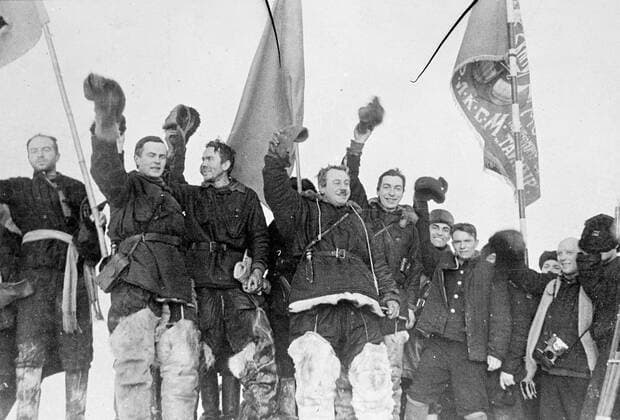
  • First, an exclusive pictures of the rescue of the North Pole expedition from their ice floe. These pictures, which had just arrived in London, the first (and exclusive) pictures of the rescue of the four Russian scientists and their dog, Jolly, from the small ice floe after they had drifted for nine months from the North Pole towards the coast of Greenland. The scientists, Ivan Papanin (leader), Ernest Krenkel (radio operator), Pyotr Shirshov (Marine biologist), Eugene Federov (astronomer), were taken from the ice camp by the Soviet icebreakers Taimir and Murman as the ice was crumbling beneath them and they were in grave danger. The first to reach the camp was Gennady Vlasov, the airman of the rescue expedition, who landed his plane on the ice. As these pictures show, the scientists seem to be in excellent physical condition and  UnitedArchivesEU053071

    First, an exclusive pictures of the rescue of the North Pole expedition from their ice floe. These pictures, which had just arrived in London, the first (and exclusive) pictures of the rescue of the four Russian scientists and their dog, Jolly, from the small ice floe after they had drifted for nine months from the North Pole towards the coast of Greenland. The scientists, Ivan Papanin (leader), Ernest Krenkel (radio operator), Pyotr Shirshov (Marine biologist), Eugene Federov (astronomer), were taken from the ice camp by the Soviet icebreakers Taimir and Murman as the ice was crumbling beneath them and they were in grave danger. The first to reach the camp was Gennady Vlasov, the airman of the rescue expedition, who landed his plane on the ice. As these pictures show, the scientists seem to be in excellent physical condition and UnitedArchivesEU053071
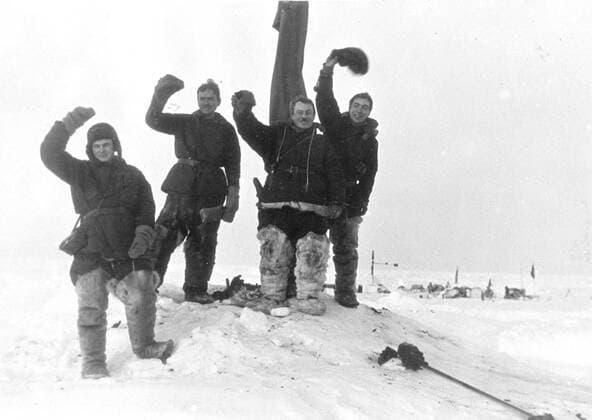
  • First, an exclusive pictures of the rescue of the North Pole expedition from their ice floe. These pictures, which had just arrived in London, the first (and exclusive) pictures of the rescue of the four Russian scientists and their dog, Jolly, from the small ice floe after they had drifted for nine months from the North Pole towards the coast of Greenland. The scientists, Ivan Papanin (leader), Ernest Krenkel (radio operator), Pyotr Shirshov (Marine biologist), Eugene Federov (astronomer), were taken from the ice camp by the Soviet icebreakers Taimir and Murman as the ice was crumbling beneath them and they were in grave danger. The first to reach the camp was Gennady Vlasov, the airman of the rescue expedition, who landed his plane on the ice. As these pictures show, the scientists seem to be in excellent physical condition and  UnitedArchivesEU053064

    First, an exclusive pictures of the rescue of the North Pole expedition from their ice floe. These pictures, which had just arrived in London, the first (and exclusive) pictures of the rescue of the four Russian scientists and their dog, Jolly, from the small ice floe after they had drifted for nine months from the North Pole towards the coast of Greenland. The scientists, Ivan Papanin (leader), Ernest Krenkel (radio operator), Pyotr Shirshov (Marine biologist), Eugene Federov (astronomer), were taken from the ice camp by the Soviet icebreakers Taimir and Murman as the ice was crumbling beneath them and they were in grave danger. The first to reach the camp was Gennady Vlasov, the airman of the rescue expedition, who landed his plane on the ice. As these pictures show, the scientists seem to be in excellent physical condition and UnitedArchivesEU053064
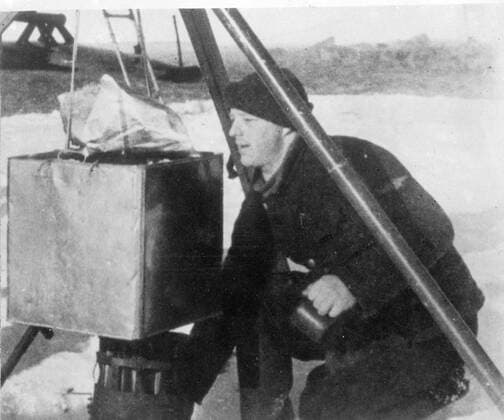
  • New pictures of Soviet scientist on ice floe, expedition rescued after drifting in Polar Seas. These pictures, just received in London, show the Soviet polar expedition on the North pole ice floe, in which they lived for nine months. Rescue expeditions succeeded in reaching the scientists as the ice crumbled beneath them and they are now on their way home. The expedition consisted of Ivan Papanin, (leader), Ernest Krenkel, radio operator, Pyotr Shirshov and Eugene Federov. Photo shows, preparing breakfast on the ice floe. 3 March 1938, Arctic Copyright: Topfoto  UnitedArchivesEU052985

    New pictures of Soviet scientist on ice floe, expedition rescued after drifting in Polar Seas. These pictures, just received in London, show the Soviet polar expedition on the North pole ice floe, in which they lived for nine months. Rescue expeditions succeeded in reaching the scientists as the ice crumbled beneath them and they are now on their way home. The expedition consisted of Ivan Papanin, (leader), Ernest Krenkel, radio operator, Pyotr Shirshov and Eugene Federov. Photo shows, preparing breakfast on the ice floe. 3 March 1938, Arctic Copyright: Topfoto UnitedArchivesEU052985
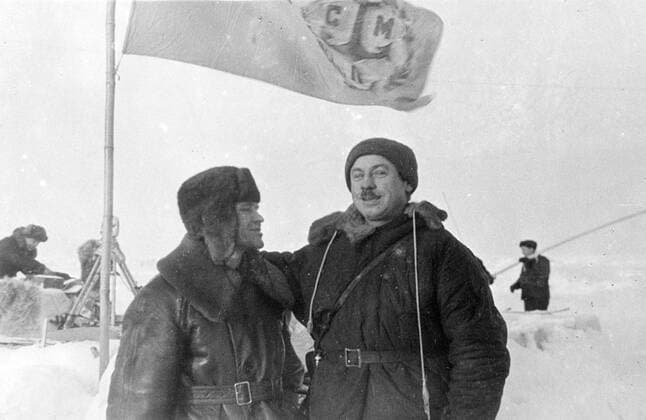
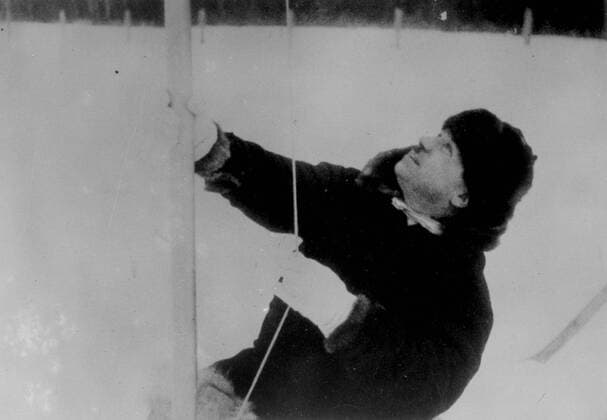
  • New pictures of Soviet scientist on ice floe, expedition rescued after drifting in Polar Seas. These pictures, just received in London, show the Soviet polar expedition on the North pole ice floe, in which they lived for nine months. Rescue expeditions succeeded in reaching the scientists as the ice crumbled beneath them and they are now on their way home. The expedition consisted of Ivan Papanin, (leader), Ernest Krenkel, radio operator, Pyotr Shirshov and Eugene Federov. Photo shows Pyotr Shirshov (Marine biologist) at the North Pole ice floe camp. 3 March 1938, Arctic Copyright: Topfoto  UnitedArchivesEU052982

    New pictures of Soviet scientist on ice floe, expedition rescued after drifting in Polar Seas. These pictures, just received in London, show the Soviet polar expedition on the North pole ice floe, in which they lived for nine months. Rescue expeditions succeeded in reaching the scientists as the ice crumbled beneath them and they are now on their way home. The expedition consisted of Ivan Papanin, (leader), Ernest Krenkel, radio operator, Pyotr Shirshov and Eugene Federov. Photo shows Pyotr Shirshov (Marine biologist) at the North Pole ice floe camp. 3 March 1938, Arctic Copyright: Topfoto UnitedArchivesEU052982

  • First, an exclusive pictures of the rescue of the North Pole expedition from their ice floe. These pictures, which had just arrived in London, the first (and exclusive) pictures of the rescue of the four Russian scientists and their dog, Jolly, from the small ice floe after they had drifted for nine months from the North Pole towards the coast of Greenland. The scientists, Ivan Papanin (leader), Ernest Krenkel (radio operator), Pyotr Shirshov (Marine biologist), Eugene Federov (astronomer), were taken from the ice camp by the Soviet icebreakers Taimir and Murman as the ice was crumbling beneath them and they were in grave danger. The first to reach the camp was Gennady Vlasov, the airman of the rescue expedition, who landed his plane on the ice. As these pictures show, the scientists seem to be in excellent physical condition and  UnitedArchivesEU052930

    First, an exclusive pictures of the rescue of the North Pole expedition from their ice floe. These pictures, which had just arrived in London, the first (and exclusive) pictures of the rescue of the four Russian scientists and their dog, Jolly, from the small ice floe after they had drifted for nine months from the North Pole towards the coast of Greenland. The scientists, Ivan Papanin (leader), Ernest Krenkel (radio operator), Pyotr Shirshov (Marine biologist), Eugene Federov (astronomer), were taken from the ice camp by the Soviet icebreakers Taimir and Murman as the ice was crumbling beneath them and they were in grave danger. The first to reach the camp was Gennady Vlasov, the airman of the rescue expedition, who landed his plane on the ice. As these pictures show, the scientists seem to be in excellent physical condition and UnitedArchivesEU052930
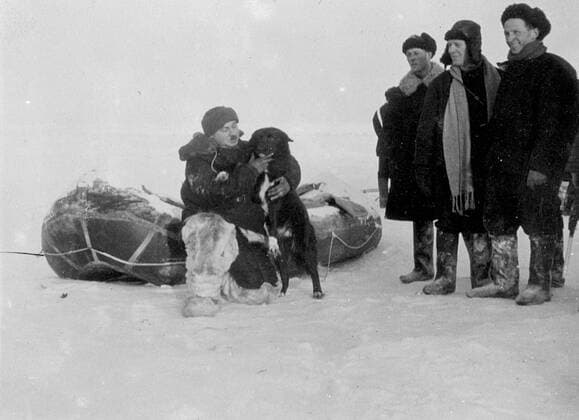
  • First, an exclusive pictures of the rescue of the North Pole expedition from their ice floe. These pictures, which had just arrived in London, the first (and exclusive) pictures of the rescue of the four Russian scientists and their dog, Jolly, from the small ice floe after they had drifted for nine months from the North Pole towards the coast of Greenland. The scientists, Ivan Papanin (leader), Ernest Krenkel (radio operator), Pyotr Shirshov (Marine biologist), Eugene Federov (astronomer), were taken from the ice camp by the Soviet icebreakers Taimir and Murman as the ice was crumbling beneath them and they were in grave danger. The first to reach the camp was Gennady Vlasov, the airman of the rescue expedition, who landed his plane on the ice. As these pictures show, the scientists seem to be in excellent physical condition and  UnitedArchivesEU052832

    First, an exclusive pictures of the rescue of the North Pole expedition from their ice floe. These pictures, which had just arrived in London, the first (and exclusive) pictures of the rescue of the four Russian scientists and their dog, Jolly, from the small ice floe after they had drifted for nine months from the North Pole towards the coast of Greenland. The scientists, Ivan Papanin (leader), Ernest Krenkel (radio operator), Pyotr Shirshov (Marine biologist), Eugene Federov (astronomer), were taken from the ice camp by the Soviet icebreakers Taimir and Murman as the ice was crumbling beneath them and they were in grave danger. The first to reach the camp was Gennady Vlasov, the airman of the rescue expedition, who landed his plane on the ice. As these pictures show, the scientists seem to be in excellent physical condition and UnitedArchivesEU052832
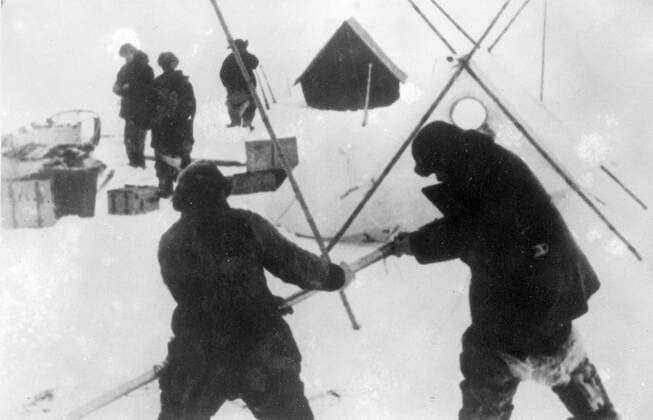
  • New pictures of Soviet scientist on ice floe, expedition rescued after drifting in Polar Seas. These pictures, just received in London, show the Soviet polar expedition on the North pole ice floe, in which they lived for nine months. Rescue expeditions succeeded in reaching the scientists as the ice crumbled beneath them and they are now on their way home. The expedition consisted of Ivan Papanin, (leader), Ernest Krenkel, radio operator, Pyotr Shirshov and Eugene Federov. Photo shows, members of the expedition erecting a tent on the ice floe. 3 March 1938, Arctic Copyright: Topfoto  UnitedArchivesEU052786

    New pictures of Soviet scientist on ice floe, expedition rescued after drifting in Polar Seas. These pictures, just received in London, show the Soviet polar expedition on the North pole ice floe, in which they lived for nine months. Rescue expeditions succeeded in reaching the scientists as the ice crumbled beneath them and they are now on their way home. The expedition consisted of Ivan Papanin, (leader), Ernest Krenkel, radio operator, Pyotr Shirshov and Eugene Federov. Photo shows, members of the expedition erecting a tent on the ice floe. 3 March 1938, Arctic Copyright: Topfoto UnitedArchivesEU052786
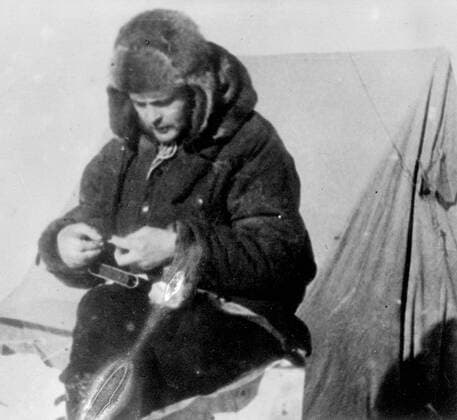
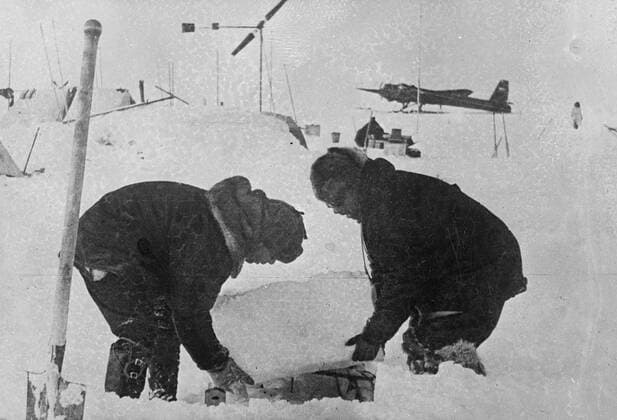
  • Members of the Soviet polar expedition taking the first water test from the Arctic Ocean. The Russian scientists are conquering the legendary land of ice and snow on top of the world that is still uncharted. They have settle down for a year s stay on an ice floe at the North Pole and are now making whether surveys. 9 July 1937, North Pole Copyright: Topfoto  UnitedArchivesEU050305

    Members of the Soviet polar expedition taking the first water test from the Arctic Ocean. The Russian scientists are conquering the legendary land of ice and snow on top of the world that is still uncharted. They have settle down for a year s stay on an ice floe at the North Pole and are now making whether surveys. 9 July 1937, North Pole Copyright: Topfoto UnitedArchivesEU050305

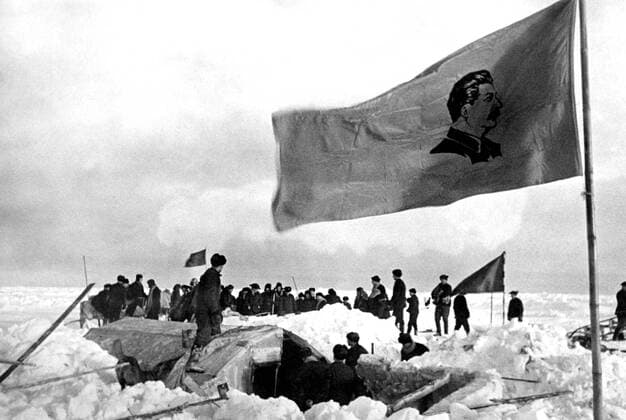
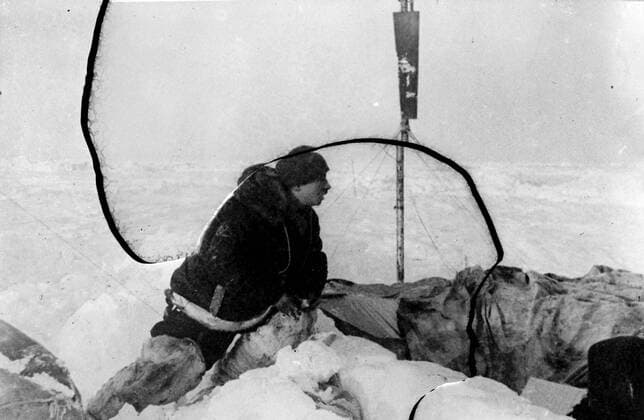
  • Soviet Arctic Expedition Men from the rescuing icebreaker Taimyr digging out one of the tents of the Russian scientific expedition which had spent nine months on a drifting Ice-Floe. 1937-8 Mono Print !AUFNAHMEDATUM GESCHÄTZT! UnitedArchives1056602

    Soviet Arctic Expedition Men from the rescuing icebreaker Taimyr digging out one of the tents of the Russian scientific expedition which had spent nine months on a drifting Ice-Floe. 1937-8 Mono Print !AUFNAHMEDATUM GESCHÄTZT! UnitedArchives1056602

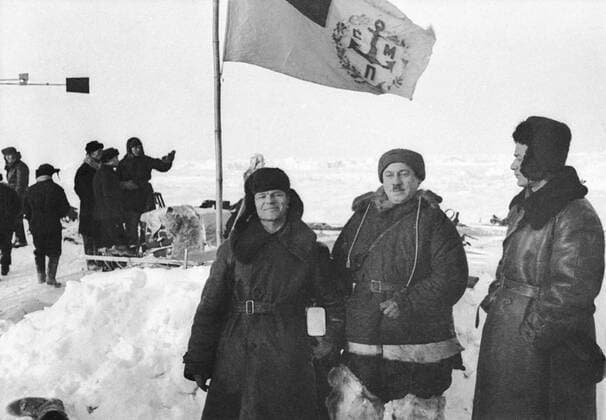
  • Pilot G.P. Vlasov, researcher Ivan Papanin and head of the Taimyr icebreaker expedition, A. Ostaltsev (L-R) are on the North Pole-1 floating station, 1937.  190512

    Pilot G.P. Vlasov, researcher Ivan Papanin and head of the Taimyr icebreaker expedition, A. Ostaltsev (L-R) are on the North Pole-1 floating station, 1937. 190512

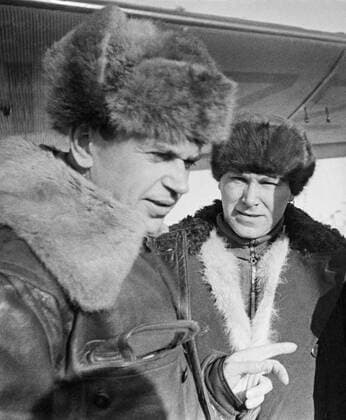
  • The expedition was organized to rescue people from drigting icebreakers Sadko, Sedov and Malygin. Hero of the USSR Anatoly Alekseev (L) and pilot Pavel Golovin before the departure.  1149504

    The expedition was organized to rescue people from drigting icebreakers Sadko, Sedov and Malygin. Hero of the USSR Anatoly Alekseev (L) and pilot Pavel Golovin before the departure. 1149504

Collections