Images in this collection
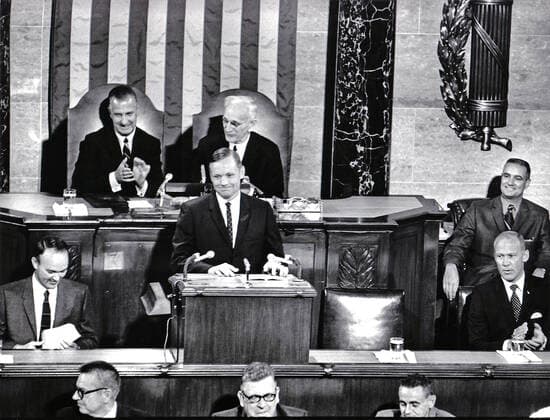
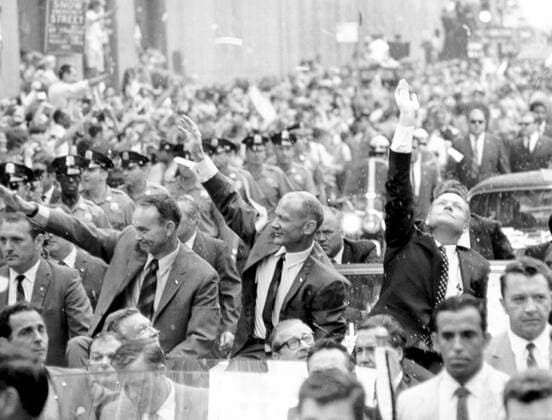
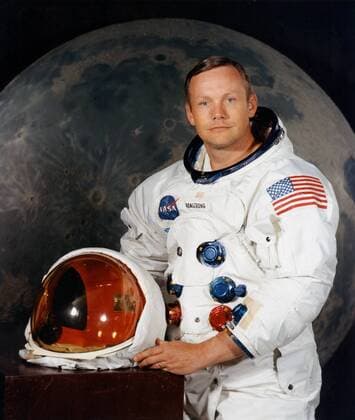
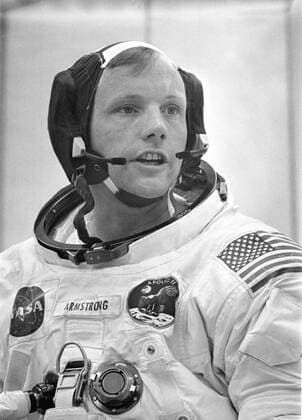
April 14, 2009, Washington, District of Columbia, USA: Washington, DC - (FILE) -- Astronaut Neil Armstrong displays his boyish grim as he shares the rostrum in the United States House of Representatives with fellow lunar travelers Michael Collins, left, and Edwin E. Buzz Aldrin, Jr., right, as they address a Joint Session of Congress on September 16, 1969. Armstrong s remarks enjoyed the applause of Vice President Spiro Agnew, left rear, and Speaker of the House John McCormick (Democrat of Massachusetts), rear right Washington USA - ZUMAs152 20090414_zaa_s152_001 Copyright: xArniexSachsx
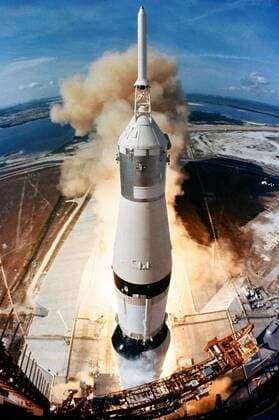
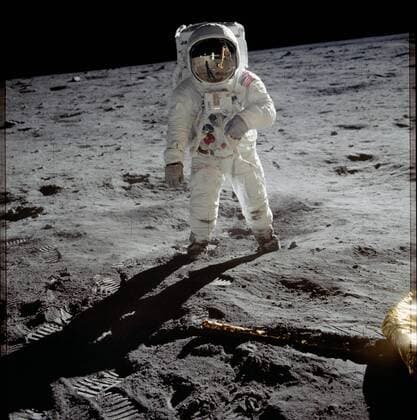
On July 16, 1969, the massive, 363-feet tall Saturn V rocket launched on the Apollo 11 mission from Pad A, Launch Complex 39, Kennedy Space Center, at 9:32 a.m. EDT. Onboard the Apollo 11 spacecraft are astronauts Neil A. Armstrong, commander; Michael Collins, command module pilot; and Edwin E. Aldrin Jr., lunar module pilot. Apollo 11 was the United States first lunar landing mission. While astronauts Armstrong and Aldrin descended in the Lunar Module Eagle to explore the Sea of Tranquility region of the moon, astronaut Collins remained with the Command and Service Modules Columbia in lunar orbit. Apollo 11 landed on the lunar surface 50 years ago this month on July 20, 1969. NASA WAX2019070930 NASA
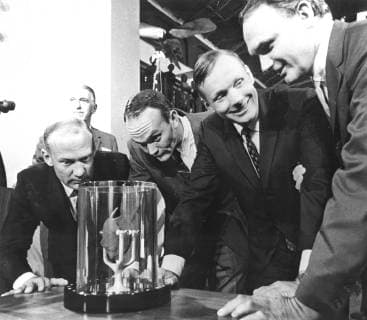
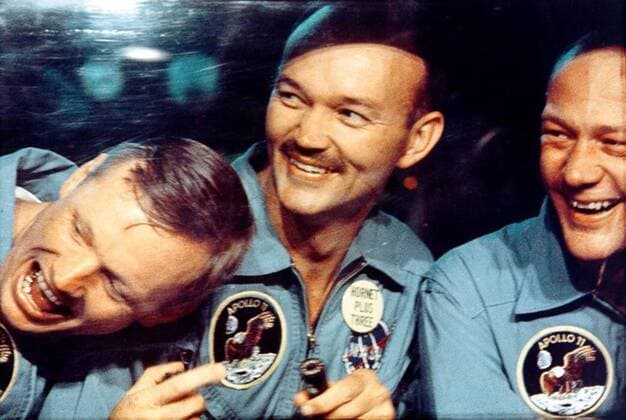
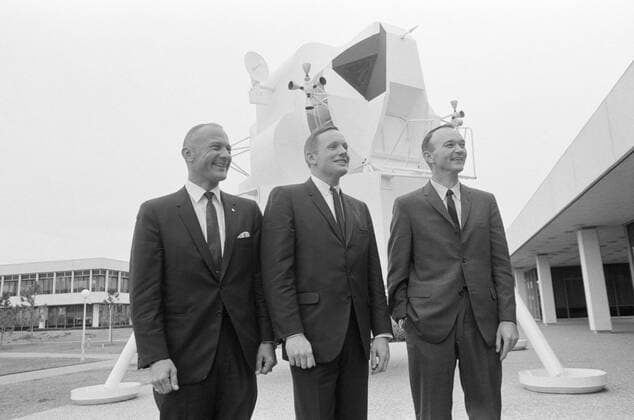
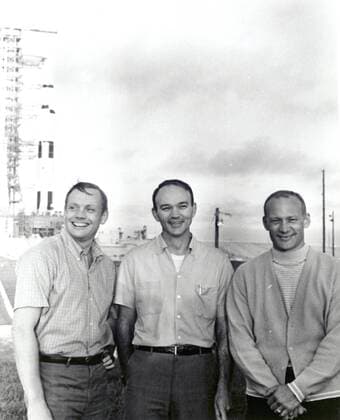
July 28, 1969 - Florida, U.S. - Apollo 11 astronauts, (left to right) Edwin E. Aldrin Jr., Lunar Module pilot; Michael Collins, Command Module pilot; and Neil A. Armstrong, commander, are showing a two-pound Moon rock to Frank Taylor, director of the Smithsonian Institute in Washington D.C. The rock was picked up from the Moon s surface during the Extra Vehicular Activity (EVA) of Aldrin and Armstrong following man s first Moon landing and was was presented to the Institute for display in the Art and Industries Building. The Apollo 11 mission, launched from the Kennedy Space Center, Florida via the Marshall Space Flight Center (MSFC) developed Saturn V launch vehicle on July 16, 1969 and safely returned to Earth on July 24, 1969. With the success of Apollo 11, the national objective to land men on the Moon and return them safely to Earth - ZUMAz03_ 19690728_sha_z03_456 Copyright: xNASAx
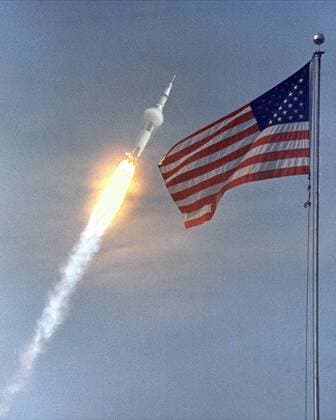
June16, 1969 - Kennedy Space Center, Florida, U.S. - The American flag heralded the launch of Apollo 11, the first Lunar landing mission, on July 16, 1969. The massive Saturn V rocket lifted off from s Kennedy Space Center with astronauts Neil A. Armstrong, Michael Collins, and Edwin Buzz Aldrin at 9:32 a.m. EDT. Four days later, on July 20, Armstrong and Aldrin landed on the Moon s surface Kennedy Space Center U.S. - ZUMAz03_ 19690616_sha_z03_336 Copyright: xNASAx
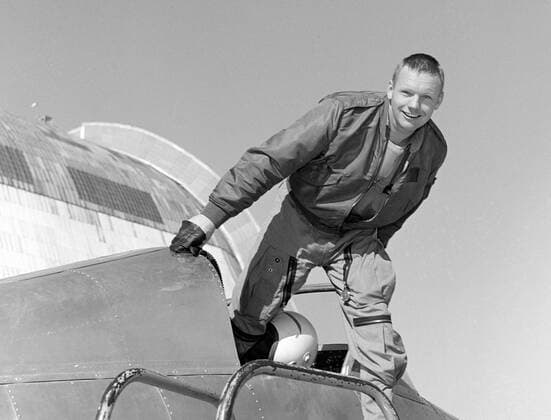
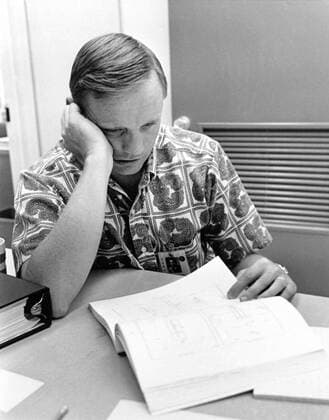
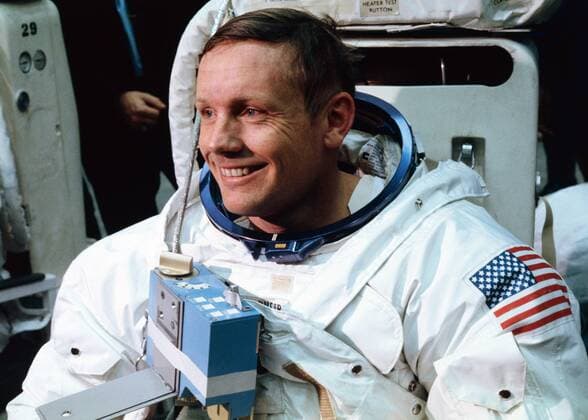
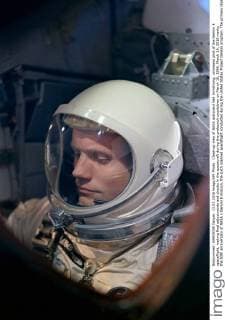
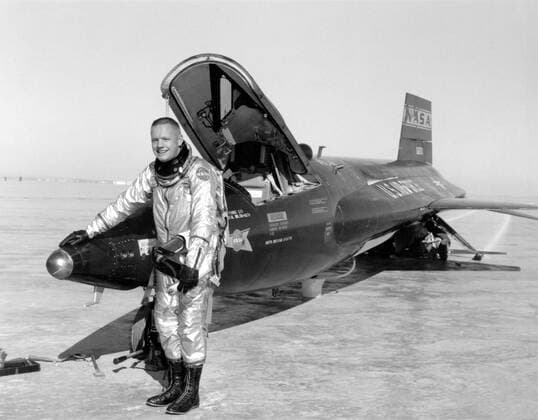
Aug 5, 2016 - Wapakoneta, Ohio, U.S. - NEIL ARMSTRONG is photographed in the cockpit of the Ames Bell X-14 aircraft at NASA s Ames Research Center. Armstrong, the first man to walk on the moon, was born in Wapakoneta, Ohio, on August 5, 1930. Armstrong joined the National Advisory Committee for Aeronautics (NACA) in 1955. His first assignment was with the NACA Lewis Research Center (now NASA Glenn) in Cleveland. Over the next 17 years, he was an engineer, test pilot, astronaut and administrator for NACA and its successor agency, the National Aeronautics and Space Administration (NASA). He was assigned as command pilot for the Gemini 8 mission, performing the first successful docking of two vehicles in space. As spacecraft commander for Apollo 11, the first manned lunar landing mission, Armstrong gained the distinction of being the first man to land a craft on the moon and first to step o - ZUMAz03_
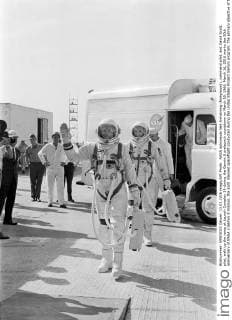
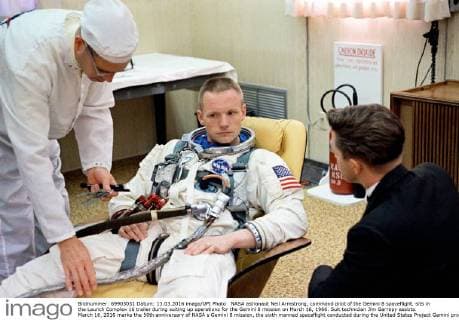
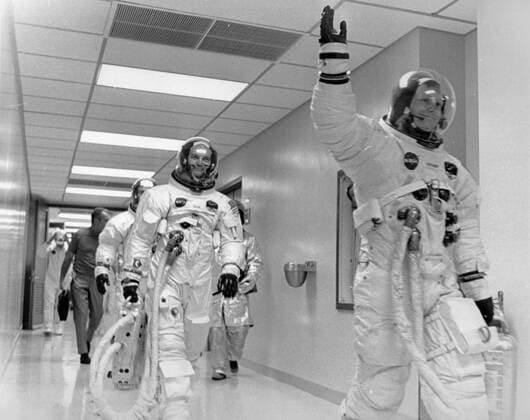
NASA astronauts Neil Armstrong (foreground), command pilot, and David Scott, pilot, walk up the ramp at Launch Complex 19 during the Gemini 8 prelaunch countdown on March 16, 1966. March 16, 2016 marks the 50th anniversary of NASA s Gemini 8 mission, the sixth manned spaceflight conducted during the United States Project Gemini program. The primary objective of the mission, the successful docking of two spacecraft in orbit, a first in spaceflight, was a success though the crew would experience a critical in-space system failure, forcing them to abandon the mission prematurely. WAX0316201631 NASA
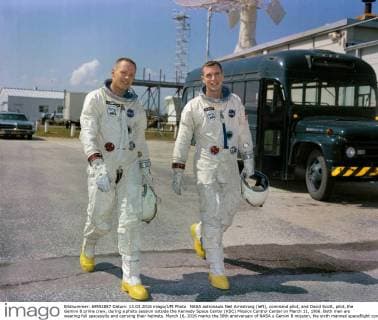
NASA astronauts Neil Armstrong (left), command pilot, and David Scott, pilot, the Gemini 8 prime crew, during a photo session outside the Kennedy Space Center (KSC) Mission Control Center on March 11, 1966. Both men are wearing full spacesuits and carrying their helmets. March 16, 2016 marks the 50th anniversary of NASA s Gemini 8 mission, the sixth manned spaceflight conducted during the United States Project Gemini program. The primary objective of the mission, the successful docking of two spacecraft in orbit, a first in spaceflight, was a success though the crew would experience a critical in-space system failure, forcing them to abandon the mission prematurely. WAX0316201601 NASA
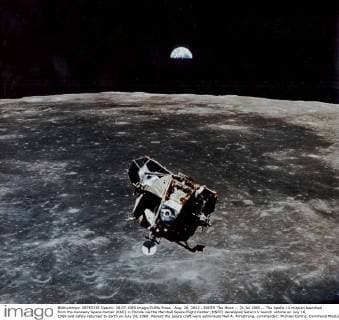
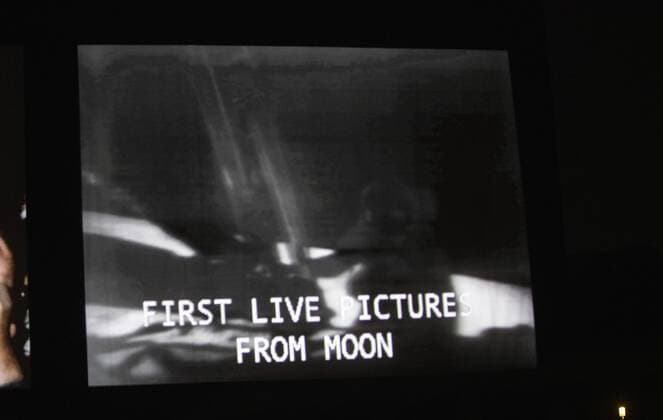
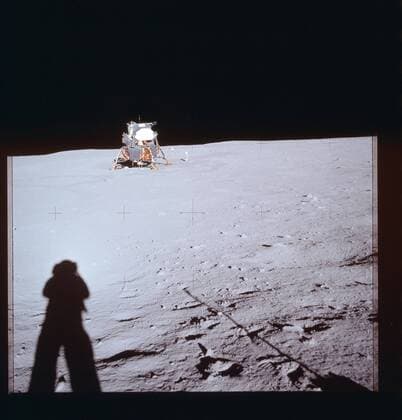
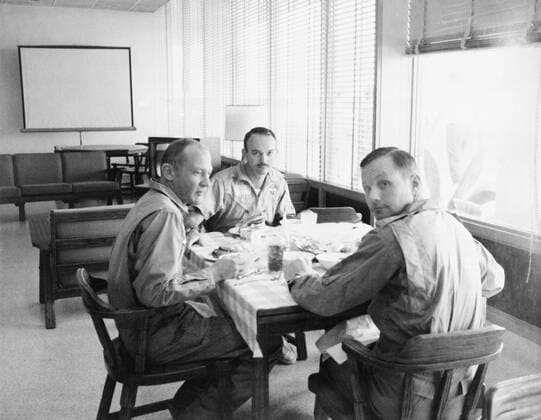
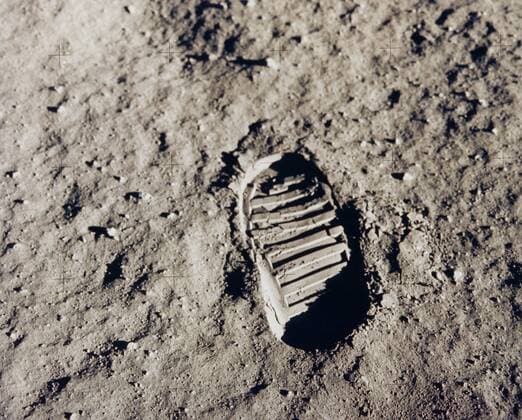
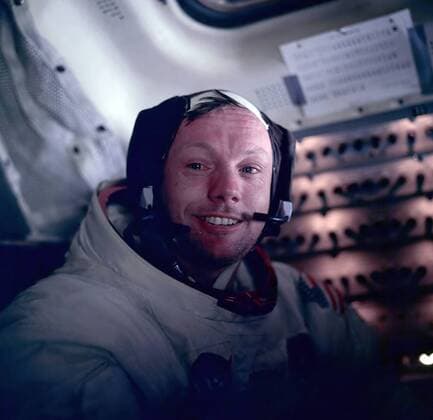
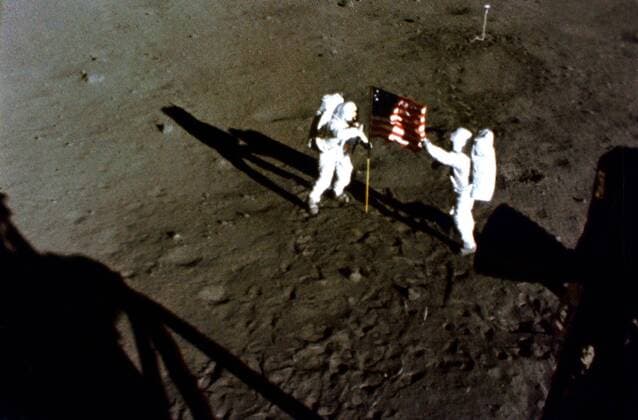
Aug. 26, 2012 - EARTH The Moon -- 21 Jul 1969 -- The Apollo 11 mission launched from the Kennedy Space Center (KSC) in Florida via the Marshall Space Flight Center (MSFC) developed Saturn V launch vehicle on July 16, 1969 and safely returned to Earth on July 24, 1969. Aboard the space craft were astronauts Neil A. Armstrong, commander; Michael Collins, Command Module (CM) pilot; and Edwin E. (Buzz) Aldrin Jr., Lunar Module (LM) pilot. With the success of Apollo 11, the national objective to land men on the Moon and return them safely to Earth had been accomplished. After 21vö2 hours of surface exploration, astronauts Neil Armstrong and Edwin Aldrin returned to the LM viEaglevì for rest, eating, and checkout of the vehicle in preparation for liftoff. The LM was a two part spacecraft. Its lower or descent stage had the landing gear, engines, and fuel needed for the landing. When the LM - ZUMAz03_