EditorialCreativeSportsCollectionsVideos
Prices
0Log in

Visual content for professionals.
800M+ images and videos.

Content Hub

  • Current Events
  • Pictures of the Year
  • Sports
  • Editorial
  • Creative
  • Collections
  • Videos

Offers

  • Prices & Packages
  • Promotions
  • Enterprise
  • Newsletter
  • Blog
  • The Game Magazine

Services

  • Content Research
  • Contract Photography
  • API & FTP Push
  • my-picturemaxx
  • Become a Partner

Company

  • About IMAGO
  • Careers
  • News

Help Center

  • FAQ
  • Contact Us
Legal NoticeTerms & ConditionsLicense InformationData PrivacyPrivacy Settings
© 2026 IMAGO
CEPICBAPLABVPA
Back to collections

IMAGO Cultures of the world, Kazakhs in Central Asia

Jul 13, 2023

The following photos have been selected for you by the IMAGO picture desk on this topic. For more pictures please use the search function.
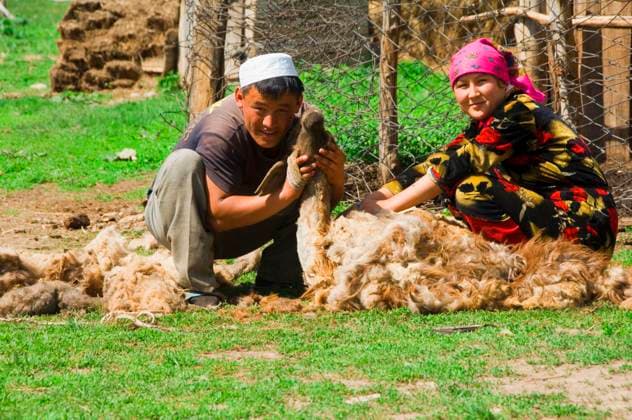
  •  Kasachen, Kazakhstan, Schaf, Schafe, Scherer, Schafscherer, Schafschur, Mann und Frau, scheren Hausschaf, Gabagly National Park, Gabagly, Kasachstan, Asien *** Kazakhs, Kazakhstan, Sheep, Sheep, Shearer, Shearers, Sheep shearing, Man and Woman, Shears Domestic sheep, Gabagly National Park, Gabagly, Kazakhstan, Asia Copyright: imageBROKER/Therin-Weise iblthg05451371.jpg
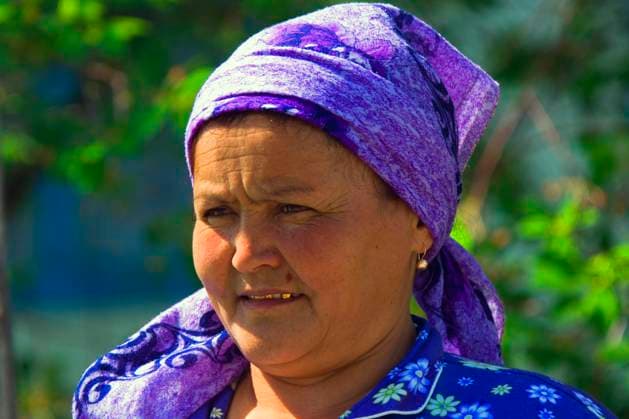
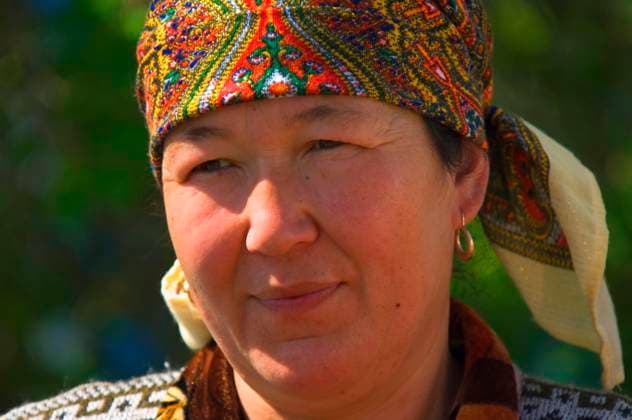
  •  Kasachen-Frau, Gabagly National Park, Gabagly, Kasachstan, Kazakhstan, Kasachin, Asien *** Kazakhs Woman, Gabagly National Park, Gabagly, Kazakhstan, Kazakhstan, Kazakh, Asia Copyright: imageBROKER/Therin-Weise iblthg05451352.jpg
  •  Kasachen-Frau, Gabagly National Park, Gabagly, Kasachstan, Kazakhstan, Kasachin, Asien *** Kazakhs Woman, Gabagly National Park, Gabagly, Kazakhstan, Kazakhstan, Kazakh, Asia Copyright: imageBROKER/Therin-Weise iblthg05451350.jpg
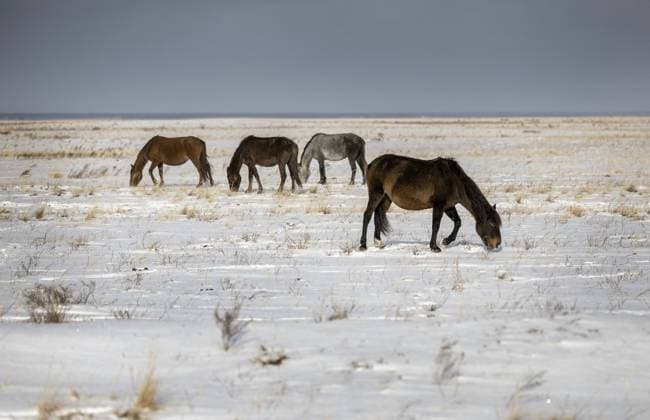
  • The nuclear weapons cities of Chagan and Kurtjatov in Kazakhstan belonged to the Soviet Union. They built atomic bombs, tested them here, and flew the planes that would attack the empire s enemies. Here, the Soviets detonated 456 atomic bombs. The empire collapsed, and the cities were emptied of inhabitants. Picture: The Kazakhs love their horses. They roam freely in large herds on the radioactive steppe. Chagan Kazakhstan x2512x *** The nuclear weapons cities of Chagan and Kurtjatov in Kazakhstan belonged to the Soviet Union They built atomic bombs, tested them here, and flew the planes that would attack the empire s enemies Here, the Soviets detonated 456 atomic bombs The empire collapsed, and the cities were emptied of inhabitants Pict  Copyright: xStefanxJerrevangx xAftonbladetx Kazakhstan SCANPIXB054142
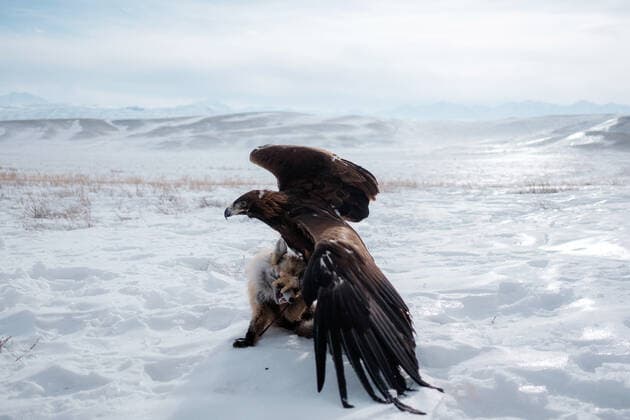
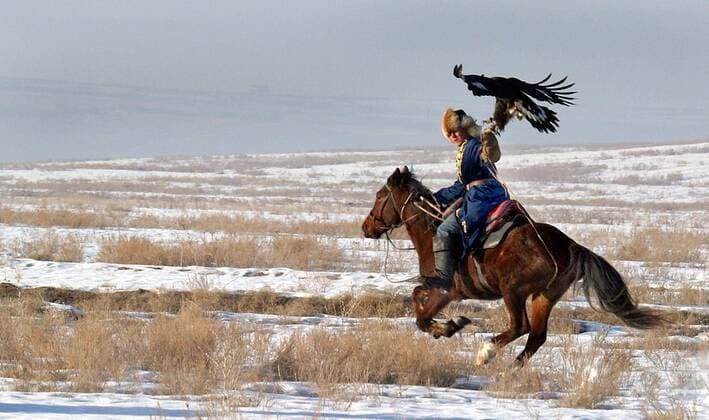
  • Berkutchi Festival in Kazakhstan 3004228 23.12.2016 A golden eagle with a prey at the Berkutchi Festival of eagle falconry near the village of Kainar, Raiymbeksky District, Kazakhstan. Nikolai Khizhniak Sputnik Kazakhstan  Copyright: xNikolaixKhizhniakx
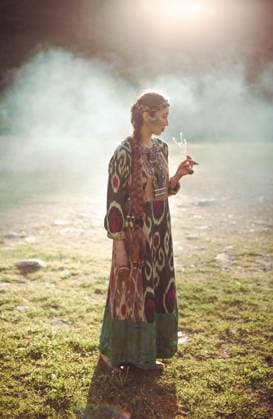
  • Kazakh clothing, worn by the Kazakh people, is often made of materials suited to the region s extreme climate and the people s nomadic lifestyle. It is commonly decorated with elaborate ornaments made from bird beaks, animal horns, hooves and feet. Although contemporary Kazakhs usually wear Western dress, the Turkic people wear more traditional clothing for holidays and special occasions. KushamanovxDidar xMajorityxWorld 925_19_MWC043951
  • Kazakh clothing, worn by the Kazakh people, is often made of materials suited to the region s extreme climate and the people s nomadic lifestyle. It is commonly decorated with elaborate ornaments made from bird beaks, animal horns, hooves and feet. Although contemporary Kazakhs usually wear Western dress, the Turkic people wear more traditional clothing for holidays and special occasions. KushamanovxDidar xMajorityxWorld 925_19_MWC043945
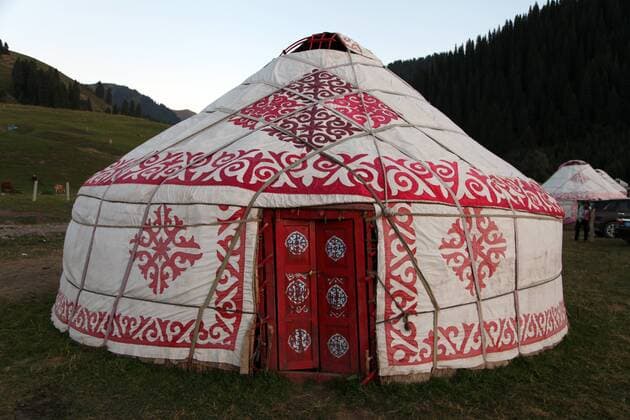
  • The word yurt is originally from a Turkic word referring to the imprint left in the ground by a moved yurt, and by extension, sometimes a person s homeland, kinsmen, or feudal appanage. The term came to be used in reference to the physical tent-like dwellings only in other languages.<br ><br > The Kazakhs (also Kazaks) are a Turkic people of the northern parts of Central Asia (largely Kazakhstan, but also found in parts of Uzbekistan, China, Russia, and Mongolia). CPAxMediaxCo.xLtd. 1060_19_CPA0035127
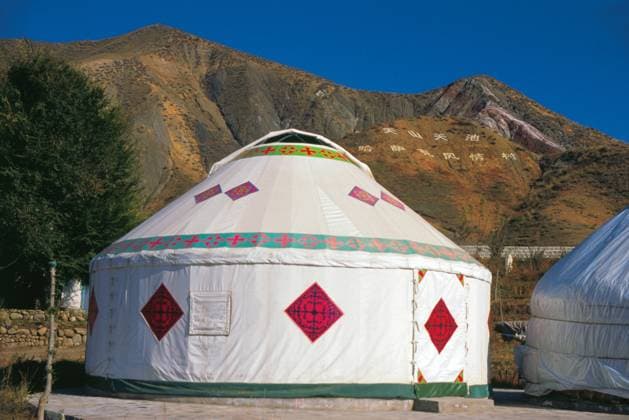
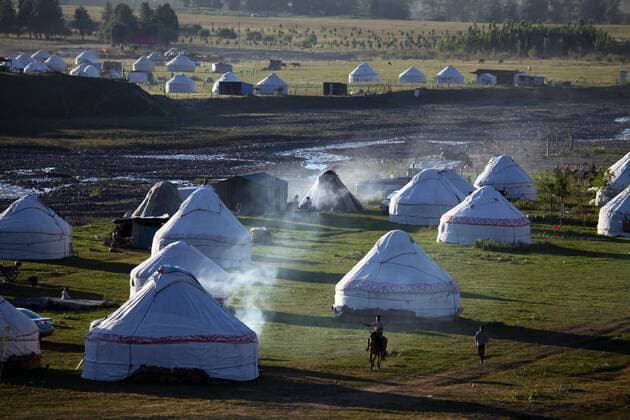
  • The word yurt is originally from a Turkic word referring to the imprint left in the ground by a moved yurt, and by extension, sometimes a person s homeland, kinsmen, or feudal appanage. The term came to be used in reference to the physical tent-like dwellings only in other languages.<br ><br > The Kazakhs (also Kazaks) are a Turkic people of the northern parts of Central Asia (largely Kazakhstan, but also found in parts of Uzbekistan, China, Russia, and Mongolia). China: Kazakh yurt near Tian Chi (Heaven Lake) in the Tian Shan (Heavenly Mountains), Xinjiang Province xCPAxMediaxCo.xLtd.x Copyright: xDavidxHenleyx
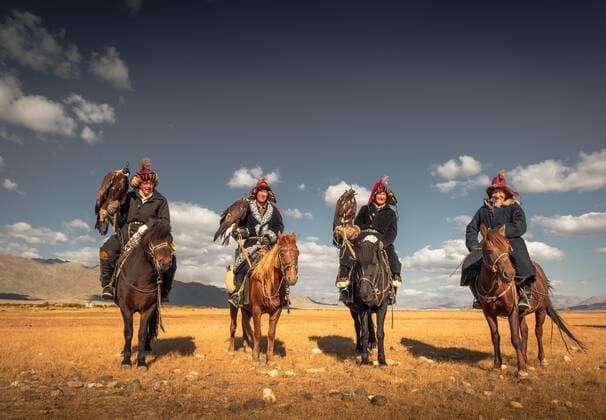
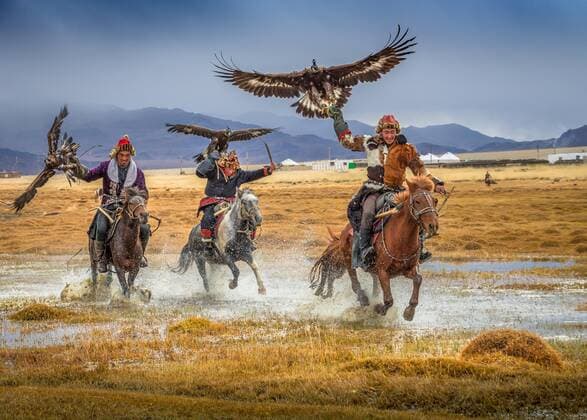
  •  Mongolische Adlerjäger, vier Kasachen mit dressierten Adlern auf Pferden in der mongolischen Steppe, Provinz Bayan-Ölgii, Mongolei, Asien *** Mongolian eagle hunters, four Kazakhs with trained eagles on horses in the Mongolian steppe, Bayan Ölgii province, Mongolia, Asia Copyright: imageBROKER/BayarxBalgantseren iblbay05238832.jpg
  •  Mongolischer Adlerjäger, drei Kasachen zu Pferd mit dressierten Adlern, Provinz Bajan-Ölgii, Mongolei, Asien *** Mongolian eagle hunter, three Kazakhs on horseback with trained eagles, Bajan Ölgii province, Mongolia, Asia Copyright: imageBROKER/BayarxBalgantseren iblbay05238808.jpg
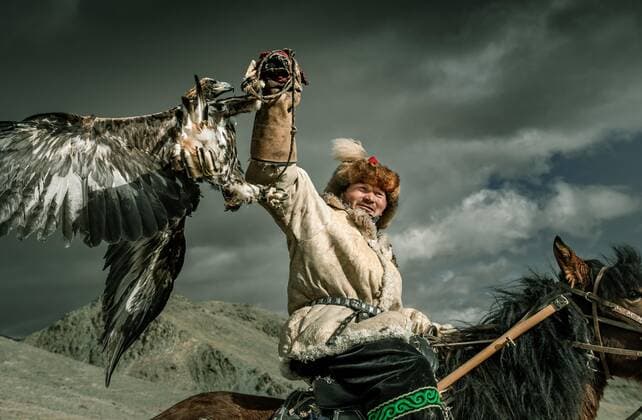
  •  Mongolischer Adlerjäger, Kasachen zu Pferd mit dressiertem Adler, Provinz Bajan-Ölgii, Mongolei, Asien *** Mongolian eagle hunter, Kazakhs on horseback with trained eagle, Bajan Ölgii province, Mongolia, Asia Copyright: imageBROKER/BayarxBalgantseren iblbay05238799.jpg
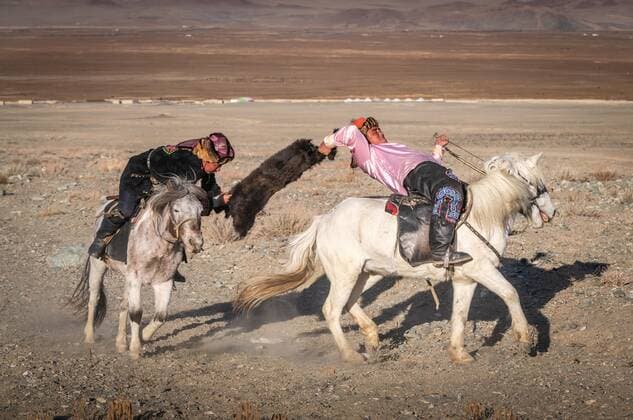
  •  Zwei Kasachen auf Pferden beim traditionellen Spiel Kokbar, Provinz Bajan-Ölgii, Mongolei, Asien *** Two Kazakhs on horses at the traditional game Kokbar, Bajan Ölgii Province, Mongolia, Asia Copyright: imageBROKER/BayarxBalgantseren iblbay05238785.jpg
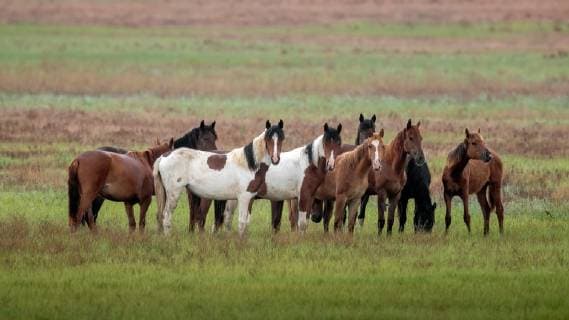
  • Kazakh, Kazakh-Pferd, Kazakhpferd (Equus przewalskii f. caballus), Herde von Kazakh-Pferden in der kasachischen Steppe, Kasachstan Kazakh Horse (Equus przewalskii f. caballus), Herd of Kazakh Horse in Kazakh steppe, Kazakhstan BLWS536528 Copyright: xblickwinkel AGAMI V.xLegrandx
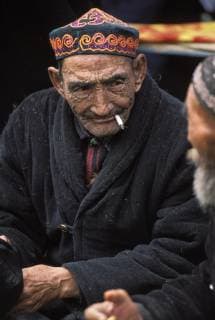
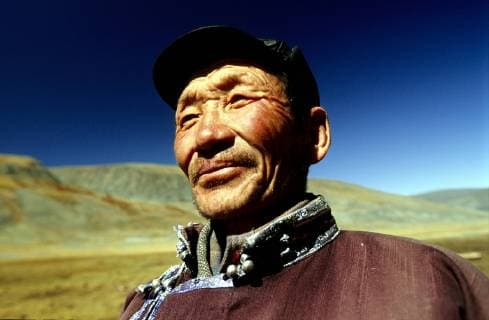
  • The hard life of the nomadic herder can be seen on this Kazakh man s face at a local gathering in Altai Tavan Bogd National Park. Kazakhs occupy far western Mongolia, including Altai Tavan Bogd National Park. Altai Tavan Bogd National Park is in the far western corner of Mongolia and contains the country s highest peaks., Bayan Ulgii Mongolia Copyright: TedxWood 9554700018
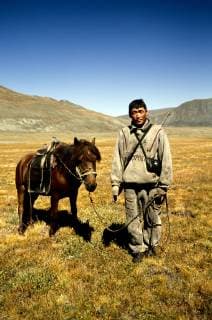
  • Portrait of a Kazakh Nomad proudly pausing with his horse for the photographer. Most of the nomads living in the Tavanbogd Atlai National Park are Kazakhs. Mongolian herders are also hunters, so they never leave their gers without old Russian binoculars and a rifle., Tavanbogd National Park Mongolia Copyright: OlivierxRenck 7282600040
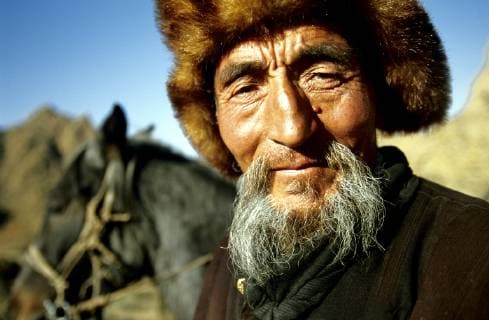
  • Portrait of a Kazakh Nomad in traditional dressing. Most of the nomads living in the Tavanbogd Atlai National Park are Kazakhs., Tavanbogd National Park Mongolia Copyright: OlivierxRenck 7282600039
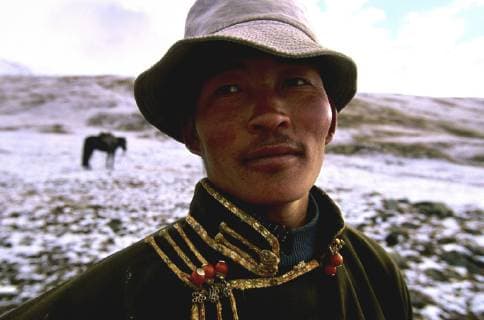
  • Portrait of a Kazakh Nomad in traditional dressing at the base camp of the mount Khuiten, the highest peak in Mongolia - 4374m. Most of the nomads living in the Tavanbogd Atlai National Park are Kazakhs., Tavanbogd National Park Mongolie Copyright: OlivierxRenck 7282600038
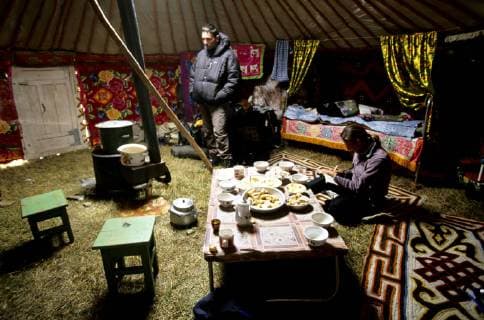
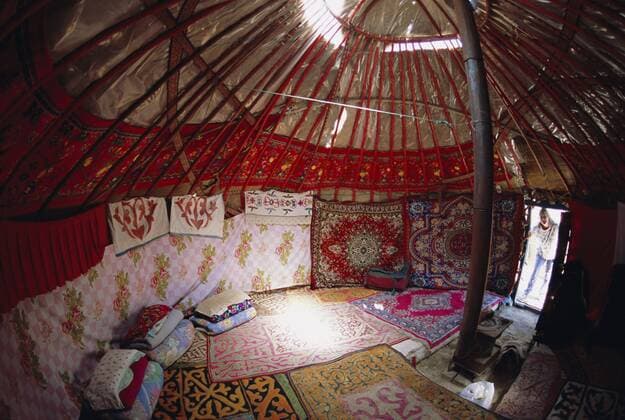
  • Taking a break from a snow storm inside a Kazakhs ger. The furniture inside a Kazakh Ger is always arranged in the same way: the stove resides in the middle, the beds -up to 6 singles- are placed against the walls, opposite to the door. A cupboard, one table, stools, and a some home-made colourful carpets completes the Ger., Tavanbogd National Park Mongolia model released Symbolfoto Copyright: OlivierxRenck 7282600022
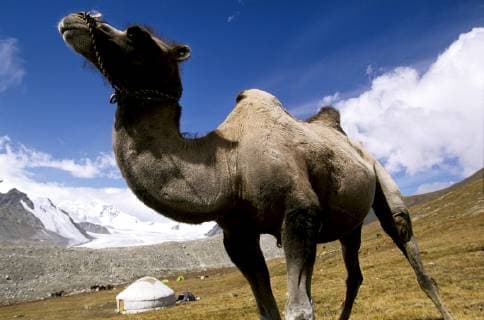
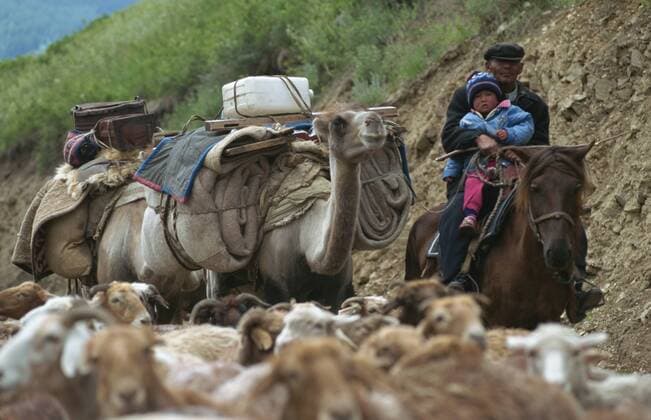
  • The two-humped Bactrian camel is perfect for carrying nomads equipment during long-distance travel. Kazakhs use camels to carry the Nomad Camps during long journeys across the mountains. Mountaineers use the Camels to bring their gear at the mount Khuiten base camp. Despite their small height, Mongolian camels can carry up to 250 kg., Tavanbogd National Park Mongolia Copyright: OlivierxRenck 7282600018
  • Portrait of a Kazakh Nomad in traditional dressing. Most of the nomads living in the Tavanbogd Atlai National Park are Kazakhs., Tavanbogd National Park Mongolia Copyright: OlivierxRenck 7282600041
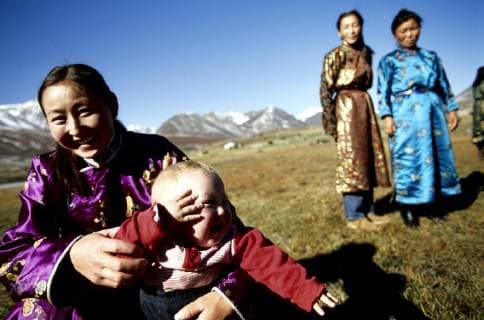
  • Portrait of a Kazakh women in traditional dressing. Most of the nomads living in the Tavanbogd Atlai National Park are Kazakhs. All babies have blond hairs that will darken a few months later., Tavanbogd National Park Mongolia Copyright: OlivierxRenck 7282600037
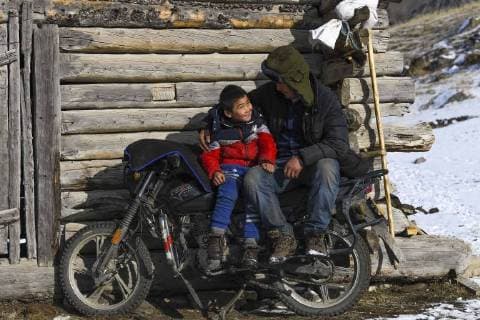
  • (180203) -- ILI, Feb. 3, 2018 -- A seven-year-old boy enjoys the sunshine with his father in Akyaz Valley, Zhaosu County, northwest China s Xinjiang Uygur Autonomous Region, Jan. 18, 2018. About 130 kilometers from the nearest town, Akyaz Valley is an important winter grazing place for herders in Zhaosu County, Xinjiang. Despite an altitude of 2,000 meters, the Akyaz Valley has a warmer climate than surrounding areas and abundant grass and water. It is sometimes referred to as the valley of life. For centuries, herding has been an ancestral tradition for nomadic Kazakhs in Zhaosu. Migration begins in October, and more than 10,000 people drive 400,000 cattle and sheep to their winter homes, not leaving until May the next year. ) (wyo)(zt) CHINA-XINJIANG-AKYAZ VALLEY-WINTER GRAZING (CN) HuxHuhu
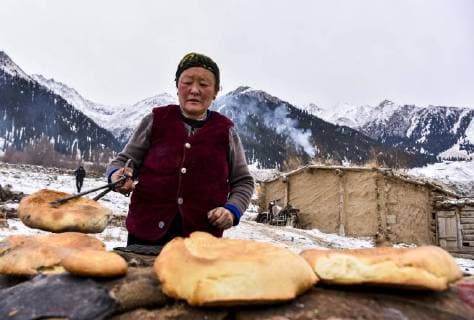
  • (180203) -- ILI, Feb. 3, 2018 -- A herder makes naan bread, a local snack, in Akyaz Valley, Zhaosu County, northwest China s Xinjiang Uygur Autonomous Region, Jan. 15, 2018. About 130 kilometers from the nearest town, Akyaz Valley is an important winter grazing place for herders in Zhaosu County, Xinjiang. Despite an altitude of 2,000 meters, the Akyaz Valley has a warmer climate than surrounding areas and abundant grass and water. It is sometimes referred to as the valley of life. For centuries, herding has been an ancestral tradition for nomadic Kazakhs in Zhaosu. Migration begins in October, and more than 10,000 people drive 400,000 cattle and sheep to their winter homes, not leaving until May the next year. ) (wyo)(zt) CHINA-XINJIANG-AKYAZ VALLEY-WINTER GRAZING (CN) HuxHuhu
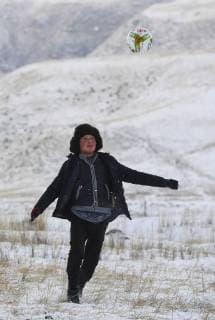
  • (180203) -- ILI, Feb. 3, 2018 -- Yeyeni, 14, plays football on the pasture in Akyaz Valley, Zhaosu County, northwest China s Xinjiang Uygur Autonomous Region, Jan. 16, 2018. He will spend the winter holidays with his parents at the valley. About 130 kilometers from the nearest town, Akyaz Valley is an important winter grazing place for herders in Zhaosu County, Xinjiang. Despite an altitude of 2,000 meters, the Akyaz Valley has a warmer climate than surrounding areas and abundant grass and water. It is sometimes referred to as the valley of life. For centuries, herding has been an ancestral tradition for nomadic Kazakhs in Zhaosu. Migration begins in October, and more than 10,000 people drive 400,000 cattle and sheep to their winter homes, not leaving until May the next year. ) (wyo)(zt) CHINA-XINJIANG-AKYAZ VALLEY-WINTER GRAZING (CN)
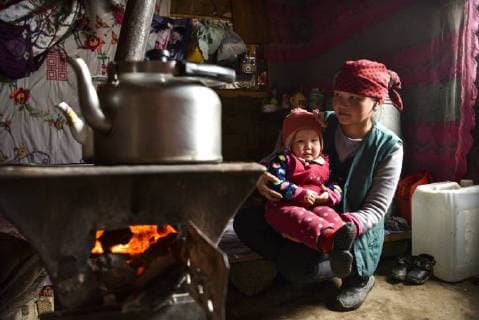
  • (180203) -- ILI, Feb. 3, 2018 -- A herder holds her daughter to warm themselves by a stove at home in Akyaz Valley, Zhaosu County, northwest China s Xinjiang Uygur Autonomous Region, Jan. 15, 2018. About 130 kilometers from the nearest town, Akyaz Valley is an important winter grazing place for herders in Zhaosu County, Xinjiang. Despite an altitude of 2,000 meters, the Akyaz Valley has a warmer climate than surrounding areas and abundant grass and water. It is sometimes referred to as the valley of life. For centuries, herding has been an ancestral tradition for nomadic Kazakhs in Zhaosu. Migration begins in October, and more than 10,000 people drive 400,000 cattle and sheep to their winter homes, not leaving until May the next year. ) (wyo)(zt) CHINA-XINJIANG-AKYAZ VALLEY-WINTER GRAZING (CN) HuxHuhu
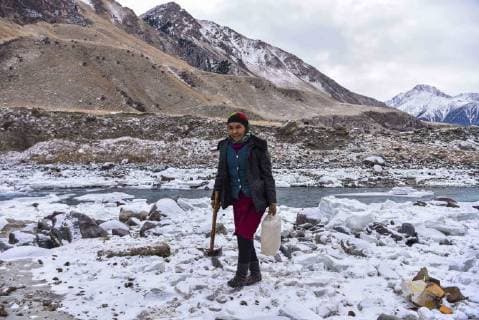
  • (180203) -- ILI, Feb. 3, 2018 -- A herder fetches water from a river in Akyaz Valley, Zhaosu County, northwest China s Xinjiang Uygur Autonomous Region, Jan. 15, 2018. About 130 kilometers from the nearest town, Akyaz Valley is an important winter grazing place for herders in Zhaosu County, Xinjiang. Despite an altitude of 2,000 meters, the Akyaz Valley has a warmer climate than surrounding areas and abundant grass and water. It is sometimes referred to as the valley of life. For centuries, herding has been an ancestral tradition for nomadic Kazakhs in Zhaosu. Migration begins in October, and more than 10,000 people drive 400,000 cattle and sheep to their winter homes, not leaving until May the next year. ) (wyo)(zt) CHINA-XINJIANG-AKYAZ VALLEY-WINTER GRAZING (CN) HuxHuhu
  • (180203) -- ILI, Feb. 3, 2018 -- Herder Nurkaldi Tursunali drives his sheep to the pasture in Akyaz Valley, Zhaosu County, northwest China s Xinjiang Uygur Autonomous Region, Jan. 16, 2018. About 130 kilometers from the nearest town, Akyaz Valley is an important winter grazing place for herders in Zhaosu County, Xinjiang. Despite an altitude of 2,000 meters, the Akyaz Valley has a warmer climate than surrounding areas and abundant grass and water. It is sometimes referred to as the valley of life. For centuries, herding has been an ancestral tradition for nomadic Kazakhs in Zhaosu. Migration begins in October, and more than 10,000 people drive 400,000 cattle and sheep to their winter homes, not leaving until May the next year. ) (wyo)(zt) CHINA-XINJIANG-AKYAZ VALLEY-WINTER GRAZING (CN) HuxHuhu
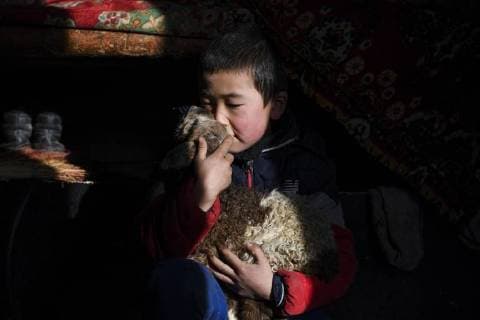
  • (180203) -- ILI, Feb. 3, 2018 -- A seven-year-old child holds a seven-day-old lamb at a shelter in Akyaz Valley, Zhaosu County, northwest China s Xinjiang Uygur Autonomous Region, Jan. 18, 2018. About 130 kilometers from the nearest town, Akyaz Valley is an important winter grazing place for herders in Zhaosu County, Xinjiang. Despite an altitude of 2,000 meters, the Akyaz Valley has a warmer climate than surrounding areas and abundant grass and water. It is sometimes referred to as the valley of life. For centuries, herding has been an ancestral tradition for nomadic Kazakhs in Zhaosu. Migration begins in October, and more than 10,000 people drive 400,000 cattle and sheep to their winter homes, not leaving until May the next year. ) (wyo)(zt) CHINA-XINJIANG-AKYAZ VALLEY-WINTER GRAZING (CN) HuxHuhu
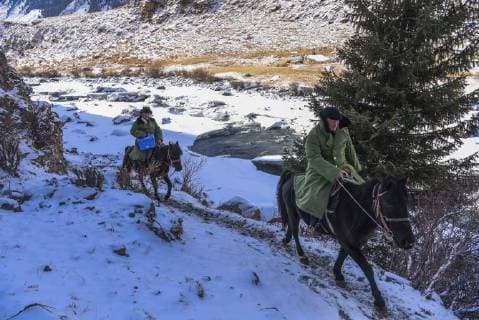
  • (180203) -- ILI, Feb. 3, 2018 -- Gyens (R), head of the local hospital, and his colleague are on the way to a patient s home in Akyaz Valley, Zhaosu County, northwest China s Xinjiang Uygur Autonomous Region, Jan. 17, 2018. About 130 kilometers from the nearest town, Akyaz Valley is an important winter grazing place for herders in Zhaosu County, Xinjiang. Despite an altitude of 2,000 meters, the Akyaz Valley has a warmer climate than surrounding areas and abundant grass and water. It is sometimes referred to as the valley of life. For centuries, herding has been an ancestral tradition for nomadic Kazakhs in Zhaosu. Migration begins in October, and more than 10,000 people drive 400,000 cattle and sheep to their winter homes, not leaving until May the next year. ) (wyo)(zt) CHINA-XINJIANG-AKYAZ VALLEY-WINTER GRAZING (CN) HuxHuhu
  • (180203) -- ILI, Feb. 3, 2018 -- A doctor plays dombra in a herder s home after inspection in Akyaz Valley, Zhaosu County, northwest China s Xinjiang Uygur Autonomous Region, Jan. 16, 2018. About 130 kilometers from the nearest town, Akyaz Valley is an important winter grazing place for herders in Zhaosu County, Xinjiang. Despite an altitude of 2,000 meters, the Akyaz Valley has a warmer climate than surrounding areas and abundant grass and water. It is sometimes referred to as the valley of life. For centuries, herding has been an ancestral tradition for nomadic Kazakhs in Zhaosu. Migration begins in October, and more than 10,000 people drive 400,000 cattle and sheep to their winter homes, not leaving until May the next year. ) (wyo)(zt) CHINA-XINJIANG-AKYAZ VALLEY-WINTER GRAZING (CN) HuxHuhu
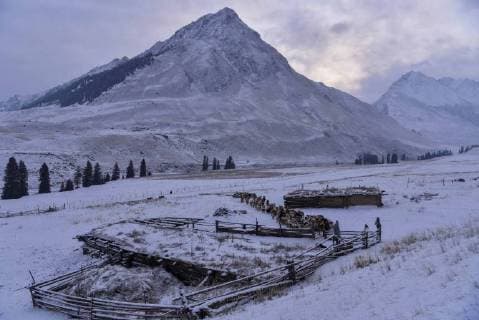
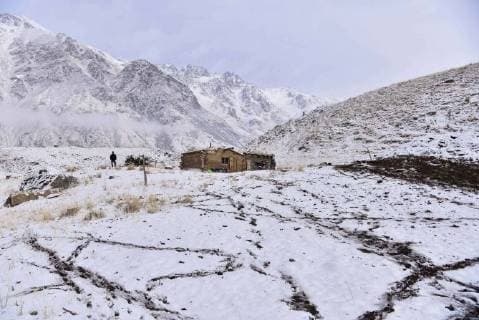
  • (180203) -- ILI, Feb. 3, 2018 -- A herder s shelter is seen in Akyaz Valley, Zhaosu County, northwest China s Xinjiang Uygur Autonomous Region, Jan. 16, 2018. About 130 kilometers from the nearest town, Akyaz Valley is an important winter grazing place for herders in Zhaosu County, Xinjiang. Despite an altitude of 2,000 meters, the Akyaz Valley has a warmer climate than surrounding areas and abundant grass and water. It is sometimes referred to as the valley of life. For centuries, herding has been an ancestral tradition for nomadic Kazakhs in Zhaosu. Migration begins in October, and more than 10,000 people drive 400,000 cattle and sheep to their winter homes, not leaving until May the next year. ) (wyo)(zt) CHINA-XINJIANG-AKYAZ VALLEY-WINTER GRAZING (CN) HuxHuhu
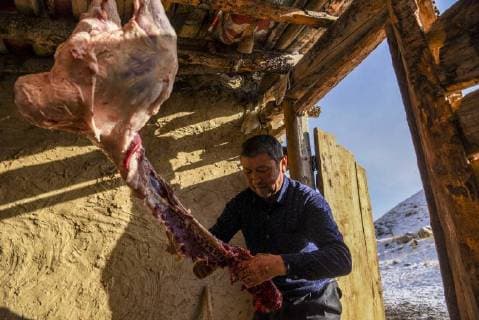
  • (180203) -- ILI, Feb. 3, 2018 -- A herder prepares lamb for guests at home in Akyaz Valley, Zhaosu County, northwest China s Xinjiang Uygur Autonomous Region, Jan. 17, 2018. About 130 kilometers from the nearest town, Akyaz Valley is an important winter grazing place for herders in Zhaosu County, Xinjiang. Despite an altitude of 2,000 meters, the Akyaz Valley has a warmer climate than surrounding areas and abundant grass and water. It is sometimes referred to as the valley of life. For centuries, herding has been an ancestral tradition for nomadic Kazakhs in Zhaosu. Migration begins in October, and more than 10,000 people drive 400,000 cattle and sheep to their winter homes, not leaving until May the next year. ) (wyo)(zt) CHINA-XINJIANG-AKYAZ VALLEY-WINTER GRAZING (CN) HuxHuhu
  • August 23, 2017 - Xinjiang, Xinjiang, China - Xinjiang, CHINA-23rd August 2017: (EDITORIAL USE ONLY. CHINA OUT) ..The Kazakhs are living in Tian Shan, northwest China s Xinjiang Uygur Autonomous Region. Xinjiang China  - ZUMAs145 20170823_zaa_s145_027 Copyright: xSunxJihux
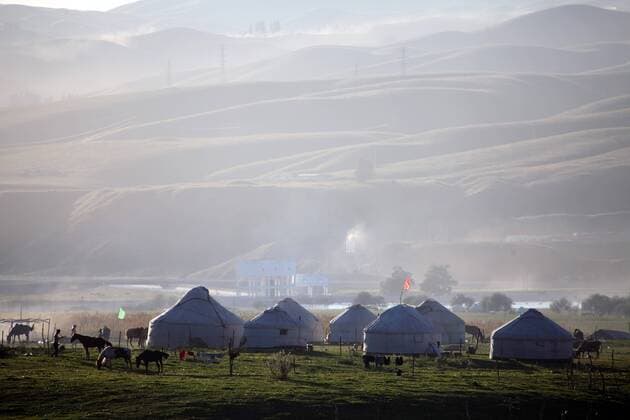
  • August 23, 2017 - Xinjiang, Xinjiang, China - Xinjiang, CHINA-23rd August 2017: (EDITORIAL USE ONLY. CHINA OUT) ..The Kazakhs are living in Tian Shan, northwest China s Xinjiang Uygur Autonomous Region. Xinjiang China  - ZUMAs145 20170823_zaa_s145_026 Copyright: xSunxJihux
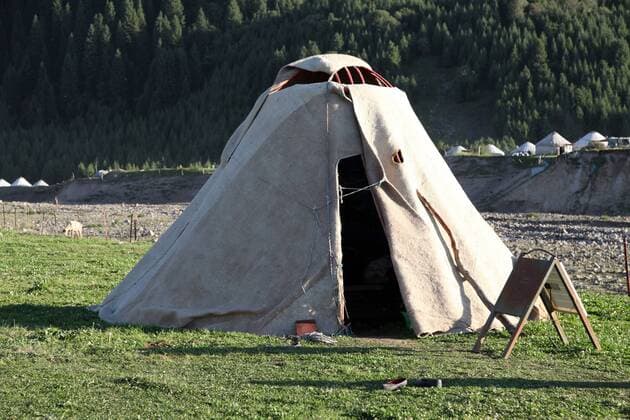
  • August 23, 2017 - Xinjiang, Xinjiang, China - Xinjiang, CHINA-23rd August 2017: (EDITORIAL USE ONLY. CHINA OUT) ..The Kazakhs are living in Tian Shan, northwest China s Xinjiang Uygur Autonomous Region. Xinjiang China  - ZUMAs145 20170823_zaa_s145_025 Copyright: xSunxJihux
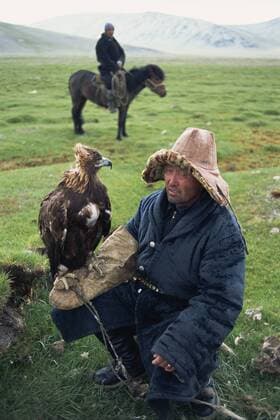
  • August 23, 2017 - Xinjiang, Xinjiang, China - Xinjiang, CHINA-23rd August 2017: (EDITORIAL USE ONLY. CHINA OUT) ..The Kazakhs are living in Tian Shan, northwest China s Xinjiang Uygur Autonomous Region. Xinjiang China  - ZUMAs145 20170823_zaa_s145_019 Copyright: xSunxJihux
  • August 23, 2017 - Xinjiang, Xinjiang, China - Xinjiang, CHINA-23rd August 2017: (EDITORIAL USE ONLY. CHINA OUT) ..The Kazakhs are living in Tian Shan, northwest China s Xinjiang Uygur Autonomous Region. Xinjiang China  - ZUMAs145 20170823_zaa_s145_005 Copyright: xSunxJihux
  • Portrait of an eagle breeder in traditional clothing, with his bird, Kazakh, Bayan-olgii, Khovd Gol valley, Mongolia, Central Asia, Asia Copyright: BrunoxMorandi 712-805
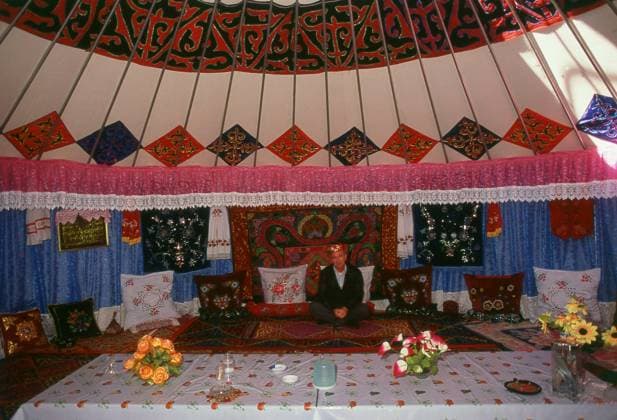
  • Inside Kazakhs yurt, Tianchi (Heaven Lake), Tien Shan, Xinjiang Province, China Copyright: TonyxWaltham 29-4209
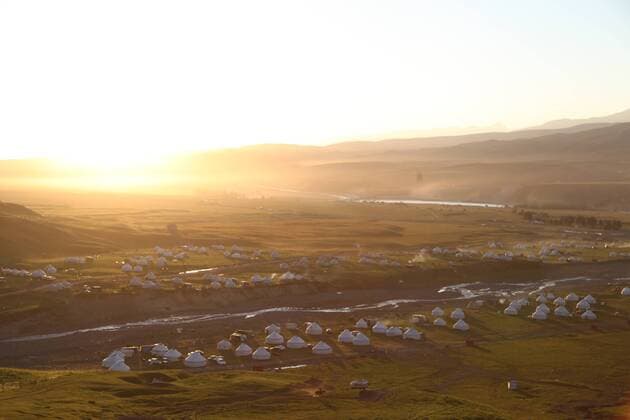
  • Summer migration of Kazaks, Altay Mountains, northeast Xinjiang, China, Asia Copyright: GinaxCorrigan 188-6307
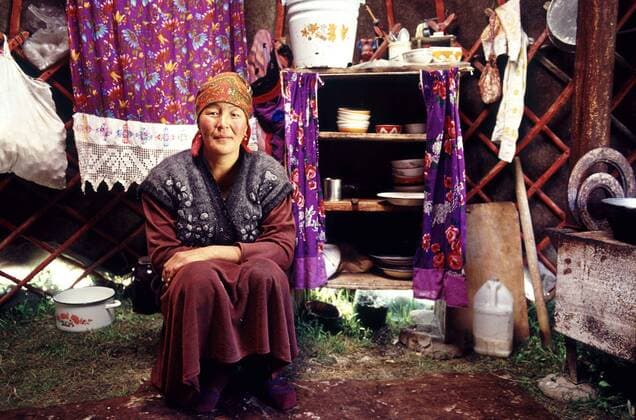
  • July 21, 2010 - Tian Mountains, Kazakstan - Kyrgyz or Kirgiz, Kirghiz. A woman sits in her yurt in front of her kitchen in a valley in the Tian Mountains, South Kazakhstan. Many Kazakhs maintain a semi nomadic existence, moving with herds, flocks and yurts from theit collective farms to summer pastures every year. The Tian Mountains lie on the southeastern border of Kazakstan and not only provide the nomadic people of Kazakstan an area which to roam freely, but also some spectacular views and scienery. Here in the remote mountain regions many traditional activities cintinue unchanged for many years. - ZUMAr126
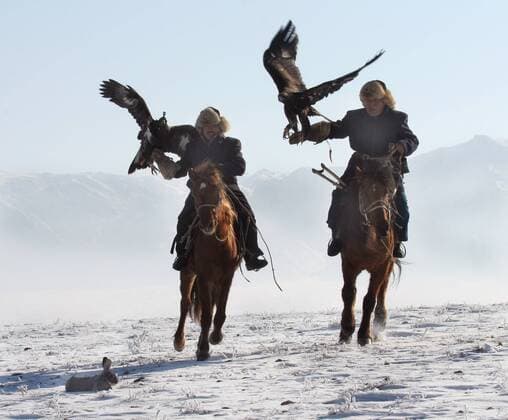
  • ALMATY REGION, KAZAKHSTAN. Hunter with his bird rides a horse during Kazakhstan s National Competitions of Berkutchi (Golden-Eagle hunters). Kazakhs are renowned for their unique and extraordinary skill in using Golden Eagles to hunt small prey.  424959
  • ALMATY REGION, KAZAKHSTAN. Hunters with their birds ride horses during Kazakhstan s National Competitions of Berkutchi (Golden-Eagle hunters). Kazakhs are renowned for their unique and extraordinary skill in using Golden Eagles to hunt small prey.  424955