Images in this collection
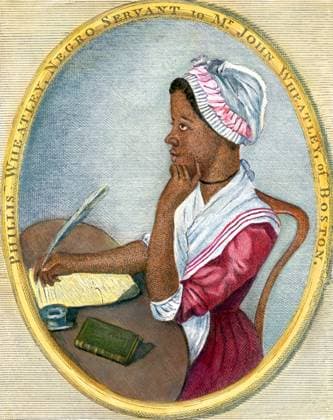
USA: Phillis Wheatley, Negro servant to Mr. John Wheatley, of Boston . Frontispiece of Poems on Various Subjects, Religious and Moral , Phillis Wheatley, London, 1773 Born in present-day Gambia around 1753, little is known of Phillis Wheatley™s early life. When 7 or 8 years old, she was kidnapped and shipped from the Gambia to Boston; her purchasers named her Phillis after the ship that brought her to Massachusetts.<br ><br > Living in their household as a servant, she was permitted to learn to read, and not long after began writing poetry; her first published poem appeared in 1767. She left no account of her life in Africa or the middle passage, and her life ended sadly in Boston in 1784. Her portrait was made when she was about 20 y Copyright: xxPicturesxFromxHistoryx
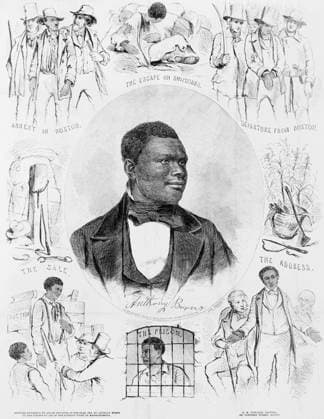
USA: A portrait of the fugitive slave Anthony Burns, whose arrest and trial under the Fugitive Slave Act of 1850 touched off riots and protests by abolitionists and citizens of Boston in the spring of 1854. Boston, c. 1855 Anthony Burns (31 May 1834 17 July 1862) was born a slave in Stafford County, Virginia. As a young man, he became a Baptist and a slave preacher at the Falmouth Union Church in Falmouth, Virginia. In 1853 he escaped from slavery and reached Boston, where he started working.<br ><br > The following year, he was captured under the Fugitive Slave Act of 1850 and tried under the law in Boston. The law was fiercely resisted in Boston, and the case attracted national publicity, large demonstrations, protests and an attac Copyright: xxPicturesxFromxHistoryx
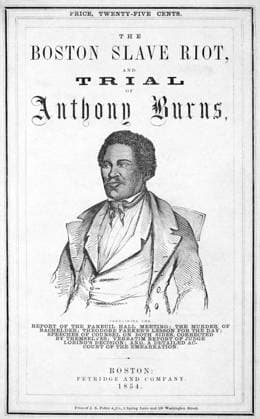
USA: Report on The Boston Slave Riot and Trial of Anthony Burns , Boston, 1854 Anthony Burns (31 May 1834 17 July 1862) was born a slave in Stafford County, Virginia. As a young man, he became a Baptist and a slave preacher at the Falmouth Union Church in Falmouth, Virginia. In 1853 he escaped from slavery and reached Boston, where he started working.<br ><br > The following year, he was captured under the Fugitive Slave Act of 1850 and tried under the law in Boston. The law was fiercely resisted in Boston, and the case attracted national publicity, large demonstrations, protests and an attack on US Marshals at the courthouse. Federal troops were used to ensure Burns was transported to a ship for return to Virginia after the trial.< Copyright: xxPicturesxFromxHistoryx