Images in this collection
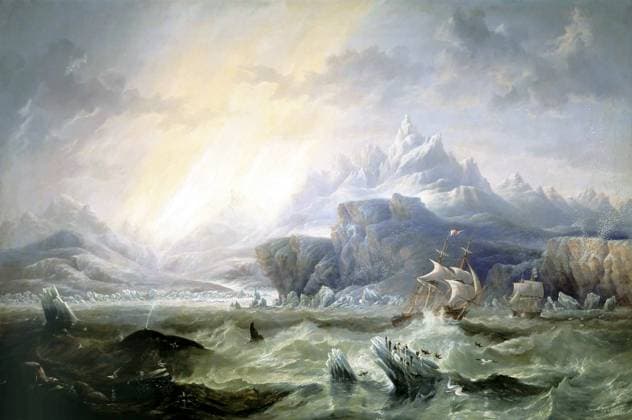
UK Antarctica: Erebus and Terror in the Antarctic, August 1841 , Ross Expedition, oil on canvas, John Wilson Carmichael (1800-1868), 1847 The Ross expedition was a voyage of scientific exploration of the Antarctic in 1839 to 1843, led by James Clark Ross, with two unusually strong warships, HMS Erebus and HMS Terror. It explored what is now called the Ross Sea and discovered the Ross Ice Shelf. On the expedition, Ross discovered the Transantarctic Mountains and the volcanoes Erebus and Terror, named after his ships. The young botanist Joseph Dalton Hooker made his name on the expedition.<br ><br > The expedition inferred the position of the South Magnetic Pole, and made substantial observations of the zoology and botany of the region, r Copyright: xxPicturesxFromxHistoryx
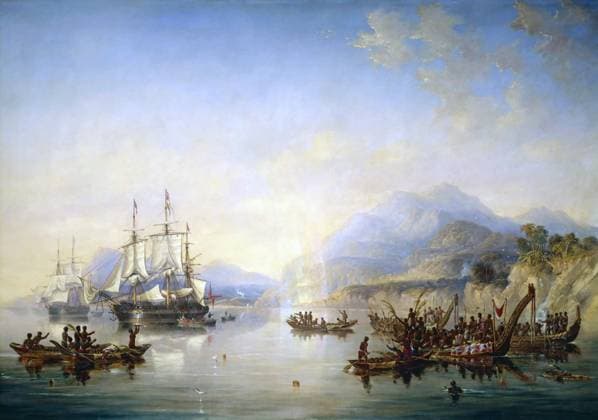
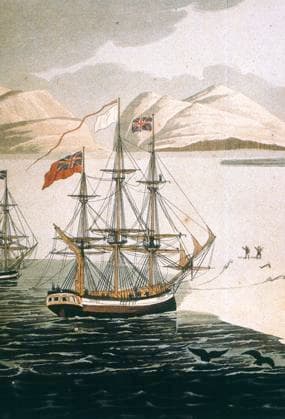
UK New Zealand: Erebus and Terror in New Zealand, August 1841 , Ross Expedition, oil on canvas, John Wilson Carmichael (1800-1868), c. 1847 The Ross expedition was a voyage of scientific exploration of the Antarctic in 1839 to 1843, led by James Clark Ross, with two unusually strong warships, HMS Erebus and HMS Terror. It explored what is now called the Ross Sea and discovered the Ross Ice Shelf. On the expedition, Ross discovered the Transantarctic Mountains and the volcanoes Erebus and Terror, named after his ships. The young botanist Joseph Dalton Hooker made his name on the expedition.<br ><br > The expedition inferred the position of the South Magnetic Pole, and made substantial observations of the zoology and botany of the region, Copyright: xxPicturesxFromxHistoryx
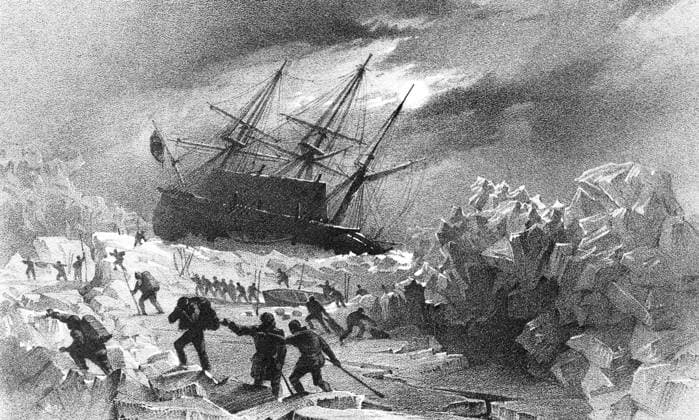
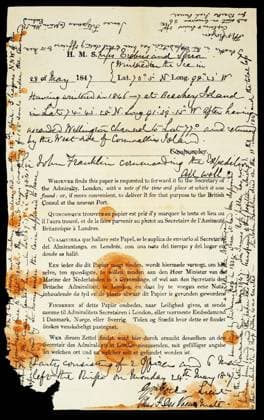
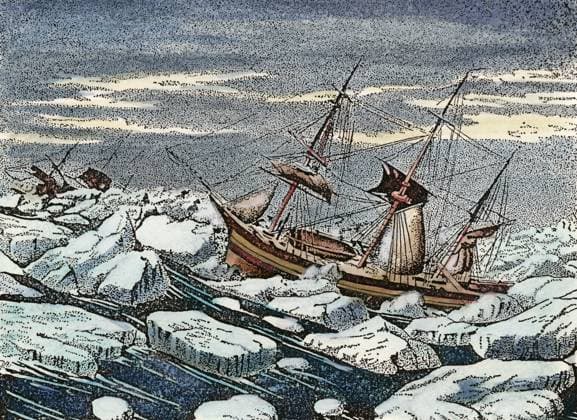
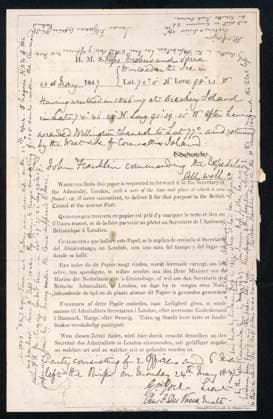
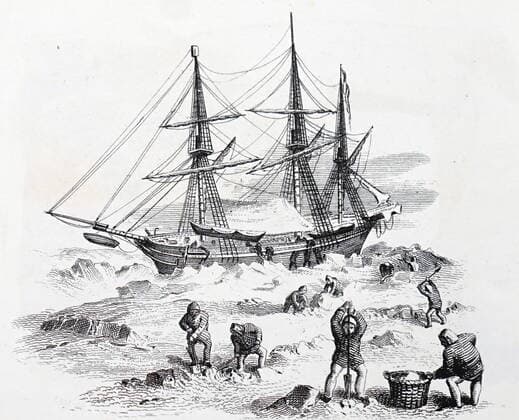
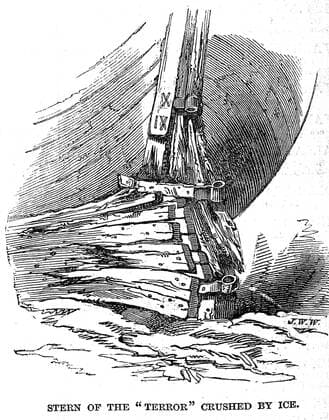
UK Canada: HMS Terror stuck in the ice under the command of Admiral George Back who is supervising salvage operations, 1836-37. Anonymous painting, Prince of Wales Northern Heritage Centre, Yellowknife Franklin disappeared on his last expedition, attempting to chart and navigate a section of the Northwest Passage in the Canadian Arctic. The icebound ships were abandoned and the entire crew perished from starvation, hypothermia, tuberculosis, lead poisoning and scurvy.<br ><br > In September 2014, the Prime Minister of Canada, Stephen Harper, announced that the wreck of HMS Erebus, one of the two ships from Franklin s final voyage, had been rediscovered.<br ><br > On 12 September 2016, it was announced that the Arctic Research Foundation Copyright: xxPicturesxFromxHistoryx
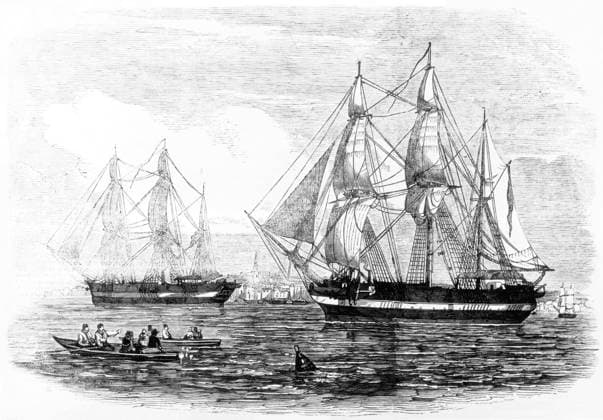
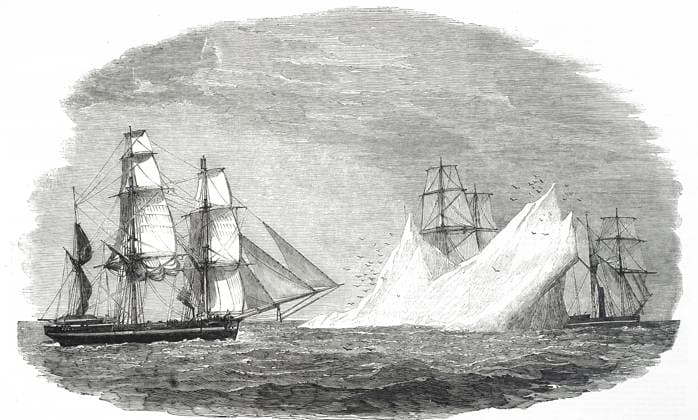
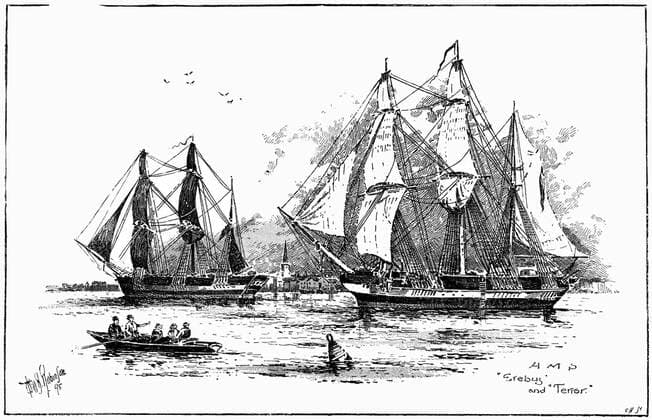
UK Canada: The HMS Erebus and HMS Terror leave England for the Northwest Passage, never to return. Anonymous engraving, 1845 Franklin disappeared on his last expedition, attempting to chart and navigate a section of the Northwest Passage in the Canadian Arctic. The icebound ships were abandoned and the entire crew perished from starvation, hypothermia, tuberculosis, lead poisoning and scurvy.<br ><br > In September 2014, the Prime Minister of Canada, Stephen Harper, announced that the wreck of HMS Erebus, one of the two ships from Franklin s final voyage, had been rediscovered.<br ><br > On 12 September 2016, it was announced that the Arctic Research Foundation expedition had found the wreck of HMS Terror south of King William Island in Copyright: xxPicturesxFromxHistoryx
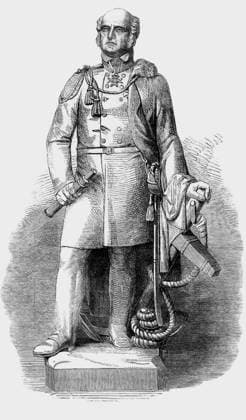
UK Canada: Rear-Admiral Sir John Franklin (1786 1847), British Royal Navy officer and explorer of the Arctic, drawing for a statue subsequently erected at Franklin s home town of Spilsby, 1861 Franklin also served as Lieutenant-Governor of Van Diemen s Land (now Tasmania) from 1837 to 1843. He disappeared on his last expedition, attempting to chart and navigate a section of the Northwest Passage in the Canadian Arctic. The icebound ships were abandoned and the entire crew perished from starvation, hypothermia, tuberculosis, lead poisoning and scurvy.<br ><br > In September 2014, the Prime Minister of Canada, Stephen Harper, announced that the wreck of HMS Erebus, one of the two ships from Franklin s final voyage, had been rediscovere Copyright: xxPicturesxFromxHistoryx
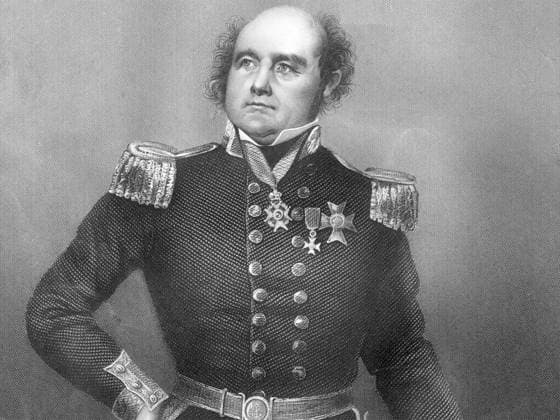
UK Canada: Rear-Admiral Sir John Franklin (1786 1847), British Royal Navy officer and explorer of the Arctic, 1828, National Archives of Canada Franklin also served as Lieutenant-Governor of Van Diemen s Land (now Tasmania) from 1837 to 1843. He disappeared on his last expedition, attempting to chart and navigate a section of the Northwest Passage in the Canadian Arctic. The icebound ships were abandoned and the entire crew perished from starvation, hypothermia, tuberculosis, lead poisoning and scurvy.<br ><br > In September 2014, the Prime Minister of Canada, Stephen Harper, announced that the wreck of HMS Erebus, one of the two ships from Franklin s final voyage, had been rediscovered.<br ><br > On 12 September 2016, it was announ Copyright: xxPicturesxFromxHistoryx