EditorialCreativeSportsCollectionsVideos
Prices
0Log in

Visual content for professionals.
800M+ images and videos.

Content Hub

  • Current Events
  • Pictures of the Year
  • Sports
  • Editorial
  • Creative
  • Collections
  • Videos

Offers

  • Prices & Packages
  • Promotions
  • Enterprise
  • Newsletter
  • Blog
  • The Game Magazine

Services

  • Content Research
  • Contract Photography
  • API & FTP Push
  • my-picturemaxx
  • Become a Partner

Company

  • About IMAGO
  • Careers
  • News

Help Center

  • FAQ
  • Contact Us
Legal NoticeTerms & ConditionsLicense InformationData PrivacyPrivacy Settings
© 2026 IMAGO
CEPICBAPLABVPA
  1. IMAGO International History, Archive, Ships of the Royal Navy, HMS Beagle 1820-1870

IMAGO International History, Archive, Ships of the Royal Navy, HMS Beagle 1820-1870

Apr 3, 2024

The following photos have been selected for you by the IMAGO picture desk on this topic. For more pictures please use the search function.
Images in this collection

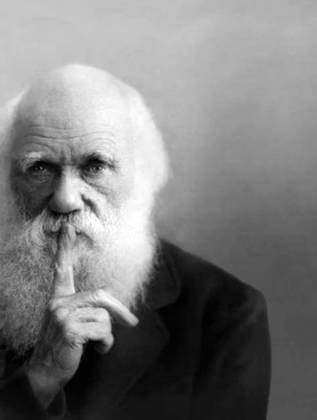
  • England UK: Charles Darwin (1809-1882), English naturalist, geologist and author of On the Origin of the Species (1859) Charles Robert Darwin, FRS (12 February 1809 19 April 1882) was an English naturalist and geologist, best known for his contributions to evolutionary theory. He established that all species of life have descended over time from common ancestors, and in a joint publication with Alfred Russel Wallace introduced his scientific theory that this branching pattern of evolution resulted from a process that he called natural selection, in which the struggle for existence has a similar effect to the artificial selection involved in selective breeding.<br ><br > Darwin published his theory of evolution with compelling evide Copyright: xxPicturesxFromxHistoryx

    England UK: Charles Darwin (1809-1882), English naturalist, geologist and author of On the Origin of the Species (1859) Charles Robert Darwin, FRS (12 February 1809 19 April 1882) was an English naturalist and geologist, best known for his contributions to evolutionary theory. He established that all species of life have descended over time from common ancestors, and in a joint publication with Alfred Russel Wallace introduced his scientific theory that this branching pattern of evolution resulted from a process that he called natural selection, in which the struggle for existence has a similar effect to the artificial selection involved in selective breeding.<br ><br > Darwin published his theory of evolution with compelling evide Copyright: xxPicturesxFromxHistoryx

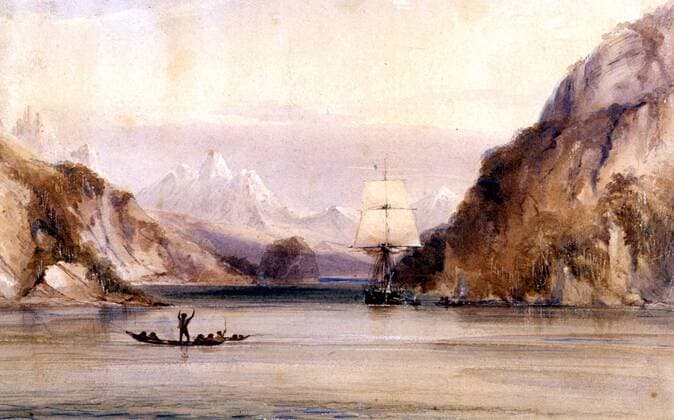
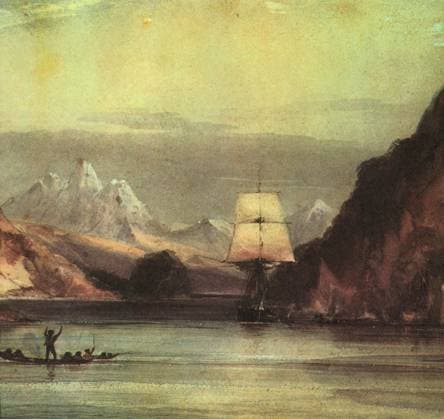
  • DARWIN: HMS BEAGLE. English naturalist. Natives of Tierra del Fuego welcoming H.M.S. Beagle, on which Charles Darwin sailed as ship s naturalist from 1831 to 1836, to a glacial fiord at the tip of South America. Contemporary watercolor by Conrad Martens.  Copyright: xGRANGERx xGRANGERx 0066179

    DARWIN: HMS BEAGLE. English naturalist. Natives of Tierra del Fuego welcoming H.M.S. Beagle, on which Charles Darwin sailed as ship s naturalist from 1831 to 1836, to a glacial fiord at the tip of South America. Contemporary watercolor by Conrad Martens. Copyright: xGRANGERx xGRANGERx 0066179

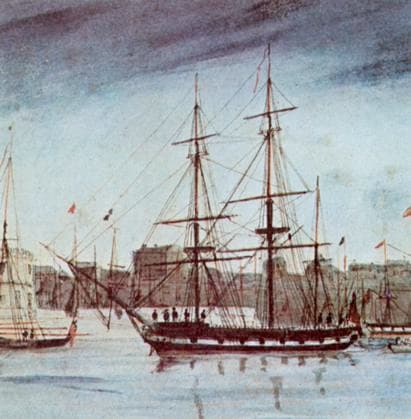
  • DARWIN: HMS BEAGLE, 1831. The HMS Beagle, aboard which Charles Darwin sailed as ship s naturalist from 1831 to 1836. Contemporary watercolor by Owen Stanley.  Copyright: xGRANGERx xGRANGERx 0065438

    DARWIN: HMS BEAGLE, 1831. The HMS Beagle, aboard which Charles Darwin sailed as ship s naturalist from 1831 to 1836. Contemporary watercolor by Owen Stanley. Copyright: xGRANGERx xGRANGERx 0065438

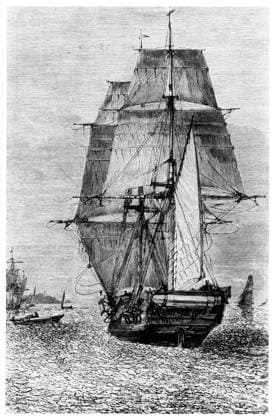
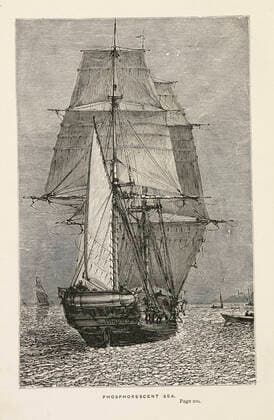
  • DARWIN: HMS BEAGLE. The H.M.S. Beagle, on which Charles Darwin sailed as naturalist, off Rio de Janeiro, July 5, 1832. Engraving, 19th century.  Copyright: xGRANGERx xGRANGERx 0029981

    DARWIN: HMS BEAGLE. The H.M.S. Beagle, on which Charles Darwin sailed as naturalist, off Rio de Janeiro, July 5, 1832. Engraving, 19th century. Copyright: xGRANGERx xGRANGERx 0029981

  • DARWIN Biography The HMS Beagle, the ship that transported Charles Darwin for his research illustration from his journal Journal of Researches into the Natural History and Geology of the Countries visited during the Voyage of H M S Beagle round the World published in 1891 Credit Collection British Library KHARBINE TAPABOR  KH417088

    DARWIN Biography The HMS Beagle, the ship that transported Charles Darwin for his research illustration from his journal Journal of Researches into the Natural History and Geology of the Countries visited during the Voyage of H M S Beagle round the World published in 1891 Credit Collection British Library KHARBINE TAPABOR KH417088

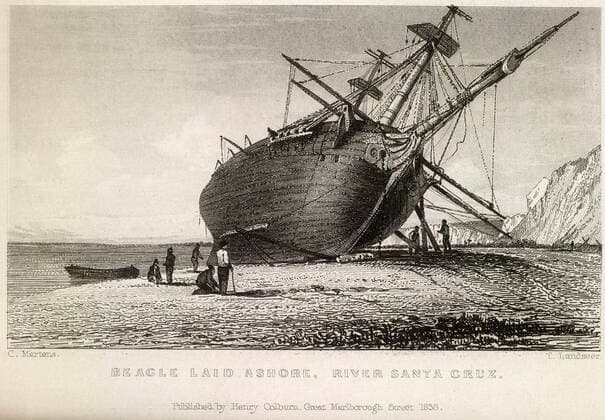
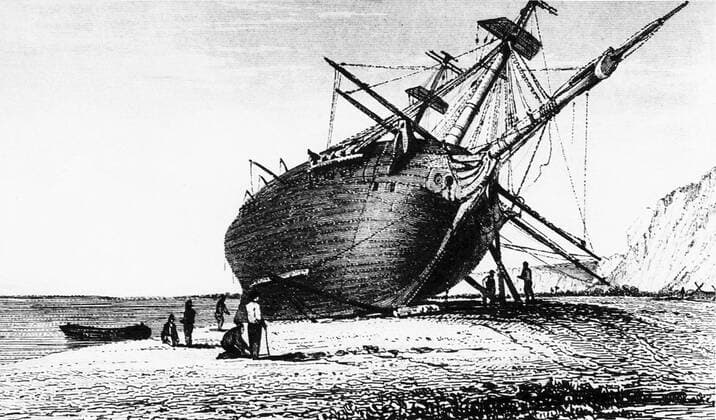
  • DARWIN Work The HMS Beagle echhoue on the Rio Santa Cruz in Patagonia Illustration by C Martens taken from the work of Charles Darwin 1809 1882 The Voyage of the Beagle , published in 1839 Credit Collection British Library KHARBINE TAPABOR  KH406646

    DARWIN Work The HMS Beagle echhoue on the Rio Santa Cruz in Patagonia Illustration by C Martens taken from the work of Charles Darwin 1809 1882 The Voyage of the Beagle , published in 1839 Credit Collection British Library KHARBINE TAPABOR KH406646

  • HMS Beagle laid ashore: River Santa Cruz. It was during his voyage as naturalist on Beagle Charles Darwin (1809-82) made observations that helped form his theory of evolution. From Fitzroy Narrative of the Surveying Voyages of His Majesty s Ships Advent Photos12.com - Ann Ronan Picture Library Copyright: xPhoto12 AnnxRonanxPicturexLibraryx ARP07098390002678

    HMS Beagle laid ashore: River Santa Cruz. It was during his voyage as naturalist on Beagle Charles Darwin (1809-82) made observations that helped form his theory of evolution. From Fitzroy Narrative of the Surveying Voyages of His Majesty s Ships Advent Photos12.com - Ann Ronan Picture Library Copyright: xPhoto12 AnnxRonanxPicturexLibraryx ARP07098390002678

  • UK -- Portrait of Charles Darwin - one of the greatest scientists ever who became famous after a trip on HMS Beagle to South America, which became the basis of his theory of evolution which he wrote in The Origin of Species - Picture by Julia Margaret Cameron Lightroom Photos  UnitedArchives01184083

    UK -- Portrait of Charles Darwin - one of the greatest scientists ever who became famous after a trip on HMS Beagle to South America, which became the basis of his theory of evolution which he wrote in The Origin of Species - Picture by Julia Margaret Cameron Lightroom Photos UnitedArchives01184083

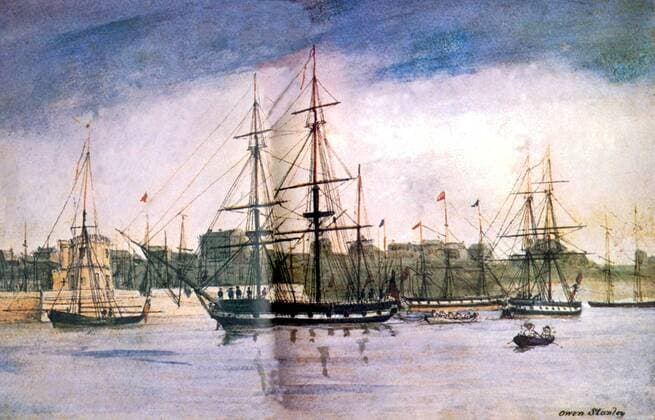
  • Charles Darwin, The Beagle at Sydney Harbour by Owen Stanley. A small ten-ton brig, she nevertheless has to accomodate seventy-four people and was fitted out at great expense with mahogany furnishings. UnitedArchives00551352

    Charles Darwin, The Beagle at Sydney Harbour by Owen Stanley. A small ten-ton brig, she nevertheless has to accomodate seventy-four people and was fitted out at great expense with mahogany furnishings. UnitedArchives00551352

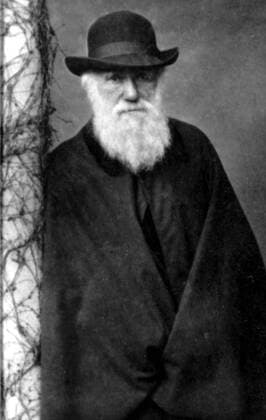
  • Portrait of Charles Robert Darwin 1809 -1896), the great naturalist, in his middle age c.1854. From Darwin and the Beagle by Alan Moorhead, page 268. Charles Robert Darwin was a British naturalist who achieved lasting fame as the originator of the theory of evolution through natural selection. Darwin s five-year voyage on the Beagle brought him eminence as a geologist and fame as a popular author. His biological observations led him to study the transmutation of species and develop his theory of natural selection in 1838. His 1859 book, The Origin of Species by Means of Natural Selection, or The Preservation of Favoured Races in the Struggle for Life, established evolution by common descent as the dominant scientific theory of diversification in nature. Local Caption Mono Print UnitedArchives0651917

    Portrait of Charles Robert Darwin 1809 -1896), the great naturalist, in his middle age c.1854. From Darwin and the Beagle by Alan Moorhead, page 268. Charles Robert Darwin was a British naturalist who achieved lasting fame as the originator of the theory of evolution through natural selection. Darwin s five-year voyage on the Beagle brought him eminence as a geologist and fame as a popular author. His biological observations led him to study the transmutation of species and develop his theory of natural selection in 1838. His 1859 book, The Origin of Species by Means of Natural Selection, or The Preservation of Favoured Races in the Struggle for Life, established evolution by common descent as the dominant scientific theory of diversification in nature. Local Caption Mono Print UnitedArchives0651917

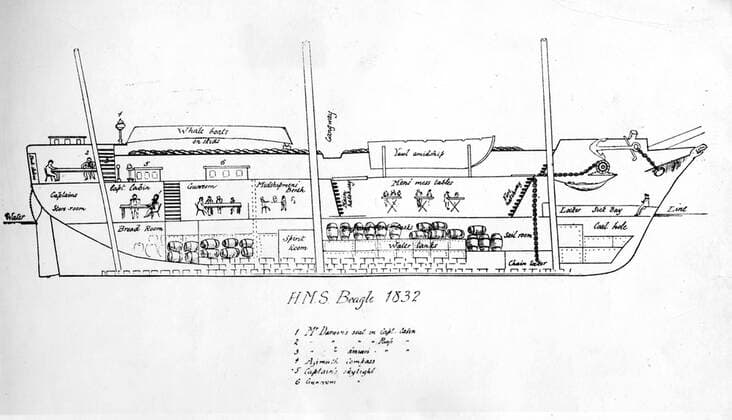
  • Side-elevation of the Beagle 1832. After he first saw the ship, Darwin wrote to Henslow: The absolute want of room is an evil that nothing can surmount. Darwin and the Beagle by Alan Moorhead, page 39. Mono Print !AUFNAHMEDATUM GESCHÄTZT! UnitedArchives0651904

    Side-elevation of the Beagle 1832. After he first saw the ship, Darwin wrote to Henslow: The absolute want of room is an evil that nothing can surmount. Darwin and the Beagle by Alan Moorhead, page 39. Mono Print !AUFNAHMEDATUM GESCHÄTZT! UnitedArchives0651904

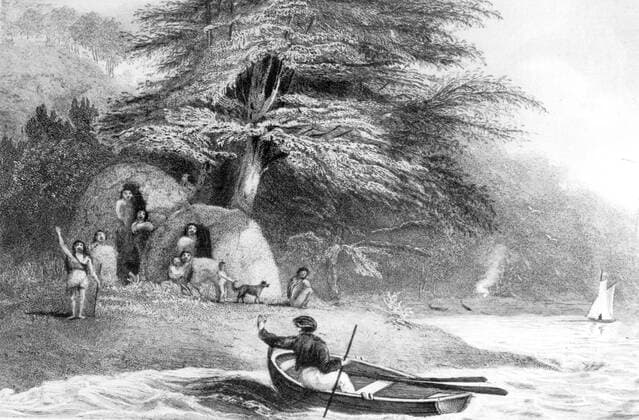
  • Fuegian (Yapoo Tekeenika). (Natives of Tierra del Fuego.) Wigwams at Hope Harbour in the Magdalen channel, during the examination of the Southern Shores of South America, and the Beagle s circumnavigation of the Globe. Darwin and the Beagle by Alan Moorhead, page 102. Mono Print UnitedArchives0651879

    Fuegian (Yapoo Tekeenika). (Natives of Tierra del Fuego.) Wigwams at Hope Harbour in the Magdalen channel, during the examination of the Southern Shores of South America, and the Beagle s circumnavigation of the Globe. Darwin and the Beagle by Alan Moorhead, page 102. Mono Print UnitedArchives0651879

  • Frontispiece - The Beagle at Sydney Harbour, 1841. Watercolour by Owen Stanley (1811-1850). The ship which Charles Darwin (1809-1882) joined as naturalist for the exploration of the South American coast in 1831-1836. In May 1840, the Beagle left Sydney to cruise on the north coast. After a pleasant visit to Hobart, Tasmania the Beagle sailed to King George s Sound in south west Australia. From Darwin and the Beagle by Alan Moorhead. Local Caption Colour Medium Format Transparency UnitedArchives0651850

    Frontispiece - The Beagle at Sydney Harbour, 1841. Watercolour by Owen Stanley (1811-1850). The ship which Charles Darwin (1809-1882) joined as naturalist for the exploration of the South American coast in 1831-1836. In May 1840, the Beagle left Sydney to cruise on the north coast. After a pleasant visit to Hobart, Tasmania the Beagle sailed to King George s Sound in south west Australia. From Darwin and the Beagle by Alan Moorhead. Local Caption Colour Medium Format Transparency UnitedArchives0651850

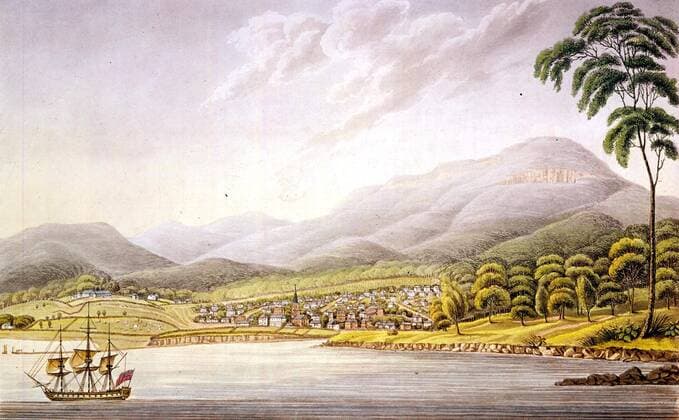
  • Hobart Town, Tasmania from Darwin and the Beagle by Alan Moorhead, page 241. HMS Beagle set off on its third voyage in 1837 to survey large parts of the coast of Australia under the command of Commander John Clements Wickham, with assistant surveyor Lieutenant John Lort Stokes, who had been a Midshipman on the first voyage of the Beagle. They started with the western coast between the Swan River (modern Perth, Australia) and the Fitzroy River, Western Australia, then surveyed both shores of the Bass Strait at the southeast corner of the continent. In May 1840, the Beagle left Sydney to cruise on the north coast. After a pleasant visit to Hobart, Tasmania the Beagle sailed to King George s Sound in south west Australia. The third voyage was completed in 1843. Colour Medium Format Transparency UnitedArchives0651830

    Hobart Town, Tasmania from Darwin and the Beagle by Alan Moorhead, page 241. HMS Beagle set off on its third voyage in 1837 to survey large parts of the coast of Australia under the command of Commander John Clements Wickham, with assistant surveyor Lieutenant John Lort Stokes, who had been a Midshipman on the first voyage of the Beagle. They started with the western coast between the Swan River (modern Perth, Australia) and the Fitzroy River, Western Australia, then surveyed both shores of the Bass Strait at the southeast corner of the continent. In May 1840, the Beagle left Sydney to cruise on the north coast. After a pleasant visit to Hobart, Tasmania the Beagle sailed to King George s Sound in south west Australia. The third voyage was completed in 1843. Colour Medium Format Transparency UnitedArchives0651830

Collections
Curations