EditorialCreativeSportsCollectionsVideos
Prices
0Log in

Visual content for professionals.
800M+ images and videos.

Content Hub

  • Current Events
  • Pictures of the Year
  • Sports
  • Editorial
  • Creative
  • Collections
  • Videos

Offers

  • Prices & Packages
  • Promotions
  • Enterprise
  • Newsletter
  • Blog
  • The Game Magazine

Services

  • Content Research
  • Contract Photography
  • API & FTP Push
  • my-picturemaxx
  • Become a Partner

Company

  • About IMAGO
  • Careers
  • News

Help Center

  • FAQ
  • Contact Us
Legal NoticeTerms & ConditionsLicense InformationData PrivacyPrivacy Settings
© 2026 IMAGO
CEPICBAPLABVPA
  1. Incident in the Gulf of Tongking, 60th anniversary on 4 August

Incident in the Gulf of Tongking, 60th anniversary on 4 August

Aug 4, 2024

The following photos have been selected for you by the IMAGO picture desk on this topic. For more pictures please use the search function.

Images in this collection
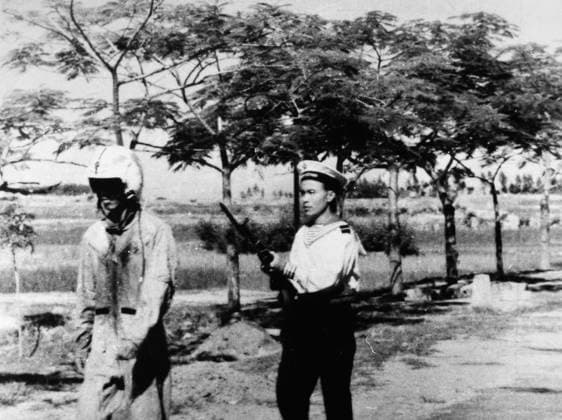
  • VIETNAM: CAPTURED PILOT. Lieutenant Everett Alvarez, photographed after being captured in the first American bombing mission over North Vietnam, 5 August 1964.  Copyright: xGRANGERx xGRANGERx 0102389

    VIETNAM: CAPTURED PILOT. Lieutenant Everett Alvarez, photographed after being captured in the first American bombing mission over North Vietnam, 5 August 1964. Copyright: xGRANGERx xGRANGERx 0102389

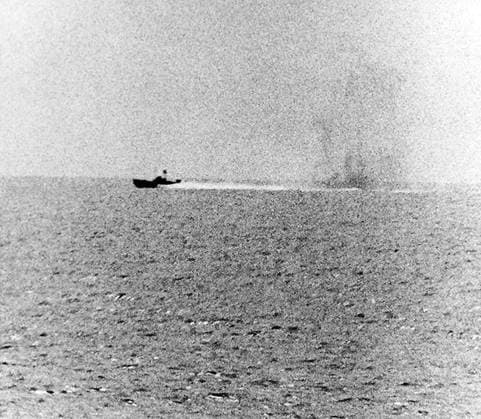
  • Vietnam: The Gulf of Tonkin Incident - North Vietnamese motor torpedo boat attacking USS Maddox, 2 August 1964 . US Navy photograph 711524. The Gulf of Tonkin Incident, or the USS Maddox Incident, are the names given to two separate incidents, one disputed, involving North Vietnam and the United States in the waters of the Gulf of Tonkin. On August 2, 1964, the destroyer USS Maddox was engaged by three North Vietnamese Navy torpedo boats of the 135th Torpedo Squadron. A sea battle resulted, in which the Maddox expended over 280 3 and 5 shells, and which involved the strafing from four USN F-8 Crusader jet fighter bombers. One US aircraft was damaged, one 14.5mm round hit the destroyer, 3 North Vietnamese torpedo boats were damaged, and 4 Copyright: xxPicturesxFromxHistoryx
    Vietnam: The Gulf of Tonkin Incident - North Vietnamese motor torpedo boat attacking USS Maddox, 2 August 1964 . US Navy photograph 711524. The Gulf of Tonkin Incident, or the USS Maddox Incident, are the names given to two separate incidents, one disputed, involving North Vietnam and the United States in the waters of the Gulf of Tonkin. On August 2, 1964, the destroyer USS Maddox was engaged by three North Vietnamese Navy torpedo boats of the 135th Torpedo Squadron. A sea battle resulted, in which the Maddox expended over 280 3 and 5 shells, and which involved the strafing from four USN F-8 Crusader jet fighter bombers. One US aircraft was damaged, one 14.5mm round hit the destroyer, 3 North Vietnamese torpedo boats were damaged, and 4 Copyright: xxPicturesxFromxHistoryx

  • The Second Indochina War, known in America as the Vietnam War, was a Cold War era military conflict that occurred in Vietnam, Laos, and Cambodia from 1 November 1955 to the fall of Saigon on 30 April 1975. This war followed the First Indochina War and was fought between North Vietnam, supported by its communist allies, and the government of South Vietnam, supported by the U.S. and other anti-communist nations. The U.S. government viewed involvement in the war as a way to prevent a communist takeover of South Vietnam and part of their wider strategy of containment.<br ><br > The North Vietnamese government viewed the war as a colonial war, fought initially against France, backed by the U.S., and later against South Vietnam, which it regarde xSupplier:xCPAxMediaxCo.xLtd.x Copyright: xx
    The Second Indochina War, known in America as the Vietnam War, was a Cold War era military conflict that occurred in Vietnam, Laos, and Cambodia from 1 November 1955 to the fall of Saigon on 30 April 1975. This war followed the First Indochina War and was fought between North Vietnam, supported by its communist allies, and the government of South Vietnam, supported by the U.S. and other anti-communist nations. The U.S. government viewed involvement in the war as a way to prevent a communist takeover of South Vietnam and part of their wider strategy of containment.<br ><br > The North Vietnamese government viewed the war as a colonial war, fought initially against France, backed by the U.S., and later against South Vietnam, which it regarde xSupplier:xCPAxMediaxCo.xLtd.x Copyright: xx

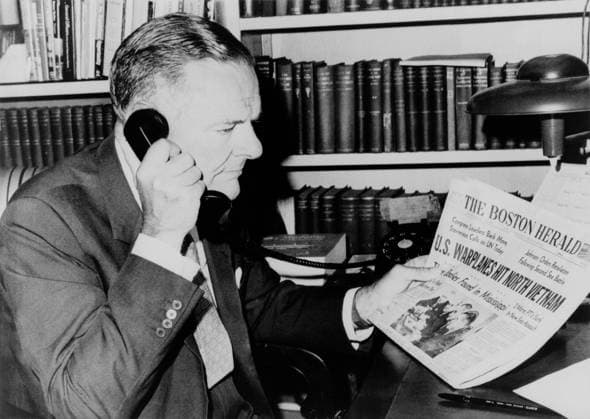
  • Henry Cabot Lodge, US ambassador of Vietnam (1963-1967), reading a newspaper headline about the Gulf of Tonkin incident. August 5, 1964. Courtesy Everett Collection PUBLICATIONXNOTxINxCANxCHNxFRAxITAxJPNxNORxPOLxRUSxESPxUKxUSA Copyright: xCourtesyxEverettxCollectionx HISL033 EC341

    Henry Cabot Lodge, US ambassador of Vietnam (1963-1967), reading a newspaper headline about the Gulf of Tonkin incident. August 5, 1964. Courtesy Everett Collection PUBLICATIONXNOTxINxCANxCHNxFRAxITAxJPNxNORxPOLxRUSxESPxUKxUSA Copyright: xCourtesyxEverettxCollectionx HISL033 EC341

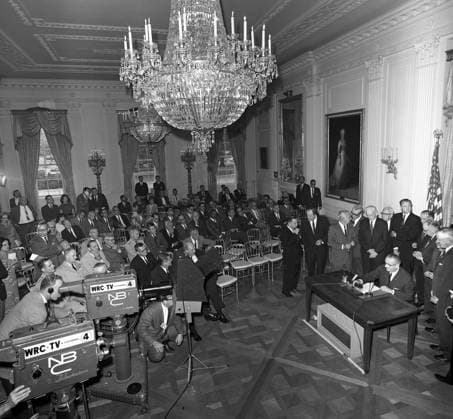
  • Television cameras at President Lyndon Johnson s signing of the Gulf of Tonkin resolution, officially called Joint Resolution for the Maintenance of Peace and Security in Southeast Asia. It was an informal declaration of war against North Vietnam. Aug Courtesy Everett Collection PUBLICATIONXNOTxINxCANxCHNxFRAxITAxJPNxNORxPOLxRUSxESPxUKxUSA Copyright: xCourtesyxEverettxCollectionx HISL033 EC297

    Television cameras at President Lyndon Johnson s signing of the Gulf of Tonkin resolution, officially called Joint Resolution for the Maintenance of Peace and Security in Southeast Asia. It was an informal declaration of war against North Vietnam. Aug Courtesy Everett Collection PUBLICATIONXNOTxINxCANxCHNxFRAxITAxJPNxNORxPOLxRUSxESPxUKxUSA Copyright: xCourtesyxEverettxCollectionx HISL033 EC297

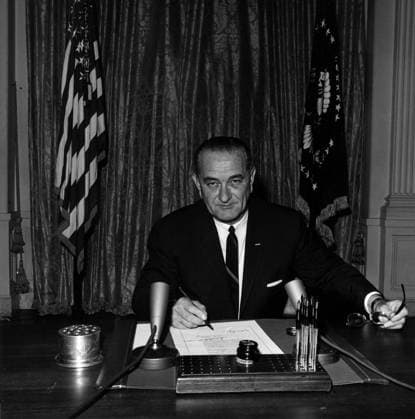
  • Vietnam War. President Lyndon B. Johnson signs Tonkin Gulf Resolution, August 7, 1964. This joint resolution of Congress gave President Lyndon Johnson authority to increase U.S. involvement in the Vietnam War. August 10, 1964 Courtesy Everett Collection PUBLICATIONXNOTxINxCANxCHNxFRAxITAxJPNxNORxPOLxRUSxESPxUKxUSA Copyright: xCourtesyxEverettxCollectionx HCDLCGC EC870

    Vietnam War. President Lyndon B. Johnson signs Tonkin Gulf Resolution, August 7, 1964. This joint resolution of Congress gave President Lyndon Johnson authority to increase U.S. involvement in the Vietnam War. August 10, 1964 Courtesy Everett Collection PUBLICATIONXNOTxINxCANxCHNxFRAxITAxJPNxNORxPOLxRUSxESPxUKxUSA Copyright: xCourtesyxEverettxCollectionx HCDLCGC EC870

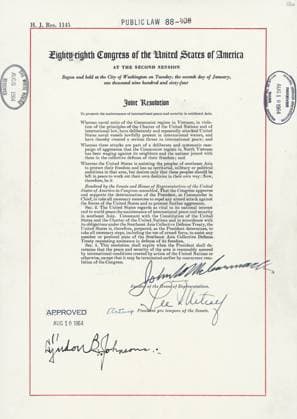
  • Vietnam War. Tonkin Gulf Resolution, August 7, 1964. This joint resolution of Congress gave President Lyndon Johnson authority to increase U.S. involvement in the Vietnam War. Courtesy Everett Collection PUBLICATIONXNOTxINxCANxCHNxFRAxITAxJPNxNORxPOLxRUSxESPxUKxUSA Copyright: xCourtesyxEverettxCollectionx HCDLCGC EC869

    Vietnam War. Tonkin Gulf Resolution, August 7, 1964. This joint resolution of Congress gave President Lyndon Johnson authority to increase U.S. involvement in the Vietnam War. Courtesy Everett Collection PUBLICATIONXNOTxINxCANxCHNxFRAxITAxJPNxNORxPOLxRUSxESPxUKxUSA Copyright: xCourtesyxEverettxCollectionx HCDLCGC EC869

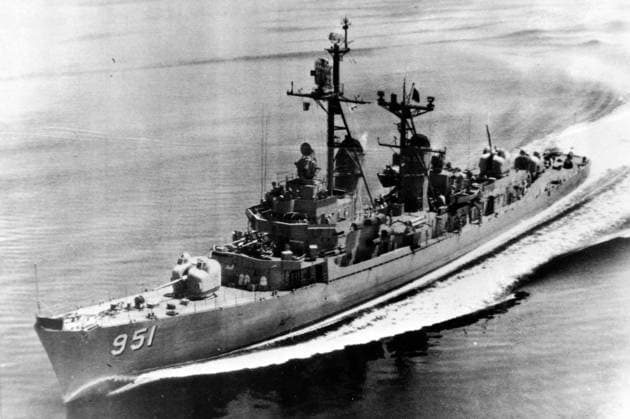
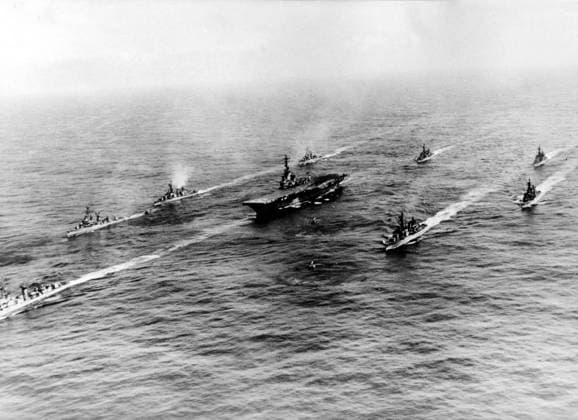
  • US NAVY USS C TURNER JOY IN TONKIN GULF ; 5 AUGUST 1964, Copyright: Topfoto  UnitedArchivesIPU481937

    US NAVY USS C TURNER JOY IN TONKIN GULF ; 5 AUGUST 1964, Copyright: Topfoto UnitedArchivesIPU481937

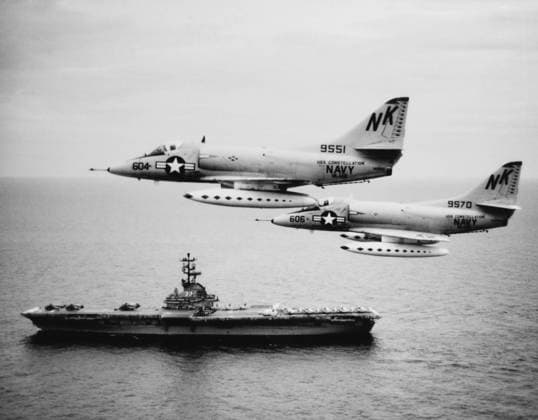
  • August 12, 1964 - Two Douglas A-4C Skyhawk aircraft fly past anti-submarine aircraft carrier USS Kearsarge (CVS-33) in the Western Pacific. These planes took part in the August 1964 strikes against North Vietnamese PT-boat bases as a result of the Tonkin Gulf Incident.  Copyright: StocktrekxImages STK500661A

    August 12, 1964 - Two Douglas A-4C Skyhawk aircraft fly past anti-submarine aircraft carrier USS Kearsarge (CVS-33) in the Western Pacific. These planes took part in the August 1964 strikes against North Vietnamese PT-boat bases as a result of the Tonkin Gulf Incident. Copyright: StocktrekxImages STK500661A

  • Aug. 5, 1964 - Tonkin, Vietnam - Vietnam War, also known as the Second Indochina War was a military struggle fought in Vietnam from 1959 to 1975, involving the North Vietnamese and the National Liberation Front (NLF) in conflict with United States forces and the South Vietnamese army. After Vietnamese had struggled for their independence from France during the First Indochina War, the country was temporarily divided into Communist North and non-Communist South Vietnam. The United States became involved in Vietnam because according to domino theory American policymakers believed that if the entire country fell under a Communist government, Communism would spread throughout Southeast Asia. The Vietnam War was a cause of much controversy in the United States. What began as a small group of advisors under President Dwight Eisenhower ended up with over a total of 2.5 million American troops  - ZUMAk09

    Aug. 5, 1964 - Tonkin, Vietnam - Vietnam War, also known as the Second Indochina War was a military struggle fought in Vietnam from 1959 to 1975, involving the North Vietnamese and the National Liberation Front (NLF) in conflict with United States forces and the South Vietnamese army. After Vietnamese had struggled for their independence from France during the First Indochina War, the country was temporarily divided into Communist North and non-Communist South Vietnam. The United States became involved in Vietnam because according to domino theory American policymakers believed that if the entire country fell under a Communist government, Communism would spread throughout Southeast Asia. The Vietnam War was a cause of much controversy in the United States. What began as a small group of advisors under President Dwight Eisenhower ended up with over a total of 2.5 million American troops - ZUMAk09

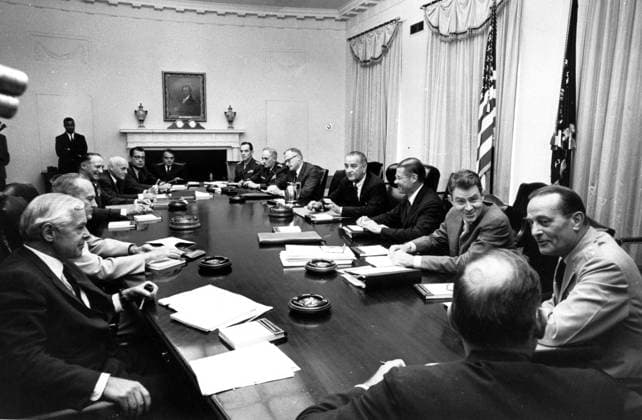
  • Cabinet Room of the White House just recently when the President Lyndon B Johnson met his top defence advisors on the Vietnam Situation. Around the table are left to right: Secretary of the Navy Paul Nitze, Admiral David L McDonald, Chief of Naval Operations General John McConnell, chief of Staff Air Force Eugene Zuckert, Secretary of the Air Force (outgoing) Harold Brown, Secretary of the Air Force Designate; Presidential Assistant Jack Valenti, General Wallace M Greene Commandant Marine Corps, General Harold K Johnson Army Chief of Staff, Stanley Resor Secretary of the Army, President Johnson, Robert McNamara Secretary of Defense, Deputy Secretary of Defence Cyrus Vance, General Earle G Wheeler Chairman of the Joint Chiefs of Staff, and McGeorge Bundy Presudential Advisor 27th July 1965 UnitedArchives00123237
    Cabinet Room of the White House just recently when the President Lyndon B Johnson met his top defence advisors on the Vietnam Situation. Around the table are left to right: Secretary of the Navy Paul Nitze, Admiral David L McDonald, Chief of Naval Operations General John McConnell, chief of Staff Air Force Eugene Zuckert, Secretary of the Air Force (outgoing) Harold Brown, Secretary of the Air Force Designate; Presidential Assistant Jack Valenti, General Wallace M Greene Commandant Marine Corps, General Harold K Johnson Army Chief of Staff, Stanley Resor Secretary of the Army, President Johnson, Robert McNamara Secretary of Defense, Deputy Secretary of Defence Cyrus Vance, General Earle G Wheeler Chairman of the Joint Chiefs of Staff, and McGeorge Bundy Presudential Advisor 27th July 1965 UnitedArchives00123237
Collections
Curations