EditorialCreativeSportsCollectionsVideos
Prices
0Log in

Visual content for professionals.
800M+ images and videos.

Content Hub

  • Current Events
  • Pictures of the Year
  • Sports
  • Editorial
  • Creative
  • Collections
  • Videos

Offers

  • Prices & Packages
  • Promotions
  • Enterprise
  • Newsletter
  • Blog
  • The Game Magazine

Services

  • Content Research
  • Contract Photography
  • API & FTP Push
  • my-picturemaxx
  • Become a Partner

Company

  • About IMAGO
  • Careers
  • News

Help Center

  • FAQ
  • Contact Us
Legal NoticeTerms & ConditionsLicense InformationData PrivacyPrivacy Settings
© 2026 IMAGO
CEPICBAPLABVPA
  1. IMAGO International History, Takeover of the Khmer Rouge in Cambodia, 50th anniversary on 17th April

IMAGO International History, Takeover of the Khmer Rouge in Cambodia, 50th anniversary on 17th April

Apr 17, 2025

The following photos have been selected for you by the IMAGO picture desk on this topic. For more pictures please use the search function.

Images in this collection
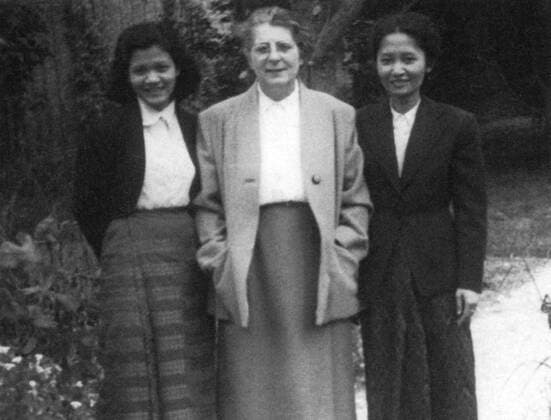
  • Ieng Thirith is a former member of the Khmer Rouge Central Committee. Her original name is Khieu Thirith. Thirith was the Minister of Social Action under the Khmer Roge regime. Khieu Ponnary (1920 - 1 July 2003) was the first wife of Pol Pot, sister of Khieu Thirith and sister-in-law to Ieng Sary. She died in Pailin on July 1, 2003.<br ><br > The Khmer Rouge, or Communist Party of Kampuchea, ruled Cambodia from 1975 to 1979, led by Pol Pot, Nuon Chea, Ieng Sary, Son Sen and Khieu Samphan. It is remembered primarily for its brutality and policy of social engineering which resulted in millions of deaths. Its attempts at agricultural reform led to widespread famine, while its insistence on absolute self-sufficiency, even in the supply of medi xSupplier:xCPAxMediaxCo.xLtd.x Copyright: xx
    Ieng Thirith is a former member of the Khmer Rouge Central Committee. Her original name is Khieu Thirith. Thirith was the Minister of Social Action under the Khmer Roge regime. Khieu Ponnary (1920 - 1 July 2003) was the first wife of Pol Pot, sister of Khieu Thirith and sister-in-law to Ieng Sary. She died in Pailin on July 1, 2003.<br ><br > The Khmer Rouge, or Communist Party of Kampuchea, ruled Cambodia from 1975 to 1979, led by Pol Pot, Nuon Chea, Ieng Sary, Son Sen and Khieu Samphan. It is remembered primarily for its brutality and policy of social engineering which resulted in millions of deaths. Its attempts at agricultural reform led to widespread famine, while its insistence on absolute self-sufficiency, even in the supply of medi xSupplier:xCPAxMediaxCo.xLtd.x Copyright: xx

  • Keo Meas (1926 1976) was a Cambodian communist politician and a leading figure within the United Issarak Front. He worked closely with Hanoi; but this made him an object of suspicion to Pol Pot and Nuon Chea. In 1975; shortly after the Khmer Rouge victory; he was taken to Tuol Sleng where he was presumably executed on Pol Pot s orders.<br ><br > The Khmer Rouge, or Communist Party of Kampuchea, ruled Cambodia from 1975 to 1979, led by Pol Pot, Nuon Chea, Ieng Sary, Son Sen and Khieu Samphan. It is remembered primarily for its brutality and policy of social engineering which resulted in millions of deaths. Its attempts at agricultural reform led to widespread famine, while its insistence on absolute self-sufficiency, even in the supply xSupplier:xCPAxMediaxCo.xLtd.x Copyright: xx

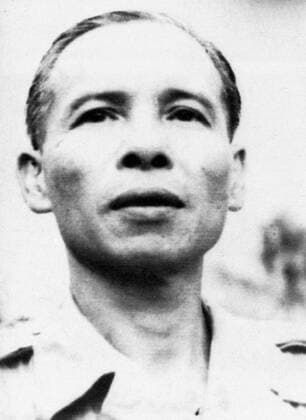
    Keo Meas (1926 1976) was a Cambodian communist politician and a leading figure within the United Issarak Front. He worked closely with Hanoi; but this made him an object of suspicion to Pol Pot and Nuon Chea. In 1975; shortly after the Khmer Rouge victory; he was taken to Tuol Sleng where he was presumably executed on Pol Pot s orders.<br ><br > The Khmer Rouge, or Communist Party of Kampuchea, ruled Cambodia from 1975 to 1979, led by Pol Pot, Nuon Chea, Ieng Sary, Son Sen and Khieu Samphan. It is remembered primarily for its brutality and policy of social engineering which resulted in millions of deaths. Its attempts at agricultural reform led to widespread famine, while its insistence on absolute self-sufficiency, even in the supply xSupplier:xCPAxMediaxCo.xLtd.x Copyright: xx

  • Tou Samouth (c.1915-1962), also known as Achar Sok, was a Cambodian Communist politician. One of the founder members of the Party in Cambodia, and head of its more moderate faction, he is mainly remembered for mentoring Saloth Sar, the man who would later become Pol Pot, leader of the Khmer Rouge. Samouth disappeared in disputed circumstances in July 1962.<br ><br > The Khmer Rouge, or Communist Party of Kampuchea, ruled Cambodia from 1975 to 1979, led by Pol Pot, Nuon Chea, Ieng Sary, Son Sen and Khieu Samphan. It is remembered primarily for its brutality and policy of social engineering which resulted in millions of deaths. Its attempts at agricultural reform led to widespread famine, while its insistence on absolute self-sufficiency, ev xSupplier:xCPAxMediaxCo.xLtd.x Copyright: xx
    Tou Samouth (c.1915-1962), also known as Achar Sok, was a Cambodian Communist politician. One of the founder members of the Party in Cambodia, and head of its more moderate faction, he is mainly remembered for mentoring Saloth Sar, the man who would later become Pol Pot, leader of the Khmer Rouge. Samouth disappeared in disputed circumstances in July 1962.<br ><br > The Khmer Rouge, or Communist Party of Kampuchea, ruled Cambodia from 1975 to 1979, led by Pol Pot, Nuon Chea, Ieng Sary, Son Sen and Khieu Samphan. It is remembered primarily for its brutality and policy of social engineering which resulted in millions of deaths. Its attempts at agricultural reform led to widespread famine, while its insistence on absolute self-sufficiency, ev xSupplier:xCPAxMediaxCo.xLtd.x Copyright: xx

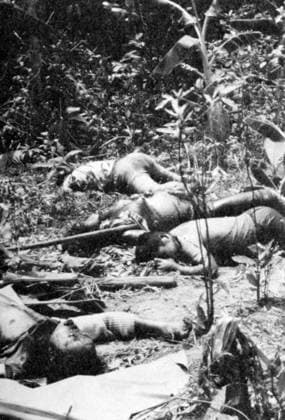
  • The Khmer Rouge, or Communist Party of Kampuchea, ruled Cambodia from 1975 to 1979, led by Pol Pot, Nuon Chea, Ieng Sary, Son Sen and Khieu Samphan. It is remembered primarily for its brutality and policy of social engineering which resulted in millions of deaths. Its attempts at agricultural reform led to widespread famine, while its insistence on absolute self-sufficiency, even in the supply of medicine, led to the deaths of thousands from treatable diseases (such as malaria). Brutal and arbitrary executions and torture carried out by its cadres against perceived subversive elements, or during purges of its own ranks between 1976 and 1978, are considered to have constituted a genocide. Several former Khmer Rouge cadres are currently on tr xSupplier:xCPAxMediaxCo.xLtd.x Copyright: xx
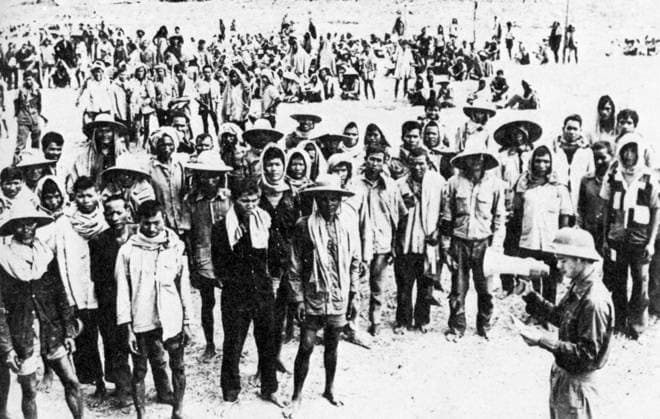
    The Khmer Rouge, or Communist Party of Kampuchea, ruled Cambodia from 1975 to 1979, led by Pol Pot, Nuon Chea, Ieng Sary, Son Sen and Khieu Samphan. It is remembered primarily for its brutality and policy of social engineering which resulted in millions of deaths. Its attempts at agricultural reform led to widespread famine, while its insistence on absolute self-sufficiency, even in the supply of medicine, led to the deaths of thousands from treatable diseases (such as malaria). Brutal and arbitrary executions and torture carried out by its cadres against perceived subversive elements, or during purges of its own ranks between 1976 and 1978, are considered to have constituted a genocide. Several former Khmer Rouge cadres are currently on tr xSupplier:xCPAxMediaxCo.xLtd.x Copyright: xx
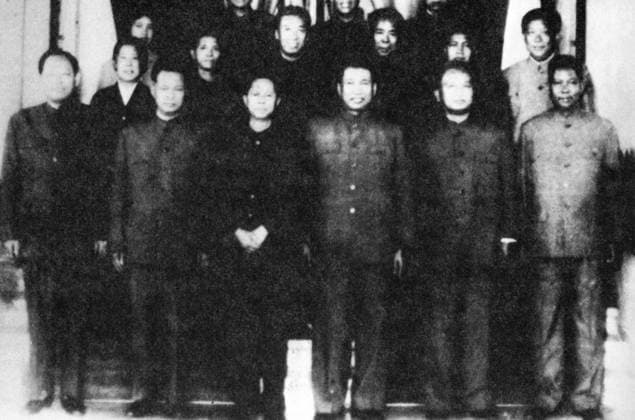
  • The Khmer Rouge, or Communist Party of Kampuchea, ruled Cambodia from 1975 to 1979, led by Pol Pot, Nuon Chea, Ieng Sary, Son Sen and Khieu Samphan. It is remembered primarily for its brutality and policy of social engineering which resulted in millions of deaths. Its attempts at agricultural reform led to widespread famine, while its insistence on absolute self-sufficiency, even in the supply of medicine, led to the deaths of thousands from treatable diseases (such as malaria). Brutal and arbitrary executions and torture carried out by its cadres against perceived subversive elements, or during purges of its own ranks between 1976 and 1978, are considered to have constituted a genocide. Several former Khmer Rouge cadres are currently on tr xSupplier:xCPAxMediaxCo.xLtd.x Copyright: xx
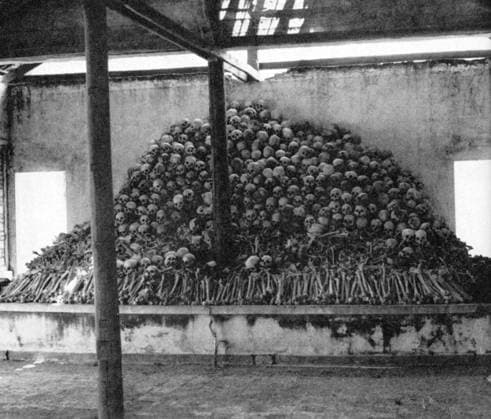
    The Khmer Rouge, or Communist Party of Kampuchea, ruled Cambodia from 1975 to 1979, led by Pol Pot, Nuon Chea, Ieng Sary, Son Sen and Khieu Samphan. It is remembered primarily for its brutality and policy of social engineering which resulted in millions of deaths. Its attempts at agricultural reform led to widespread famine, while its insistence on absolute self-sufficiency, even in the supply of medicine, led to the deaths of thousands from treatable diseases (such as malaria). Brutal and arbitrary executions and torture carried out by its cadres against perceived subversive elements, or during purges of its own ranks between 1976 and 1978, are considered to have constituted a genocide. Several former Khmer Rouge cadres are currently on tr xSupplier:xCPAxMediaxCo.xLtd.x Copyright: xx

  • The Khmer Rouge, or Communist Party of Kampuchea, ruled Cambodia from 1975 to 1979, led by Pol Pot, Nuon Chea, Ieng Sary, Son Sen and Khieu Samphan. It is remembered primarily for its brutality and policy of social engineering which resulted in millions of deaths. Its attempts at agricultural reform led to widespread famine, while its insistence on absolute self-sufficiency, even in the supply of medicine, led to the deaths of thousands from treatable diseases (such as malaria). Brutal and arbitrary executions and torture carried out by its cadres against perceived subversive elements, or during purges of its own ranks between 1976 and 1978, are considered to have constituted a genocide. Several former Khmer Rouge cadres are currently on tr xSupplier:xCPAxMediaxCo.xLtd.x Copyright: xx

    The Khmer Rouge, or Communist Party of Kampuchea, ruled Cambodia from 1975 to 1979, led by Pol Pot, Nuon Chea, Ieng Sary, Son Sen and Khieu Samphan. It is remembered primarily for its brutality and policy of social engineering which resulted in millions of deaths. Its attempts at agricultural reform led to widespread famine, while its insistence on absolute self-sufficiency, even in the supply of medicine, led to the deaths of thousands from treatable diseases (such as malaria). Brutal and arbitrary executions and torture carried out by its cadres against perceived subversive elements, or during purges of its own ranks between 1976 and 1978, are considered to have constituted a genocide. Several former Khmer Rouge cadres are currently on tr xSupplier:xCPAxMediaxCo.xLtd.x Copyright: xx

  • Collected skulls and bones from a mass grave of Khmer Rouge victims at Tonle Bati, some 30 kms south of Phnom Penh.<br ><br > The Khmer Rouge, or Communist Party of Kampuchea, ruled Cambodia from 1975 to 1979, led by Pol Pot, Nuon Chea, Ieng Sary, Son Sen and Khieu Samphan. It is remembered primarily for its brutality and policy of social engineering which resulted in millions of deaths. Its attempts at agricultural reform led to widespread famine, while its insistence on absolute self-sufficiency, even in the supply of medicine, led to the deaths of thousands from treatable diseases (such as malaria). Brutal and arbitrary executions and torture carried out by its cadres against perceived subversive elements, or during purges of its own ra xSupplier:xCPAxMediaxCo.xLtd.x Copyright: xx
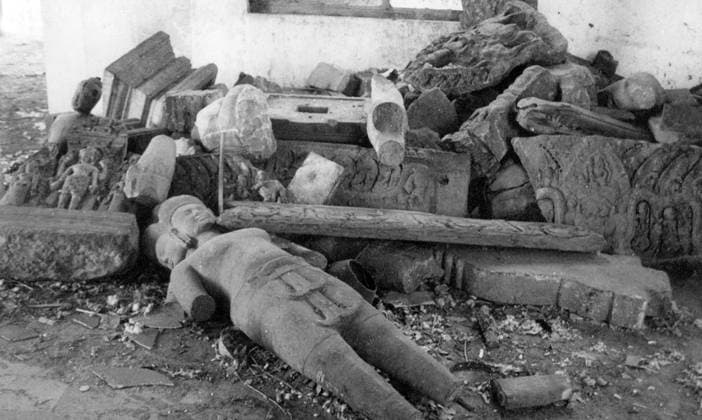
    Collected skulls and bones from a mass grave of Khmer Rouge victims at Tonle Bati, some 30 kms south of Phnom Penh.<br ><br > The Khmer Rouge, or Communist Party of Kampuchea, ruled Cambodia from 1975 to 1979, led by Pol Pot, Nuon Chea, Ieng Sary, Son Sen and Khieu Samphan. It is remembered primarily for its brutality and policy of social engineering which resulted in millions of deaths. Its attempts at agricultural reform led to widespread famine, while its insistence on absolute self-sufficiency, even in the supply of medicine, led to the deaths of thousands from treatable diseases (such as malaria). Brutal and arbitrary executions and torture carried out by its cadres against perceived subversive elements, or during purges of its own ra xSupplier:xCPAxMediaxCo.xLtd.x Copyright: xx

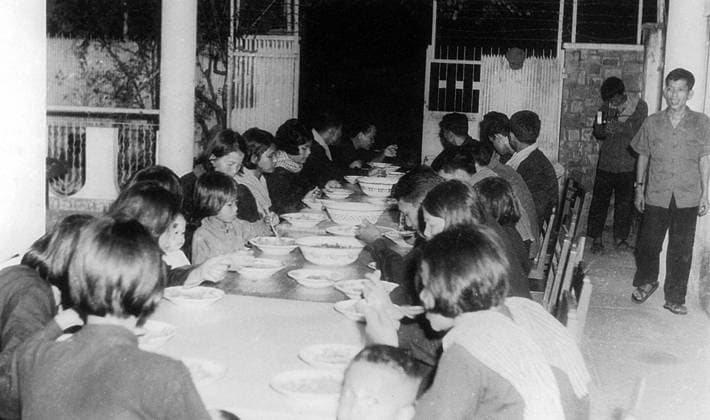
  • The Tuol Sleng Genocide Museum is a museum in Phnom Penh, the capital of Cambodia. The site is a former high school which was used as the notorious Security Prison 21 (S-21) by the Khmer Rouge communist regime from its rise to power in 1975 to its fall in 1979. Tuol Sleng means Hill of the Poisonous Trees or Strychnine Hill . Cambodia: Khmer Rouge cadre eating communally watched by Kang Kek Iew (Comrade Duch), Tuol Sleng (S 21) Prison. xSupplier:xCPAxMediaxCo.xLtd.x Copyright: xx

    The Tuol Sleng Genocide Museum is a museum in Phnom Penh, the capital of Cambodia. The site is a former high school which was used as the notorious Security Prison 21 (S-21) by the Khmer Rouge communist regime from its rise to power in 1975 to its fall in 1979. Tuol Sleng means Hill of the Poisonous Trees or Strychnine Hill . Cambodia: Khmer Rouge cadre eating communally watched by Kang Kek Iew (Comrade Duch), Tuol Sleng (S 21) Prison. xSupplier:xCPAxMediaxCo.xLtd.x Copyright: xx

  • The Khmer Rouge, or Communist Party of Kampuchea, ruled Cambodia from 1975 to 1979, led by Pol Pot, Nuon Chea, Ieng Sary, Son Sen and Khieu Samphan. It is remembered primarily for its brutality and policy of social engineering which resulted in millions of deaths. Its attempts at agricultural reform led to widespread famine, while its insistence on absolute self-sufficiency, even in the supply of medicine, led to the deaths of thousands from treatable diseases (such as malaria). Brutal and arbitrary executions and torture carried out by its cadres against perceived subversive elements, or during purges of its own ranks between 1976 and 1978, are considered to have constituted a genocide. Several former Khmer Rouge cadres are currently on tr xSupplier:xCPAxMediaxCo.xLtd.x Copyright: xx
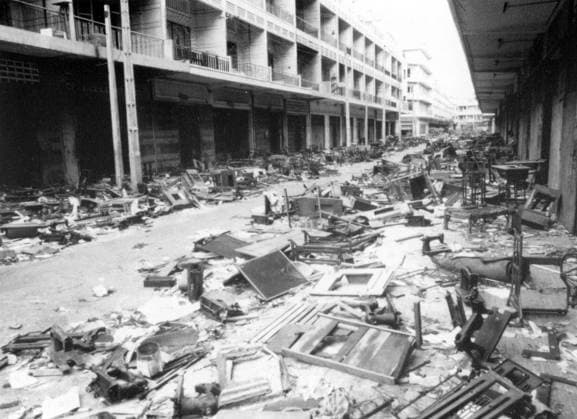
    The Khmer Rouge, or Communist Party of Kampuchea, ruled Cambodia from 1975 to 1979, led by Pol Pot, Nuon Chea, Ieng Sary, Son Sen and Khieu Samphan. It is remembered primarily for its brutality and policy of social engineering which resulted in millions of deaths. Its attempts at agricultural reform led to widespread famine, while its insistence on absolute self-sufficiency, even in the supply of medicine, led to the deaths of thousands from treatable diseases (such as malaria). Brutal and arbitrary executions and torture carried out by its cadres against perceived subversive elements, or during purges of its own ranks between 1976 and 1978, are considered to have constituted a genocide. Several former Khmer Rouge cadres are currently on tr xSupplier:xCPAxMediaxCo.xLtd.x Copyright: xx
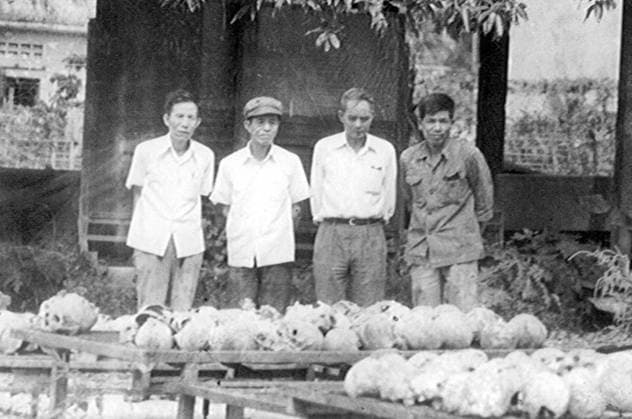
  • The Khmer Rouge, or Communist Party of Kampuchea, ruled Cambodia from 1975 to 1979, led by Pol Pot, Nuon Chea, Ieng Sary, Son Sen and Khieu Samphan. It is remembered primarily for its brutality and policy of social engineering which resulted in millions of deaths. Its attempts at agricultural reform led to widespread famine, while its insistence on absolute self-sufficiency, even in the supply of medicine, led to the deaths of thousands from treatable diseases (such as malaria). Brutal and arbitrary executions and torture carried out by its cadres against perceived subversive elements, or during purges of its own ranks between 1976 and 1978, are considered to have constituted a genocide. Several former Khmer Rouge cadres are currently on tr xSupplier:xCPAxMediaxCo.xLtd.x Copyright: xx
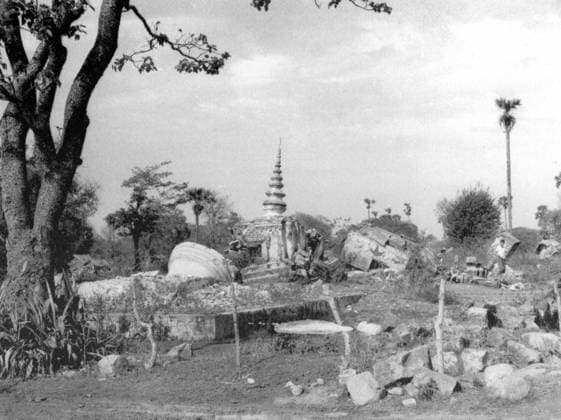
    The Khmer Rouge, or Communist Party of Kampuchea, ruled Cambodia from 1975 to 1979, led by Pol Pot, Nuon Chea, Ieng Sary, Son Sen and Khieu Samphan. It is remembered primarily for its brutality and policy of social engineering which resulted in millions of deaths. Its attempts at agricultural reform led to widespread famine, while its insistence on absolute self-sufficiency, even in the supply of medicine, led to the deaths of thousands from treatable diseases (such as malaria). Brutal and arbitrary executions and torture carried out by its cadres against perceived subversive elements, or during purges of its own ranks between 1976 and 1978, are considered to have constituted a genocide. Several former Khmer Rouge cadres are currently on tr xSupplier:xCPAxMediaxCo.xLtd.x Copyright: xx
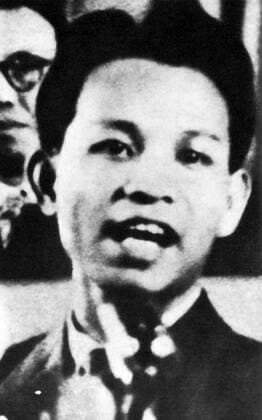
  • The Khmer Rouge, or Communist Party of Kampuchea, ruled Cambodia from 1975 to 1979, led by Pol Pot, Nuon Chea, Ieng Sary, Son Sen and Khieu Samphan. It is remembered primarily for its brutality and policy of social engineering which resulted in millions of deaths. Its attempts at agricultural reform led to widespread famine, while its insistence on absolute self-sufficiency, even in the supply of medicine, led to the deaths of thousands from treatable diseases (such as malaria). Brutal and arbitrary executions and torture carried out by its cadres against perceived subversive elements, or during purges of its own ranks between 1976 and 1978, are considered to have constituted a genocide. Several former Khmer Rouge cadres are currently on tr xSupplier:xCPAxMediaxCo.xLtd.x Copyright: xx

    The Khmer Rouge, or Communist Party of Kampuchea, ruled Cambodia from 1975 to 1979, led by Pol Pot, Nuon Chea, Ieng Sary, Son Sen and Khieu Samphan. It is remembered primarily for its brutality and policy of social engineering which resulted in millions of deaths. Its attempts at agricultural reform led to widespread famine, while its insistence on absolute self-sufficiency, even in the supply of medicine, led to the deaths of thousands from treatable diseases (such as malaria). Brutal and arbitrary executions and torture carried out by its cadres against perceived subversive elements, or during purges of its own ranks between 1976 and 1978, are considered to have constituted a genocide. Several former Khmer Rouge cadres are currently on tr xSupplier:xCPAxMediaxCo.xLtd.x Copyright: xx

  • The Khmer Rouge, or Communist Party of Kampuchea, ruled Cambodia from 1975 to 1979, led by Pol Pot, Nuon Chea, Ieng Sary, Son Sen and Khieu Samphan. It is remembered primarily for its brutality and policy of social engineering which resulted in millions of deaths. Its attempts at agricultural reform led to widespread famine, while its insistence on absolute self-sufficiency, even in the supply of medicine, led to the deaths of thousands from treatable diseases (such as malaria). Brutal and arbitrary executions and torture carried out by its cadres against perceived subversive elements, or during purges of its own ranks between 1976 and 1978, are considered to have constituted a genocide. Several former Khmer Rouge cadres are currently on tr xSupplier:xCPAxMediaxCo.xLtd.x Copyright: xx

    The Khmer Rouge, or Communist Party of Kampuchea, ruled Cambodia from 1975 to 1979, led by Pol Pot, Nuon Chea, Ieng Sary, Son Sen and Khieu Samphan. It is remembered primarily for its brutality and policy of social engineering which resulted in millions of deaths. Its attempts at agricultural reform led to widespread famine, while its insistence on absolute self-sufficiency, even in the supply of medicine, led to the deaths of thousands from treatable diseases (such as malaria). Brutal and arbitrary executions and torture carried out by its cadres against perceived subversive elements, or during purges of its own ranks between 1976 and 1978, are considered to have constituted a genocide. Several former Khmer Rouge cadres are currently on tr xSupplier:xCPAxMediaxCo.xLtd.x Copyright: xx

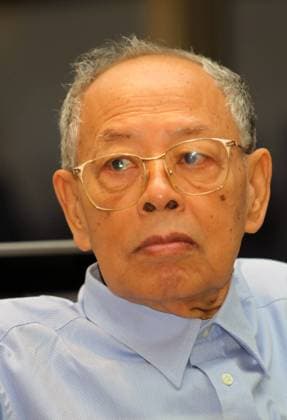
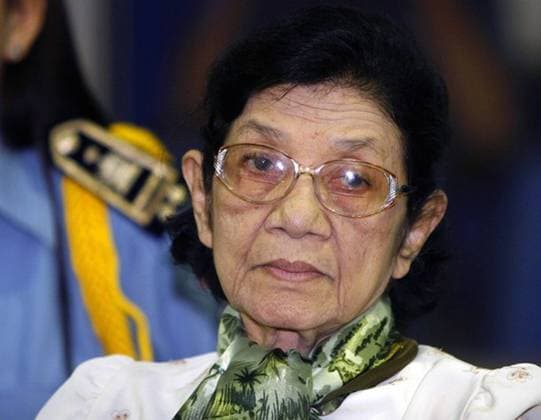
  • Former Khmer Rouge Social Affairs Minister Ieng Thirith sits at the Extraordinary Chambers in the Courts of Cambodia (ECCC) in Phnom Penh, February 24, 2009. Photo taken by Heng Sinith during pre-trial hearing. Image Courtesy of Extraordinary Chambers in the Courts of Cambodia. Cambodia: Ieng Thirith (born 1932), former member of the Khmer Rouge Central Committee. Wife of Ieng Sary and sister-in-law of Pol Pot, she was Khmer Rouge Minister of Social Affairs (1975-79). xSupplier:xCPAxMediaxCo.xLtd.x Copyright: xx

    Former Khmer Rouge Social Affairs Minister Ieng Thirith sits at the Extraordinary Chambers in the Courts of Cambodia (ECCC) in Phnom Penh, February 24, 2009. Photo taken by Heng Sinith during pre-trial hearing. Image Courtesy of Extraordinary Chambers in the Courts of Cambodia. Cambodia: Ieng Thirith (born 1932), former member of the Khmer Rouge Central Committee. Wife of Ieng Sary and sister-in-law of Pol Pot, she was Khmer Rouge Minister of Social Affairs (1975-79). xSupplier:xCPAxMediaxCo.xLtd.x Copyright: xx

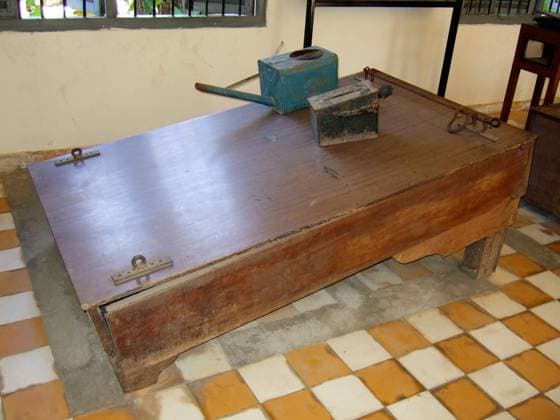
  • Evidence of torture at Tuol Sleng (S 21) Prison: Khmer Rouge water-boarding equipment. Victims were shackled to the apparatus with their heads pointing downwards. The watering can was used to induce a sensation of drowning.<br ><br > The Tuol Sleng Genocide Museum is a museum in Phnom Penh, the capital of Cambodia. The site is a former high school which was used as the notorious Security Prison 21 (S-21) by the Khmer Rouge communist regime from its rise to power in 1975 to its fall in 1979. Tuol Sleng means Hill of the Poisonous Trees or Strychnine Hill . Cambodia: Tuol Sleng (S 21) Prison: Khmer Rouge water-boarding equipment. xSupplier:xCPAxMediaxCo.xLtd.x Copyright: xx

    Evidence of torture at Tuol Sleng (S 21) Prison: Khmer Rouge water-boarding equipment. Victims were shackled to the apparatus with their heads pointing downwards. The watering can was used to induce a sensation of drowning.<br ><br > The Tuol Sleng Genocide Museum is a museum in Phnom Penh, the capital of Cambodia. The site is a former high school which was used as the notorious Security Prison 21 (S-21) by the Khmer Rouge communist regime from its rise to power in 1975 to its fall in 1979. Tuol Sleng means Hill of the Poisonous Trees or Strychnine Hill . Cambodia: Tuol Sleng (S 21) Prison: Khmer Rouge water-boarding equipment. xSupplier:xCPAxMediaxCo.xLtd.x Copyright: xx

  • Ieng Sary (born October 24, 1924) was a powerful figure in the Khmer Rouge. He was the Deputy Prime Minister and Foreign Minister of Democratic Kampuchea from 1975 to 1979 and held several senior positions in the Khmer Rouge until his defection to the government in 1996. Of Khmer ancestry on his father s side, and Chinese ancestry on his mother s, Ieng Sary was born in Chau Thanh, Tra Vinh province, southern Vietnam. Sary changed his name from the Vietnamese Kim Trang when he joined the Khmer Rouge. Ieng Sary was arrested on November 12, 2007 in Phnom Penh on an arrest warrant from the Cambodia Tribunal for war crimes and crimes against humanity. His wife, Ieng Thirith, was also arrested for crimes against humanity. On 16 December 2009, the xSupplier:xCPAxMediaxCo.xLtd.x Copyright: xx

    Ieng Sary (born October 24, 1924) was a powerful figure in the Khmer Rouge. He was the Deputy Prime Minister and Foreign Minister of Democratic Kampuchea from 1975 to 1979 and held several senior positions in the Khmer Rouge until his defection to the government in 1996. Of Khmer ancestry on his father s side, and Chinese ancestry on his mother s, Ieng Sary was born in Chau Thanh, Tra Vinh province, southern Vietnam. Sary changed his name from the Vietnamese Kim Trang when he joined the Khmer Rouge. Ieng Sary was arrested on November 12, 2007 in Phnom Penh on an arrest warrant from the Cambodia Tribunal for war crimes and crimes against humanity. His wife, Ieng Thirith, was also arrested for crimes against humanity. On 16 December 2009, the xSupplier:xCPAxMediaxCo.xLtd.x Copyright: xx

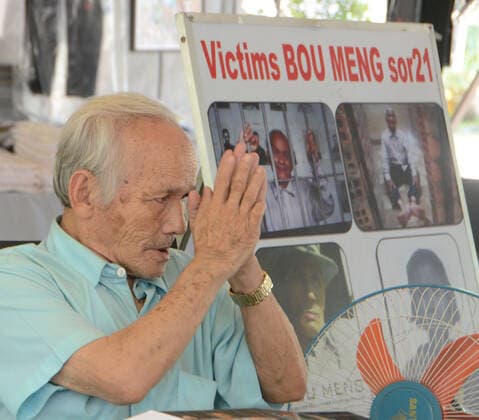
  • February 13, 2017, Phnom Penh, Cambodia: Vice Media has admitted to digitally altering photos of prisoners held by the Khmer Rouge at the infamous Tuol Sleng or S-21 prison in Phnom Penh, Cambodia. Some of the photos were colorized by Vice and edited to show victims smiling. BOU MENG, a survivor of the prison, a former high school, is shown Tuesday, February 13, 2017, signing books for visitors to the site. Phnom Penh Cambodia - ZUMAh154 20170213_znp_h154_002 Copyright: xMarkxHertzbergx
    February 13, 2017, Phnom Penh, Cambodia: Vice Media has admitted to digitally altering photos of prisoners held by the Khmer Rouge at the infamous Tuol Sleng or S-21 prison in Phnom Penh, Cambodia. Some of the photos were colorized by Vice and edited to show victims smiling. BOU MENG, a survivor of the prison, a former high school, is shown Tuesday, February 13, 2017, signing books for visitors to the site. Phnom Penh Cambodia - ZUMAh154 20170213_znp_h154_002 Copyright: xMarkxHertzbergx

  • The Tuol Sleng Genocide Museum is a former high school used as the notorious Security Prison 21 (S-21) by the Khmer Rouge regime from 1975 to its fall in 1979  Copyright: xLatitudeStockx 14778-8350-1

    The Tuol Sleng Genocide Museum is a former high school used as the notorious Security Prison 21 (S-21) by the Khmer Rouge regime from 1975 to its fall in 1979 Copyright: xLatitudeStockx 14778-8350-1

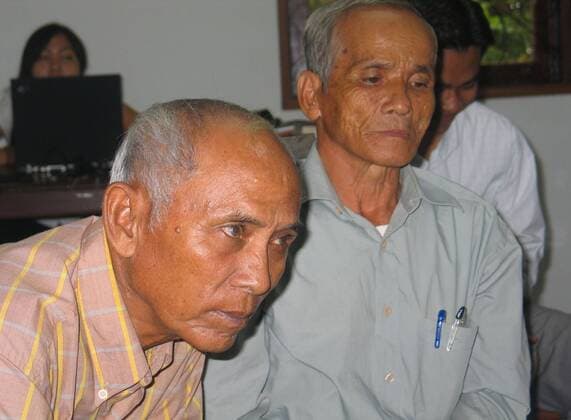
  • Feb. 20, 2007 - U.S. - Chum Mey, front, and Bou Meng, two of three remaining survivors of Tuol Sleng, listen to one of the prison s former torturers describe his work, October 3, 2006, in Phnom Penh, Cambodia. Tuol Sleng was a prison where the Khmer Rouge held, tortured and killed 14,000 Cambodians. ( Philadelphia Inquirer MCT) - ZUMAm67_ 20070220_baf_m67_072 Copyright: xTroyxGrahamx
    Feb. 20, 2007 - U.S. - Chum Mey, front, and Bou Meng, two of three remaining survivors of Tuol Sleng, listen to one of the prison s former torturers describe his work, October 3, 2006, in Phnom Penh, Cambodia. Tuol Sleng was a prison where the Khmer Rouge held, tortured and killed 14,000 Cambodians. ( Philadelphia Inquirer MCT) - ZUMAm67_ 20070220_baf_m67_072 Copyright: xTroyxGrahamx
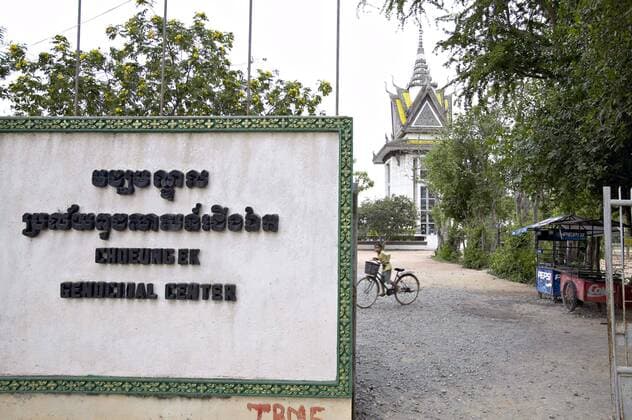
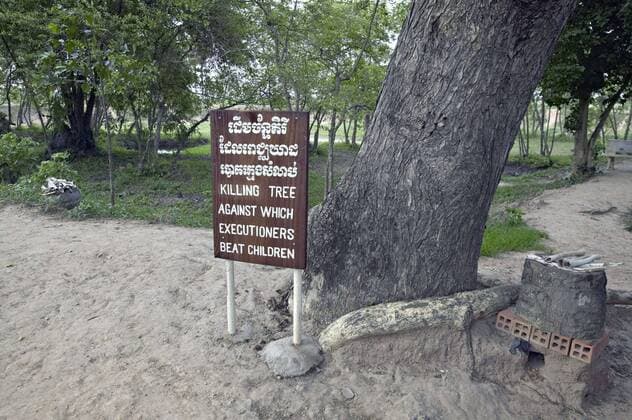
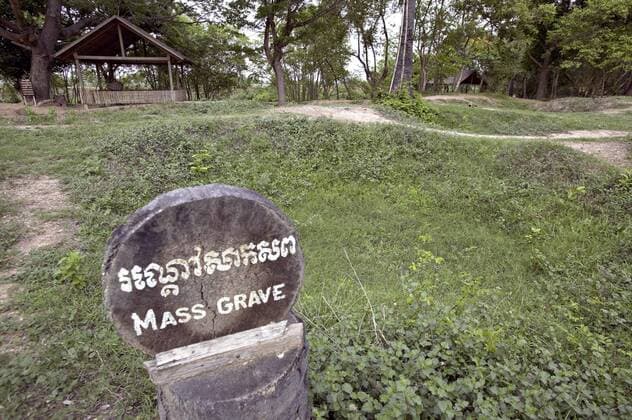
  • May 14, 2006; Phnom Penh, CAMBODIA; The Choeung Ek Memorial Center, a.k.a. the Killing Fields, near Phnom Penh, Cambodia is where thousands of the estimated 1.7 million Cambodians were killed by the Khmer Rouge between 1975-1979. Mandatory - ZUMAn22_ 20060514_nar_n22_270 Copyright: xDangxNgox

    May 14, 2006; Phnom Penh, CAMBODIA; The Choeung Ek Memorial Center, a.k.a. the Killing Fields, near Phnom Penh, Cambodia is where thousands of the estimated 1.7 million Cambodians were killed by the Khmer Rouge between 1975-1979. Mandatory - ZUMAn22_ 20060514_nar_n22_270 Copyright: xDangxNgox

  • May 14, 2006; Phnom Penh, CAMBODIA; The Choeung Ek Memorial Center, a.k.a. the Killing Fields, near Phnom Penh, Cambodia is where thousands of the estimated 1.7 million Cambodians were killed by the Khmer Rouge between 1975-1979. Mandatory - ZUMAn22_ 20060514_nar_n22_266 Copyright: xDangxNgox

    May 14, 2006; Phnom Penh, CAMBODIA; The Choeung Ek Memorial Center, a.k.a. the Killing Fields, near Phnom Penh, Cambodia is where thousands of the estimated 1.7 million Cambodians were killed by the Khmer Rouge between 1975-1979. Mandatory - ZUMAn22_ 20060514_nar_n22_266 Copyright: xDangxNgox

  • May 14, 2006; Phnom Penh, CAMBODIA; The Choeung Ek Memorial Center, a.k.a. the Killing Fields, near Phnom Penh, Cambodia is where thousands of the estimated 1.7 million Cambodians were killed by the Khmer Rouge between 1975-1979. Mandatory - ZUMAn22_ 20060514_nar_n22_265 Copyright: xDangxNgox

    May 14, 2006; Phnom Penh, CAMBODIA; The Choeung Ek Memorial Center, a.k.a. the Killing Fields, near Phnom Penh, Cambodia is where thousands of the estimated 1.7 million Cambodians were killed by the Khmer Rouge between 1975-1979. Mandatory - ZUMAn22_ 20060514_nar_n22_265 Copyright: xDangxNgox

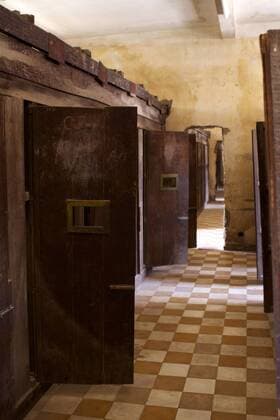
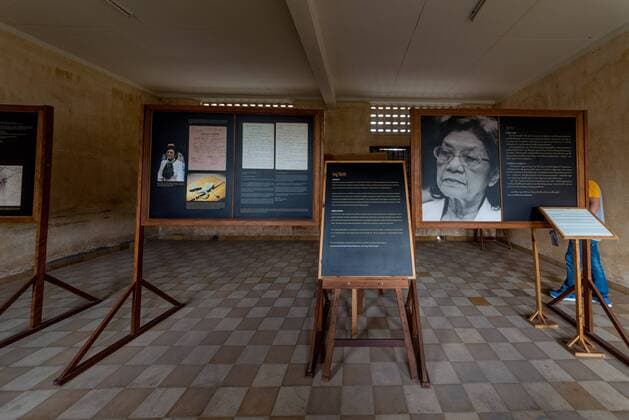
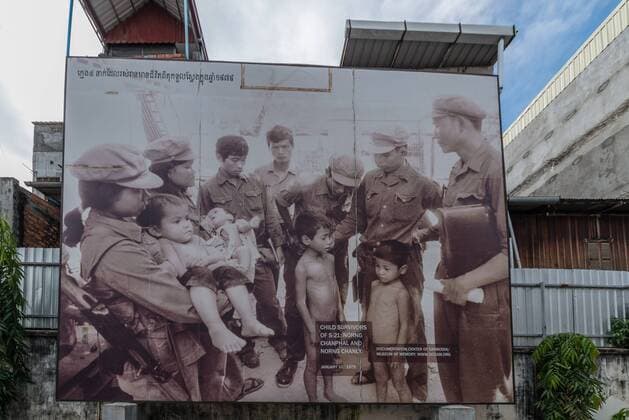
  • Fotostory Tuol Sleng Genozid Museum in Phnom Penh December 18, 2016 - Phnom Penh, Cambodia - In 1975, Tuol Svay Prey High School was taken over by Pol Potâ€⠢s security forces and turned into a prison known as Security Prison 21 (S-21); it soon became the largest centre of detention and torture in the country. Between 1975 and 1978 more than 17,000 people held at S-21 were taken to the killing fields of Choeung Ek. Phnom Penh Cambodia - ZUMAg173 20161218_zap_g173_051

    Fotostory Tuol Sleng Genozid Museum in Phnom Penh December 18, 2016 - Phnom Penh, Cambodia - In 1975, Tuol Svay Prey High School was taken over by Pol Potâ€⠢s security forces and turned into a prison known as Security Prison 21 (S-21); it soon became the largest centre of detention and torture in the country. Between 1975 and 1978 more than 17,000 people held at S-21 were taken to the killing fields of Choeung Ek. Phnom Penh Cambodia - ZUMAg173 20161218_zap_g173_051

  • Fotostory Tuol Sleng Genozid Museum in Phnom Penh December 18, 2016 - Phnom Penh, Cambodia - In 1975, Tuol Svay Prey High School was taken over by Pol Potâ€⠢s security forces and turned into a prison known as Security Prison 21 (S-21); it soon became the largest centre of detention and torture in the country. Between 1975 and 1978 more than 17,000 people held at S-21 were taken to the killing fields of Choeung Ek. Phnom Penh Cambodia - ZUMAg173 20161218_zap_g173_046

    Fotostory Tuol Sleng Genozid Museum in Phnom Penh December 18, 2016 - Phnom Penh, Cambodia - In 1975, Tuol Svay Prey High School was taken over by Pol Potâ€⠢s security forces and turned into a prison known as Security Prison 21 (S-21); it soon became the largest centre of detention and torture in the country. Between 1975 and 1978 more than 17,000 people held at S-21 were taken to the killing fields of Choeung Ek. Phnom Penh Cambodia - ZUMAg173 20161218_zap_g173_046

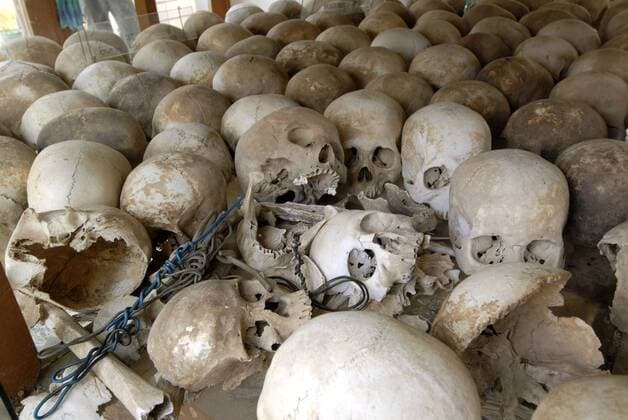
  • Totenschädel in der Gedenkstätte Choeung Ek südlich von Phnom Penh (Kambodscha) am 29.3.2008. Der ehemalige Ort von Massenhinrichtungen erinnert heute an den Völkermord des Pol Pot-Regimes. Dem Terror-Regime der Roten Khmer sind zwischen 1975 und 1979 rund zwei Millionen Menschen zum Opfer gefallen. DER ABDRUCK DES EPD-FOTOS IST HONORARPFLICHTIG! Gedenkstätte Choeung Ek bei Phnom Penh (Kambodscha) 258546 EDITORIAL USE ONLY

    Totenschädel in der Gedenkstätte Choeung Ek südlich von Phnom Penh (Kambodscha) am 29.3.2008. Der ehemalige Ort von Massenhinrichtungen erinnert heute an den Völkermord des Pol Pot-Regimes. Dem Terror-Regime der Roten Khmer sind zwischen 1975 und 1979 rund zwei Millionen Menschen zum Opfer gefallen. DER ABDRUCK DES EPD-FOTOS IST HONORARPFLICHTIG! Gedenkstätte Choeung Ek bei Phnom Penh (Kambodscha) 258546 EDITORIAL USE ONLY

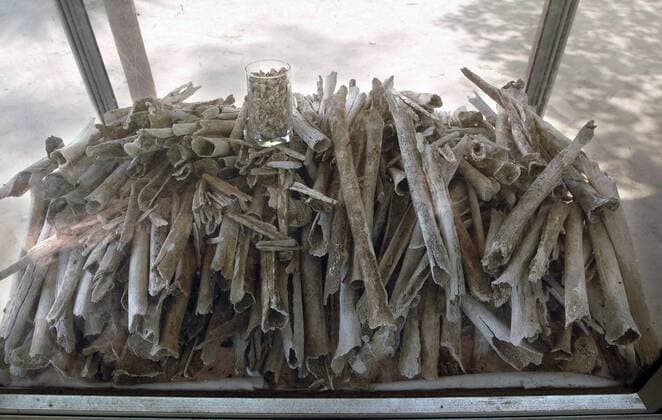
  • Knochen von Ermordeten in der Gedenkstätte Choeung Ek südlich von Phnom Penh (Kambodscha) am 29.3.2008. Der ehemalige Ort von Massenhinrichtungen erinnert heute an den Völkermord des Pol Pot-Regimes. Dem Terror-Regime der Roten Khmer sind zwischen 1975 und 1979 rund zwei Millionen Menschen zum Opfer gefallen. DER ABDRUCK DES EPD-FOTOS IST HONORARPFLICHTIG! Gedenkstätte Choeung Ek bei Phnom Penh (Kambodscha) 258046 EDITORIAL USE ONLY

    Knochen von Ermordeten in der Gedenkstätte Choeung Ek südlich von Phnom Penh (Kambodscha) am 29.3.2008. Der ehemalige Ort von Massenhinrichtungen erinnert heute an den Völkermord des Pol Pot-Regimes. Dem Terror-Regime der Roten Khmer sind zwischen 1975 und 1979 rund zwei Millionen Menschen zum Opfer gefallen. DER ABDRUCK DES EPD-FOTOS IST HONORARPFLICHTIG! Gedenkstätte Choeung Ek bei Phnom Penh (Kambodscha) 258046 EDITORIAL USE ONLY

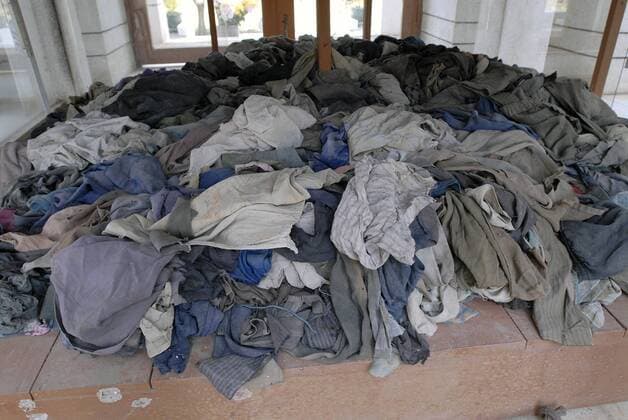
  • Kleidungsstücke von Ermordeten in der Gedenkstätte Choeung Ek südlich von Phnom Penh (Kambodscha) am 29.3.2008. Der ehemalige Ort von Massenhinrichtungen erinnert heute an den Völkermord des Pol Pot-Regimes. Dem Terror-Regime der Roten Khmer sind zwischen 1975 und 1979 rund zwei Millionen Menschen zum Opfer gefallen. DER ABDRUCK DES EPD-FOTOS IST HONORARPFLICHTIG! Gedenkstätte Choeung Ek bei Phnom Penh (Kambodscha) 258037 EDITORIAL USE ONLY

    Kleidungsstücke von Ermordeten in der Gedenkstätte Choeung Ek südlich von Phnom Penh (Kambodscha) am 29.3.2008. Der ehemalige Ort von Massenhinrichtungen erinnert heute an den Völkermord des Pol Pot-Regimes. Dem Terror-Regime der Roten Khmer sind zwischen 1975 und 1979 rund zwei Millionen Menschen zum Opfer gefallen. DER ABDRUCK DES EPD-FOTOS IST HONORARPFLICHTIG! Gedenkstätte Choeung Ek bei Phnom Penh (Kambodscha) 258037 EDITORIAL USE ONLY

Page 2 of 2
Collections