EditorialCreativeSportsCollectionsVideos
Prices
0Log in

Visual content for professionals.
800M+ images and videos.

Content Hub

  • Current Events
  • Pictures of the Year
  • Sports
  • Editorial
  • Creative
  • Collections
  • Videos

Offers

  • Prices & Packages
  • Promotions
  • Enterprise
  • Newsletter
  • Blog
  • The Game Magazine

Services

  • Content Research
  • Contract Photography
  • API & FTP Push
  • my-picturemaxx
  • Become a Partner

Company

  • About IMAGO
  • Careers
  • News

Help Center

  • FAQ
  • Contact Us
Legal NoticeTerms & ConditionsLicense InformationData PrivacyPrivacy Settings
© 2026 IMAGO
CEPICBAPLABVPA
  1. IMAGO International History, End of the Vietnam War, 50th anniversary on 30 April

IMAGO International History, End of the Vietnam War, 50th anniversary on 30 April

Apr 30, 2025

The following photos have been selected for you by the IMAGO picture desk on this topic. For more pictures please use the search function.

Images in this collection
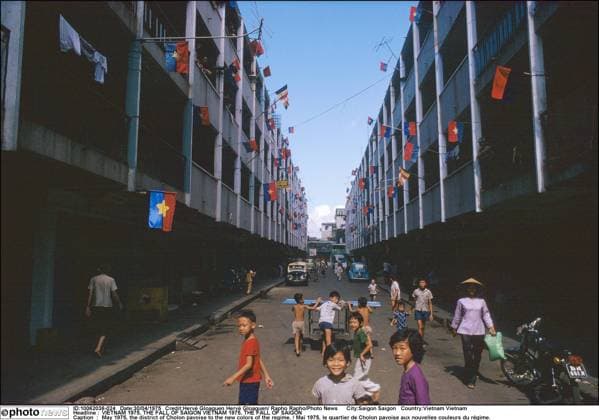
  • VIETNAM 1975, THE FALL OF SAIGON VIETNAM 1975, THE FALL OF SAIGON May 1975, the district of Cholon pavoise to the new colors of the regime. Mai 1975, le quartier de Cholon pavoise aux nouvelles couleurs du régime. Saigon Saigon Vietnam Vietnam  Copyright: xHervéxGloaguenxHervéxGloaguenx

    VIETNAM 1975, THE FALL OF SAIGON VIETNAM 1975, THE FALL OF SAIGON May 1975, the district of Cholon pavoise to the new colors of the regime. Mai 1975, le quartier de Cholon pavoise aux nouvelles couleurs du régime. Saigon Saigon Vietnam Vietnam Copyright: xHervéxGloaguenxHervéxGloaguenx

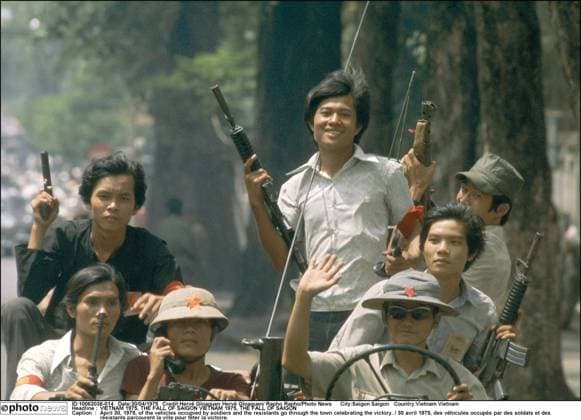
  • VIETNAM 1975, THE FALL OF SAIGON VIETNAM 1975, THE FALL OF SAIGON April 30, 1975, of the vehicles occupied by soldiers and the resistants go through the town celebrating the victory. 30 avril 1975, des véhicules occupés par des soldats et des résistants parcourent la ville pour fêter la victoire. Saigon Saigon Vietnam Vietnam  Copyright: xHervéxGloaguenxHervéxGloaguenx

    VIETNAM 1975, THE FALL OF SAIGON VIETNAM 1975, THE FALL OF SAIGON April 30, 1975, of the vehicles occupied by soldiers and the resistants go through the town celebrating the victory. 30 avril 1975, des véhicules occupés par des soldats et des résistants parcourent la ville pour fêter la victoire. Saigon Saigon Vietnam Vietnam Copyright: xHervéxGloaguenxHervéxGloaguenx

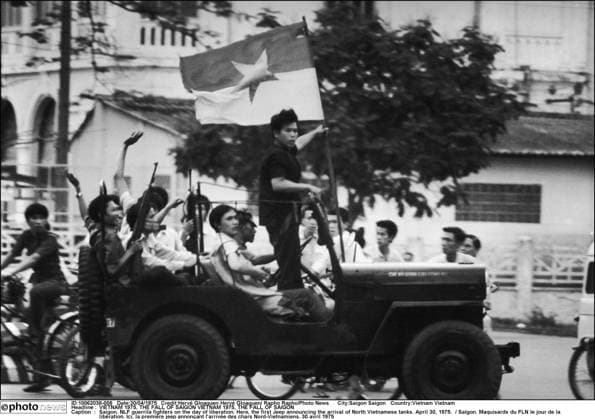
  • VIETNAM 1975, THE FALL OF SAIGON VIETNAM 1975, THE FALL OF SAIGON Saigon. NLF guerrila fighters on the day of liberation. Here, the first Jeep announcing the arrival of North Vietnamese tanks. April 30, 1975. Saïgon. Maquisards du FLN le jour de la libération. Ici, la première jeep annonçant l arrivée des chars Nord-Vietnamiens. 30 avril 1975 Saigon Saigon Vietnam Vietnam  Copyright: xHervéxGloaguenxHervéxGloaguenx

    VIETNAM 1975, THE FALL OF SAIGON VIETNAM 1975, THE FALL OF SAIGON Saigon. NLF guerrila fighters on the day of liberation. Here, the first Jeep announcing the arrival of North Vietnamese tanks. April 30, 1975. Saïgon. Maquisards du FLN le jour de la libération. Ici, la première jeep annonçant l arrivée des chars Nord-Vietnamiens. 30 avril 1975 Saigon Saigon Vietnam Vietnam Copyright: xHervéxGloaguenxHervéxGloaguenx

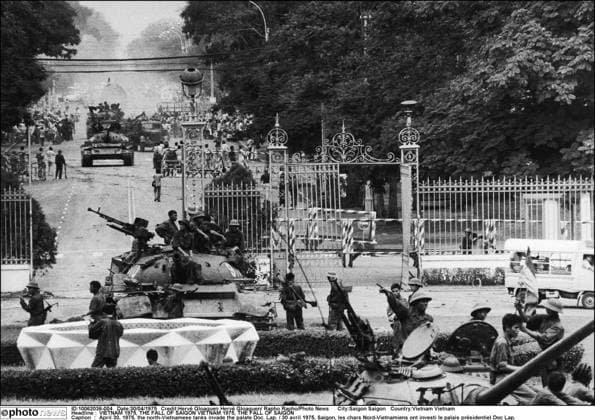
  • VIETNAM 1975, THE FALL OF SAIGON VIETNAM 1975, THE FALL OF SAIGON April 30, 1975, the north-Vietnamese tanks invade the palate Doc. Lap. 30 avril 1975, Saïgon, les chars Nord-Vietnamiens ont investi le palais présidentiel Doc Lap. Saigon Saigon Vietnam Vietnam  Copyright: xHervéxGloaguenxHervéxGloaguenx

    VIETNAM 1975, THE FALL OF SAIGON VIETNAM 1975, THE FALL OF SAIGON April 30, 1975, the north-Vietnamese tanks invade the palate Doc. Lap. 30 avril 1975, Saïgon, les chars Nord-Vietnamiens ont investi le palais présidentiel Doc Lap. Saigon Saigon Vietnam Vietnam Copyright: xHervéxGloaguenxHervéxGloaguenx

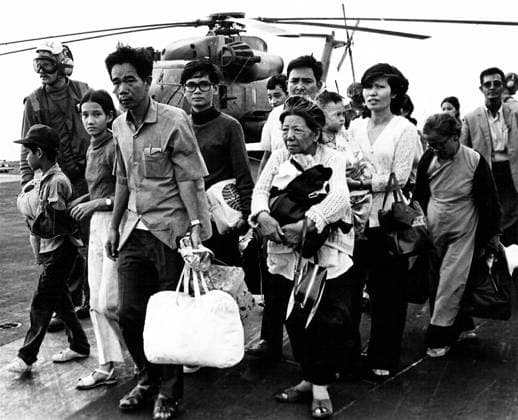
  • Vietnam: Vietnamese refugees evacuated by helicopter arriving aboard the USS Midway, Fall of Saigon, 29 April 1975 The Fall of Saigon was the capture of Saigon, the capital of South Vietnam, by the People s Army of Vietnam and the National Liberation Front of South Vietnam (also known as the Viet Cong) on April 30, 1975. The event marked the end of the Vietnam War and the start of a transition period leading to the formal reunification of Vietnam into a Socialist Republic governed by the Communist Party.<br ><br > North Vietnamese forces under the command of the General Van Tien Dung began their final attack on Saigon, with South Vietnamese forces commanded by General Nguyen Van Toan, on April 29, suffering heavy artillery bombardment. By Copyright: xxPicturesxFromxHistoryx

    Vietnam: Vietnamese refugees evacuated by helicopter arriving aboard the USS Midway, Fall of Saigon, 29 April 1975 The Fall of Saigon was the capture of Saigon, the capital of South Vietnam, by the People s Army of Vietnam and the National Liberation Front of South Vietnam (also known as the Viet Cong) on April 30, 1975. The event marked the end of the Vietnam War and the start of a transition period leading to the formal reunification of Vietnam into a Socialist Republic governed by the Communist Party.<br ><br > North Vietnamese forces under the command of the General Van Tien Dung began their final attack on Saigon, with South Vietnamese forces commanded by General Nguyen Van Toan, on April 29, suffering heavy artillery bombardment. By Copyright: xxPicturesxFromxHistoryx

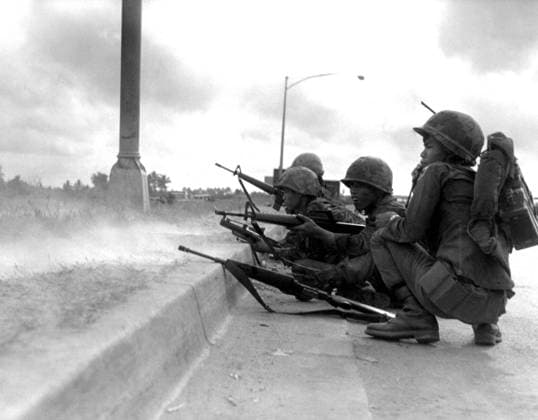
  • Vietnam: Army of the Republic of Vietnam (ARVN) rangers defending Saigon during the Tet Offensive of January-February 1968 The Tet Offensive was a military campaign during the Vietnam War that began on January 31, 1968. Regular and irregular forces of the People s Army of Vietnam, as well as NLF (Viet Cong) resistance fighters, fought against the forces of the Republic of Vietnam (South Vietnam), the United States, and their allies.<br ><br > The purpose of the offensive was to strike military and civilian command and control centers throughout South Vietnam and to spark a general uprising among the population that would then topple the Saigon government, thus ending the war in a single blow. Although the offensive failed militarily, it su Copyright: xxPicturesxFromxHistoryx

    Vietnam: Army of the Republic of Vietnam (ARVN) rangers defending Saigon during the Tet Offensive of January-February 1968 The Tet Offensive was a military campaign during the Vietnam War that began on January 31, 1968. Regular and irregular forces of the People s Army of Vietnam, as well as NLF (Viet Cong) resistance fighters, fought against the forces of the Republic of Vietnam (South Vietnam), the United States, and their allies.<br ><br > The purpose of the offensive was to strike military and civilian command and control centers throughout South Vietnam and to spark a general uprising among the population that would then topple the Saigon government, thus ending the war in a single blow. Although the offensive failed militarily, it su Copyright: xxPicturesxFromxHistoryx

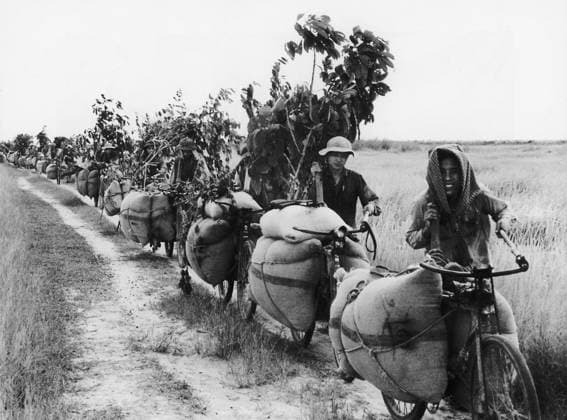
  • Vietnam: Transporting food for the frontline, Cu Chi, South Vietnam, Second Indochina War (Vietnam War) (1972) The Second Indochina War, known in America as the Vietnam War, was a Cold War era military conflict that occurred in Vietnam, Laos, and Cambodia from 1 November 1955 to the fall of Saigon on 30 April 1975. This war followed the First Indochina War and was fought between North Vietnam, supported by its communist allies, and the government of South Vietnam, supported by the U.S. and other anti-communist nations. The U.S. government viewed involvement in the war as a way to prevent a communist takeover of South Vietnam and part of their wider strategy of containment.<br ><br > The North Vietnamese government viewed the war as a colon Copyright: xxPicturesxFromxHistoryx
    Vietnam: Transporting food for the frontline, Cu Chi, South Vietnam, Second Indochina War (Vietnam War) (1972) The Second Indochina War, known in America as the Vietnam War, was a Cold War era military conflict that occurred in Vietnam, Laos, and Cambodia from 1 November 1955 to the fall of Saigon on 30 April 1975. This war followed the First Indochina War and was fought between North Vietnam, supported by its communist allies, and the government of South Vietnam, supported by the U.S. and other anti-communist nations. The U.S. government viewed involvement in the war as a way to prevent a communist takeover of South Vietnam and part of their wider strategy of containment.<br ><br > The North Vietnamese government viewed the war as a colon Copyright: xxPicturesxFromxHistoryx

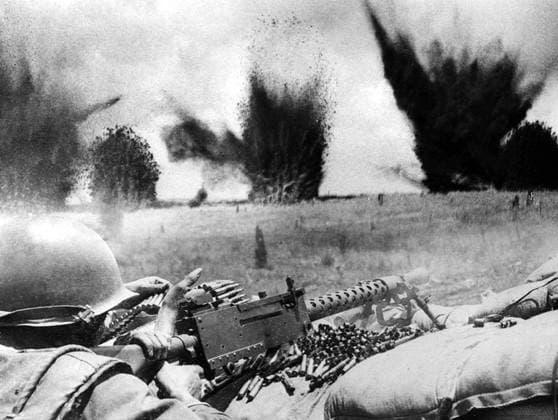
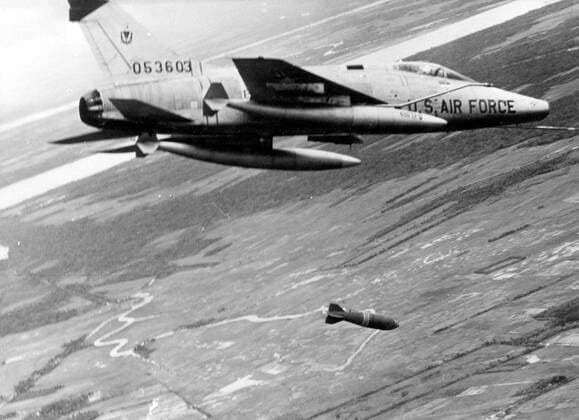
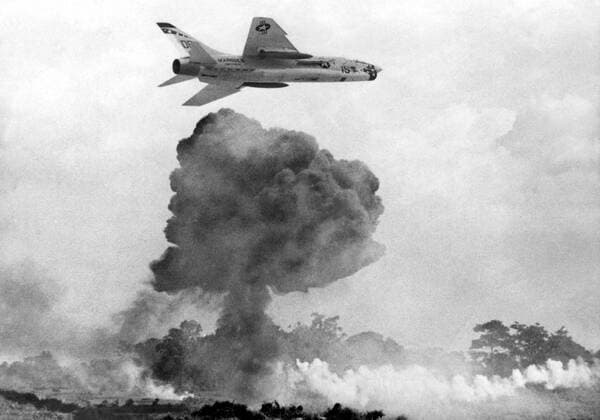
  • Vietnam: U.S. Air Force bombs create a curtain of flying shrapnel and debris barely 200 feet beyond the perimeter of Khe Sanh during the siege of the U.S. Marine base, March 1968. Photo by Nguyen Ngoc Hang (ARVN) (CC BY-SA 3.0 License) Khe Sanh is the district capital of Hướng Hoa District, Quảng Trị Province, Vietnam, located 63 km west of Đà ng Hà .<br ><br > Khe Sanh Combat Base was a United States Marine Corps outpost in South Vietnam (MGRS 48QXD850418) used during the Vietnam War. The airstrip was built in September 1962. Fighting began there in late April of 1967 known as the Hill Fights , which later expanded into the 1968 Battle of Khe Sanh. U.S. commanders hoped that the North Vietnamese Army would attempt to repeat thei Copyright: xNguyenxNgocxHangx(ARVN)x(CCxBY-SxPicturesxFromxHistoryx

    Vietnam: U.S. Air Force bombs create a curtain of flying shrapnel and debris barely 200 feet beyond the perimeter of Khe Sanh during the siege of the U.S. Marine base, March 1968. Photo by Nguyen Ngoc Hang (ARVN) (CC BY-SA 3.0 License) Khe Sanh is the district capital of Hướng Hoa District, Quảng Trị Province, Vietnam, located 63 km west of Đà ng Hà .<br ><br > Khe Sanh Combat Base was a United States Marine Corps outpost in South Vietnam (MGRS 48QXD850418) used during the Vietnam War. The airstrip was built in September 1962. Fighting began there in late April of 1967 known as the Hill Fights , which later expanded into the 1968 Battle of Khe Sanh. U.S. commanders hoped that the North Vietnamese Army would attempt to repeat thei Copyright: xNguyenxNgocxHangx(ARVN)x(CCxBY-SxPicturesxFromxHistoryx

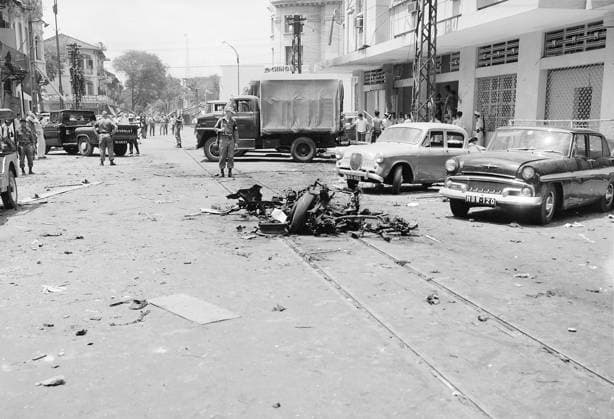
  • Vietnam: Aftermath of a street bombing attributed to the NLF (Viet Cong) in Saigon, c. 1965. The Second Indochina War, known in America as the Vietnam War, was a Cold War era military conflict that occurred in Vietnam, Laos, and Cambodia from 1 November 1955 to the fall of Saigon on 30 April 1975. This war followed the First Indochina War and was fought between North Vietnam, supported by its communist allies, and the government of South Vietnam, supported by the U.S. and other anti-communist nations. The U.S. government viewed involvement in the war as a way to prevent a communist takeover of South Vietnam and part of their wider strategy of containment.<br ><br > The North Vietnamese government viewed the war as a colonial war, fought in Copyright: xxPicturesxFromxHistoryx

    Vietnam: Aftermath of a street bombing attributed to the NLF (Viet Cong) in Saigon, c. 1965. The Second Indochina War, known in America as the Vietnam War, was a Cold War era military conflict that occurred in Vietnam, Laos, and Cambodia from 1 November 1955 to the fall of Saigon on 30 April 1975. This war followed the First Indochina War and was fought between North Vietnam, supported by its communist allies, and the government of South Vietnam, supported by the U.S. and other anti-communist nations. The U.S. government viewed involvement in the war as a way to prevent a communist takeover of South Vietnam and part of their wider strategy of containment.<br ><br > The North Vietnamese government viewed the war as a colonial war, fought in Copyright: xxPicturesxFromxHistoryx

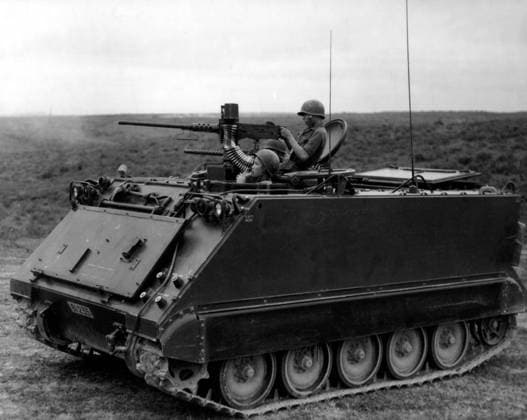
  • Vietnam: Army of the Republic of Vietnam (ARVN) troops in a M113 armoured vehicle. The Second Indochina War, known in America as the Vietnam War, was a Cold War era military conflict that occurred in Vietnam, Laos, and Cambodia from 1 November 1955 to the fall of Saigon on 30 April 1975. This war followed the First Indochina War and was fought between North Vietnam, supported by its communist allies, and the government of South Vietnam, supported by the U.S. and other anti-communist nations. The U.S. government viewed involvement in the war as a way to prevent a communist takeover of South Vietnam and part of their wider strategy of containment.<br ><br > The North Vietnamese government viewed the war as a colonial war, fought initially ag Copyright: xxPicturesxFromxHistoryx

    Vietnam: Army of the Republic of Vietnam (ARVN) troops in a M113 armoured vehicle. The Second Indochina War, known in America as the Vietnam War, was a Cold War era military conflict that occurred in Vietnam, Laos, and Cambodia from 1 November 1955 to the fall of Saigon on 30 April 1975. This war followed the First Indochina War and was fought between North Vietnam, supported by its communist allies, and the government of South Vietnam, supported by the U.S. and other anti-communist nations. The U.S. government viewed involvement in the war as a way to prevent a communist takeover of South Vietnam and part of their wider strategy of containment.<br ><br > The North Vietnamese government viewed the war as a colonial war, fought initially ag Copyright: xxPicturesxFromxHistoryx

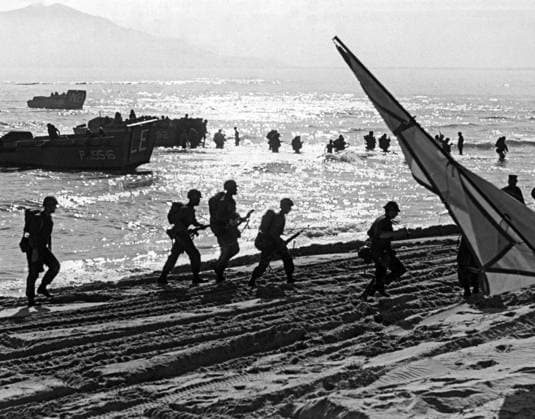
  • Vietnam: First US Marines wading ashore near Da Nang Air Base, South Vietnam, 1965. The Second Indochina War, known in America as the Vietnam War, was a Cold War era military conflict that occurred in Vietnam, Laos, and Cambodia from 1 November 1955 to the fall of Saigon on 30 April 1975. This war followed the First Indochina War and was fought between North Vietnam, supported by its communist allies, and the government of South Vietnam, supported by the U.S. and other anti-communist nations. The U.S. government viewed involvement in the war as a way to prevent a communist takeover of South Vietnam and part of their wider strategy of containment.<br ><br > The North Vietnamese government viewed the war as a colonial war, fought initially a Copyright: xxPicturesxFromxHistoryx
    Vietnam: First US Marines wading ashore near Da Nang Air Base, South Vietnam, 1965. The Second Indochina War, known in America as the Vietnam War, was a Cold War era military conflict that occurred in Vietnam, Laos, and Cambodia from 1 November 1955 to the fall of Saigon on 30 April 1975. This war followed the First Indochina War and was fought between North Vietnam, supported by its communist allies, and the government of South Vietnam, supported by the U.S. and other anti-communist nations. The U.S. government viewed involvement in the war as a way to prevent a communist takeover of South Vietnam and part of their wider strategy of containment.<br ><br > The North Vietnamese government viewed the war as a colonial war, fought initially a Copyright: xxPicturesxFromxHistoryx

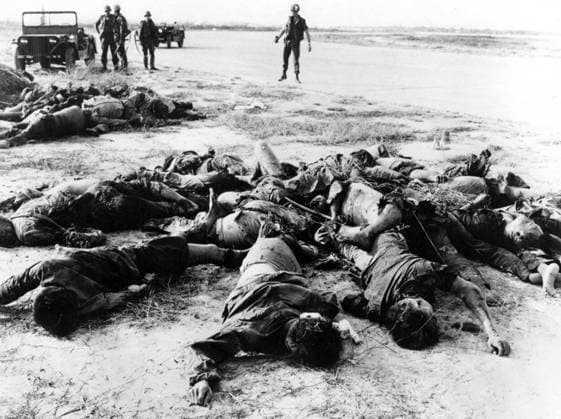
  • Vietnam: Bodies of dead NLF (Viet Cong) guerrillas lying piled up at Tan Son Nhat Airport, Saigon, February 1968 The Tet Offensive was a military campaign during the Second Indochina War that began on January 31, 1968. Forces of the National Liberation Front for South Vietnam (NLF, or Viet Cong), and the People s Army of Vietnam (the North Vietnamese army), fought against the forces of the Republic of Vietnam (South Vietnam), the United States, and their allies. The purpose of the offensive was to strike military and civilian command and control centers throughout South Vietnam and to spark a general uprising among the population that would then topple the Saigon government, thus ending the war in a single blow. Copyright: xxPicturesxFromxHistoryx

    Vietnam: Bodies of dead NLF (Viet Cong) guerrillas lying piled up at Tan Son Nhat Airport, Saigon, February 1968 The Tet Offensive was a military campaign during the Second Indochina War that began on January 31, 1968. Forces of the National Liberation Front for South Vietnam (NLF, or Viet Cong), and the People s Army of Vietnam (the North Vietnamese army), fought against the forces of the Republic of Vietnam (South Vietnam), the United States, and their allies. The purpose of the offensive was to strike military and civilian command and control centers throughout South Vietnam and to spark a general uprising among the population that would then topple the Saigon government, thus ending the war in a single blow. Copyright: xxPicturesxFromxHistoryx

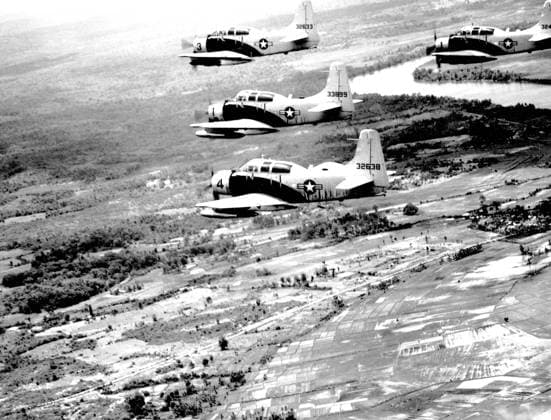
  • Vietnam: A-1E Skyraider aircraft of the 34th Tactical Group, based at Bien Hoa, South Vietnam, fly in formation over South Vietnam on way to target on June 25, 1965 The Second Indochina War, known in America as the Vietnam War, was a Cold War era military conflict that occurred in Vietnam, Laos, and Cambodia from 1 November 1955 to the fall of Saigon on 30 April 1975. This war followed the First Indochina War and was fought between North Vietnam, supported by its communist allies, and the government of South Vietnam, supported by the U.S. and other anti-communist nations. The U.S. government viewed involvement in the war as a way to prevent a communist takeover of South Vietnam and part of their wider strategy of containment.<br ><br > The Copyright: xxPicturesxFromxHistoryx
    Vietnam: A-1E Skyraider aircraft of the 34th Tactical Group, based at Bien Hoa, South Vietnam, fly in formation over South Vietnam on way to target on June 25, 1965 The Second Indochina War, known in America as the Vietnam War, was a Cold War era military conflict that occurred in Vietnam, Laos, and Cambodia from 1 November 1955 to the fall of Saigon on 30 April 1975. This war followed the First Indochina War and was fought between North Vietnam, supported by its communist allies, and the government of South Vietnam, supported by the U.S. and other anti-communist nations. The U.S. government viewed involvement in the war as a way to prevent a communist takeover of South Vietnam and part of their wider strategy of containment.<br ><br > The Copyright: xxPicturesxFromxHistoryx

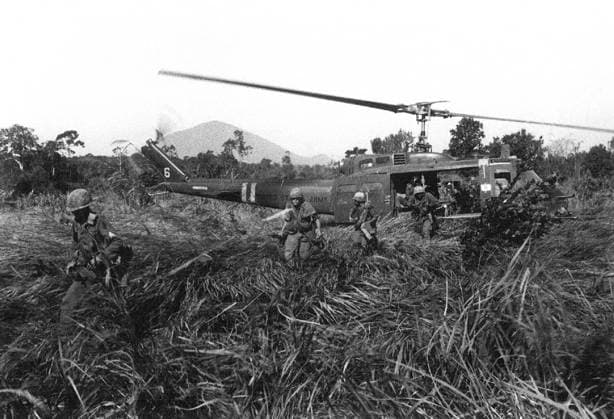
  • RECORD DATE NOT STATED Vietnam: US infantry attacking from a Huey UH-1D helicopter, Central Highlands, 1966 The Second Indochina War, known in America as the Vietnam War, was a Cold War era military conflict that occurred in Vietnam, Laos, and Cambodia from 1 November 1955 to the fall of Saigon on 30 April 1975. This war followed the First Indochina War and was fought between North Vietnam, supported by its communist allies, and the government of South Vietnam, supported by the U.S. and other anti-communist nations. The U.S. government viewed involvement in the war as a way to prevent a communist takeover of South Vietnam and part of their wider strategy of containment.<br ><br > The North Vietnamese government viewed the war as a colonial war, fought initially Copyright: xxPicturesxFromxHistoryx
    RECORD DATE NOT STATED Vietnam: US infantry attacking from a Huey UH-1D helicopter, Central Highlands, 1966 The Second Indochina War, known in America as the Vietnam War, was a Cold War era military conflict that occurred in Vietnam, Laos, and Cambodia from 1 November 1955 to the fall of Saigon on 30 April 1975. This war followed the First Indochina War and was fought between North Vietnam, supported by its communist allies, and the government of South Vietnam, supported by the U.S. and other anti-communist nations. The U.S. government viewed involvement in the war as a way to prevent a communist takeover of South Vietnam and part of their wider strategy of containment.<br ><br > The North Vietnamese government viewed the war as a colonial war, fought initially Copyright: xxPicturesxFromxHistoryx

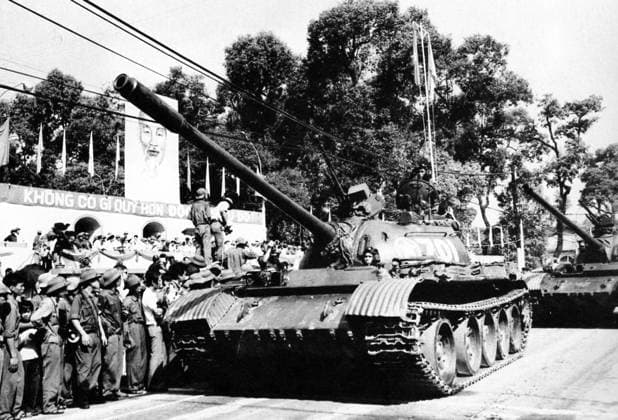
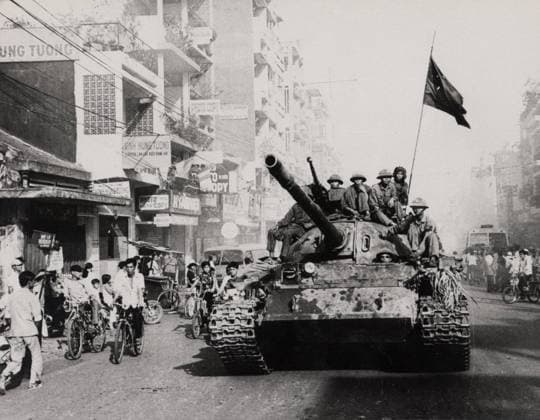
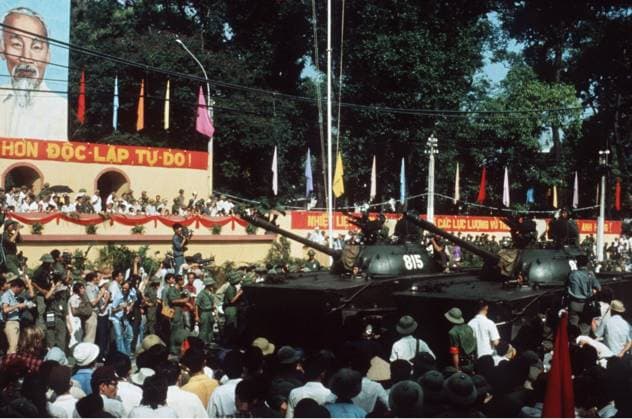
  • RECORD DATE NOT STATED Vietnam: North Vietnamese T54 tanks on a victory parade through the streets of Saigon, April 1975 The Fall of Saigon was the capture liberation of Saigon, the capital of South Vietnam, by the People s Army of Vietnam and the National Liberation Front on April 30, 1975. The event marked the end of the Vietnam War and the start of a transition period leading to the formal reunification of Vietnam under Communist rule.<br ><br > North Vietnamese forces under the command of the Senior General Văn Tiến DÅ ng began their final attack on Saigon, which was commanded by General Nguyen Van Toan on April 29, with a heavy artillery bombardment.<br ><br > By the afternoon of the next day, North Vietnamese troops had occupied the important points Copyright: xxPicturesxFromxHistoryx

    RECORD DATE NOT STATED Vietnam: North Vietnamese T54 tanks on a victory parade through the streets of Saigon, April 1975 The Fall of Saigon was the capture liberation of Saigon, the capital of South Vietnam, by the People s Army of Vietnam and the National Liberation Front on April 30, 1975. The event marked the end of the Vietnam War and the start of a transition period leading to the formal reunification of Vietnam under Communist rule.<br ><br > North Vietnamese forces under the command of the Senior General Văn Tiến DŠng began their final attack on Saigon, which was commanded by General Nguyen Van Toan on April 29, with a heavy artillery bombardment.<br ><br > By the afternoon of the next day, North Vietnamese troops had occupied the important points Copyright: xxPicturesxFromxHistoryx

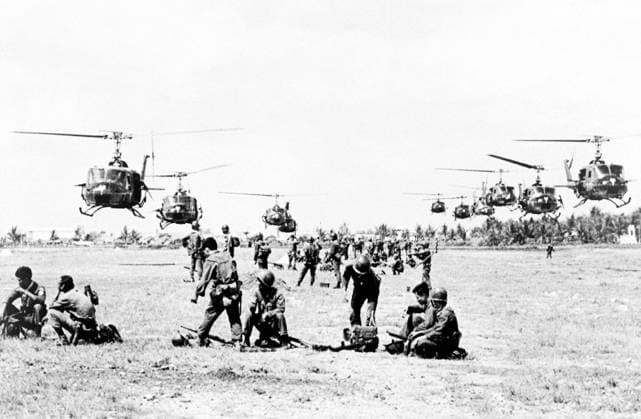
  • RECORD DATE NOT STATED Vietnam: U.S. helicopters arriving to air lift Vietnamese government Rangers of the 43rd battalion into battle against NLF (Viet Cong) guerrillas, Saigon, 1965. The Second Indochina War, known in America as the Vietnam War, was a Cold War era military conflict that occurred in Vietnam, Laos, and Cambodia from 1 November 1955 to the fall of Saigon on 30 April 1975. This war followed the First Indochina War and was fought between North Vietnam, supported by its communist allies, and the government of South Vietnam, supported by the U.S. and other anti-communist nations. The U.S. government viewed involvement in the war as a way to prevent a communist takeover of South Vietnam and part of their wider strategy of containment.<br ><br > The Nor Copyright: xxPicturesxFromxHistoryx

    RECORD DATE NOT STATED Vietnam: U.S. helicopters arriving to air lift Vietnamese government Rangers of the 43rd battalion into battle against NLF (Viet Cong) guerrillas, Saigon, 1965. The Second Indochina War, known in America as the Vietnam War, was a Cold War era military conflict that occurred in Vietnam, Laos, and Cambodia from 1 November 1955 to the fall of Saigon on 30 April 1975. This war followed the First Indochina War and was fought between North Vietnam, supported by its communist allies, and the government of South Vietnam, supported by the U.S. and other anti-communist nations. The U.S. government viewed involvement in the war as a way to prevent a communist takeover of South Vietnam and part of their wider strategy of containment.<br ><br > The Nor Copyright: xxPicturesxFromxHistoryx

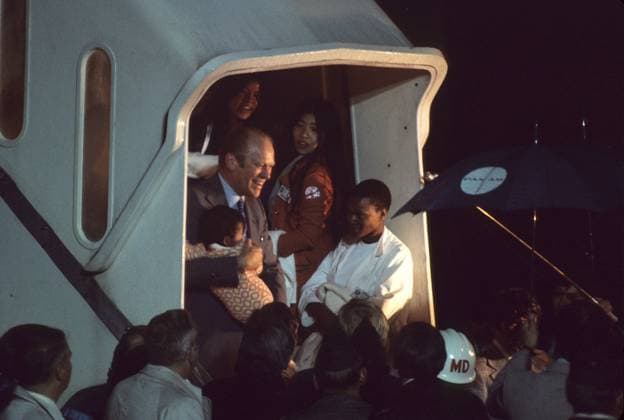
  • Orphans Vietnam A plane full of orphans from Vietnam arrives at Dulles Airport and is greeted by President Ford and their future parents in April 1975 Photograph by Dennis Brack BB23 Dulles Airport VA USA EDITORIAL USE ONLY Copyright: xx x bsphotos031973

    Orphans Vietnam A plane full of orphans from Vietnam arrives at Dulles Airport and is greeted by President Ford and their future parents in April 1975 Photograph by Dennis Brack BB23 Dulles Airport VA USA EDITORIAL USE ONLY Copyright: xx x bsphotos031973

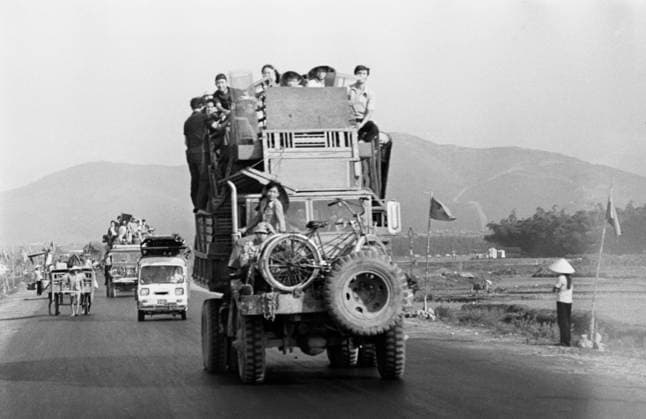
  • April 1-22, 1975. Vietnam. Refugees return to Da Nang via National Route 1A in Quang Nam Province. The exact date and location of the photograph is unknown. Alexander Mineyev TASS  17005434

    April 1-22, 1975. Vietnam. Refugees return to Da Nang via National Route 1A in Quang Nam Province. The exact date and location of the photograph is unknown. Alexander Mineyev TASS 17005434

  • SCANPIX SWEDEN, 1975 The end of the war in Vietnam On 30 April 1975, FNL tanks rolled into the streets of Saigon Vietnams 30-year war was over Saigon Vietnam x20360x  Copyright: xTTx 20360

    SCANPIX SWEDEN, 1975 The end of the war in Vietnam On 30 April 1975, FNL tanks rolled into the streets of Saigon Vietnams 30-year war was over Saigon Vietnam x20360x Copyright: xTTx 20360

  • SCANPIX SWEDEN, 1975 05 14 Military parade in Vietnam The first military parade after the end of the Vietnam War in Ho Chi Minh City Saigon Military parade x20360x  Copyright: xTTx 20360

    SCANPIX SWEDEN, 1975 05 14 Military parade in Vietnam The first military parade after the end of the Vietnam War in Ho Chi Minh City Saigon Military parade x20360x Copyright: xTTx 20360

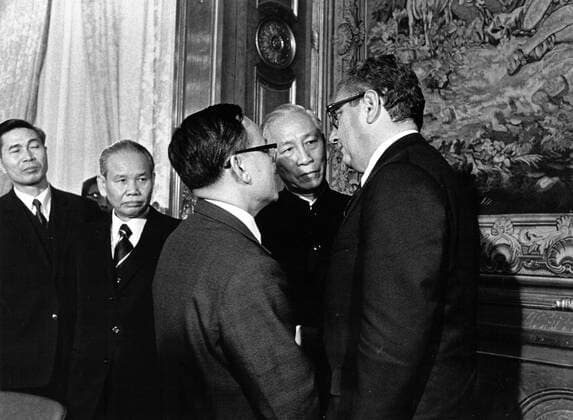
  • January 23, 1973, Paris, USA: In this photo released by the White House from the final meeting in Paris, France on January 23, 1973 at which the cease fire agreement putting an end to the Vietnam War was initialed, chatting together are, from left to right: Nguyen Co Thach, Vice Minister for Foreign Affairs, Democratic Republic of Vietnam (DRV or North Vietnam); Minister Xuan Thuy, DRV Chief of Delegation to Paris Peace Conference; Nguyen Dinh Phung, interpreter; Le Duc Tho, Special Advisor to DRV Delegation to Paris; and Dr. Henry Kissinger..Mandatory Credit: Robert L. Knudsen White House via CNP Paris USA - ZUMAs152 19730123_zaa_s152_004 Copyright: xRobertxL.xKnudsenx-xWhitexHousex
    January 23, 1973, Paris, USA: In this photo released by the White House from the final meeting in Paris, France on January 23, 1973 at which the cease fire agreement putting an end to the Vietnam War was initialed, chatting together are, from left to right: Nguyen Co Thach, Vice Minister for Foreign Affairs, Democratic Republic of Vietnam (DRV or North Vietnam); Minister Xuan Thuy, DRV Chief of Delegation to Paris Peace Conference; Nguyen Dinh Phung, interpreter; Le Duc Tho, Special Advisor to DRV Delegation to Paris; and Dr. Henry Kissinger..Mandatory Credit: Robert L. Knudsen White House via CNP Paris USA - ZUMAs152 19730123_zaa_s152_004 Copyright: xRobertxL.xKnudsenx-xWhitexHousex
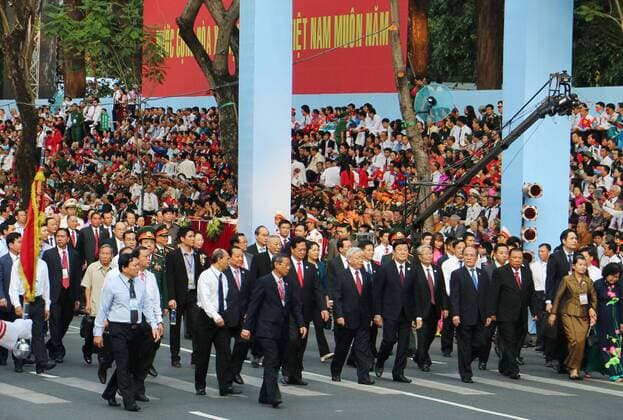
  • 40th anniversary of Vietnam War s end The Vietnamese leadership arrives in Ho Chi Minh City on April 30, 2015, for a ceremony marking the 40th anniversary of the fall of Saigon, now Ho Chi Minh City, and the end of Vietnam War.

    40th anniversary of Vietnam War s end The Vietnamese leadership arrives in Ho Chi Minh City on April 30, 2015, for a ceremony marking the 40th anniversary of the fall of Saigon, now Ho Chi Minh City, and the end of Vietnam War.

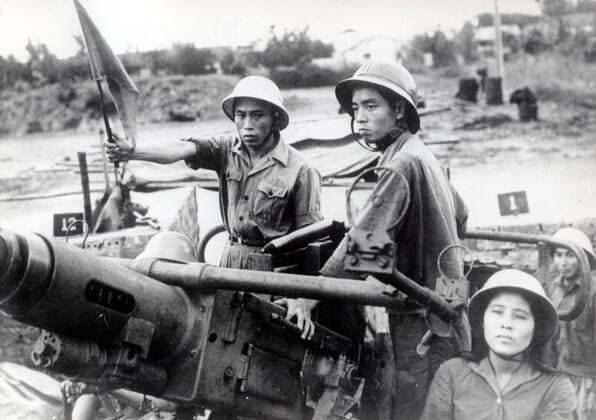
  • Feb 15, 1969 - Hanoi, Vietnam - Vietnam War, also known as the Second Indochina War was a military struggle fought in Vietnam from 1959 to 1975, involving the North Vietnamese and the National Liberation Front (NLF) in conflict with United States forces and the South Vietnamese army. After Vietnamese had struggled for their independence from France during the First Indochina War, the country was temporarily divided into Communist North and non-Communist South Vietnam. The United States became involved in Vietnam because according to domino theory American policymakers believed that if the entire country fell under a Communist government, Communism would spread throughout Southeast Asia. The Vietnam War was a cause of much controversy in the United States. What began as a small group of advisors under President Dwight Eisenhower ended up with over a total of 2.5 million American troops  - ZUMAk09

    Feb 15, 1969 - Hanoi, Vietnam - Vietnam War, also known as the Second Indochina War was a military struggle fought in Vietnam from 1959 to 1975, involving the North Vietnamese and the National Liberation Front (NLF) in conflict with United States forces and the South Vietnamese army. After Vietnamese had struggled for their independence from France during the First Indochina War, the country was temporarily divided into Communist North and non-Communist South Vietnam. The United States became involved in Vietnam because according to domino theory American policymakers believed that if the entire country fell under a Communist government, Communism would spread throughout Southeast Asia. The Vietnam War was a cause of much controversy in the United States. What began as a small group of advisors under President Dwight Eisenhower ended up with over a total of 2.5 million American troops - ZUMAk09

  • Jan. 1, 1967 - Hanoi, Vietnam - Vietnam War, also known as the Second Indochina War was a military struggle fought in Vietnam from 1959 to 1975, involving the North Vietnamese and the National Liberation Front (NLF) in conflict with United States forces and the South Vietnamese army. After Vietnamese had struggled for their independence from France during the First Indochina War, the country was temporarily divided into Communist North and non-Communist South Vietnam. The United States became involved in Vietnam because according to domino theory American policymakers believed that if the entire country fell under a Communist government, Communism would spread throughout Southeast Asia. The Vietnam War was a cause of much controversy in the United States. What began as a small group of advisors under President Dwight Eisenhower ended up with over a total of 2.5 million American troops  - ZUMAk09

    Jan. 1, 1967 - Hanoi, Vietnam - Vietnam War, also known as the Second Indochina War was a military struggle fought in Vietnam from 1959 to 1975, involving the North Vietnamese and the National Liberation Front (NLF) in conflict with United States forces and the South Vietnamese army. After Vietnamese had struggled for their independence from France during the First Indochina War, the country was temporarily divided into Communist North and non-Communist South Vietnam. The United States became involved in Vietnam because according to domino theory American policymakers believed that if the entire country fell under a Communist government, Communism would spread throughout Southeast Asia. The Vietnam War was a cause of much controversy in the United States. What began as a small group of advisors under President Dwight Eisenhower ended up with over a total of 2.5 million American troops - ZUMAk09

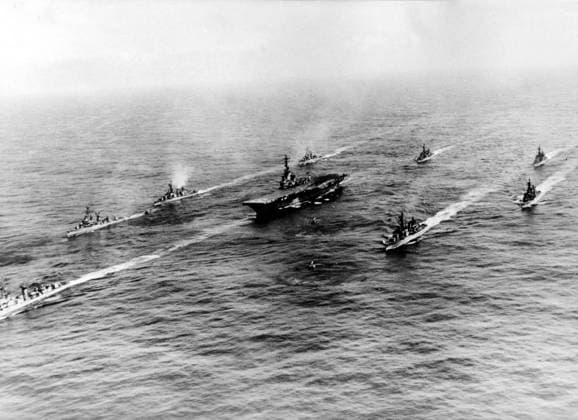
  • Aug. 5, 1964 - Tonkin, Vietnam - Vietnam War, also known as the Second Indochina War was a military struggle fought in Vietnam from 1959 to 1975, involving the North Vietnamese and the National Liberation Front (NLF) in conflict with United States forces and the South Vietnamese army. After Vietnamese had struggled for their independence from France during the First Indochina War, the country was temporarily divided into Communist North and non-Communist South Vietnam. The United States became involved in Vietnam because according to domino theory American policymakers believed that if the entire country fell under a Communist government, Communism would spread throughout Southeast Asia. The Vietnam War was a cause of much controversy in the United States. What began as a small group of advisors under President Dwight Eisenhower ended up with over a total of 2.5 million American troops  - ZUMAk09

    Aug. 5, 1964 - Tonkin, Vietnam - Vietnam War, also known as the Second Indochina War was a military struggle fought in Vietnam from 1959 to 1975, involving the North Vietnamese and the National Liberation Front (NLF) in conflict with United States forces and the South Vietnamese army. After Vietnamese had struggled for their independence from France during the First Indochina War, the country was temporarily divided into Communist North and non-Communist South Vietnam. The United States became involved in Vietnam because according to domino theory American policymakers believed that if the entire country fell under a Communist government, Communism would spread throughout Southeast Asia. The Vietnam War was a cause of much controversy in the United States. What began as a small group of advisors under President Dwight Eisenhower ended up with over a total of 2.5 million American troops - ZUMAk09

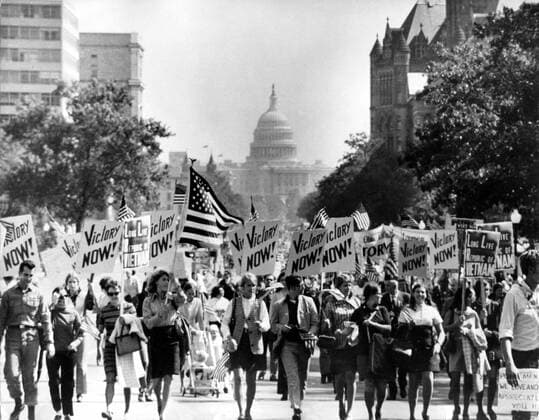
  • Oct 08, 1970 - Washington, District of Columbia, USA - Vietnam War, also known as the Second Indochina War was a military struggle fought in Vietnam from 1959 to 1975, involving the North Vietnamese and the National Liberation Front (NLF) in conflict with United States forces and the South Vietnamese army. After Vietnamese had struggled for their independence from France during the First Indochina War, the country was temporarily divided into Communist North and non-Communist South Vietnam. The United States became involved in Vietnam because according to domino theory American policymakers believed that if the entire country fell under a Communist government, Communism would spread throughout Southeast Asia. The Vietnam War was a cause of much controversy in the United States. What began as a small group of advisors under President Dwight Eisenhower ended up with over a total of 2.5 m  - ZUMAk09

    Oct 08, 1970 - Washington, District of Columbia, USA - Vietnam War, also known as the Second Indochina War was a military struggle fought in Vietnam from 1959 to 1975, involving the North Vietnamese and the National Liberation Front (NLF) in conflict with United States forces and the South Vietnamese army. After Vietnamese had struggled for their independence from France during the First Indochina War, the country was temporarily divided into Communist North and non-Communist South Vietnam. The United States became involved in Vietnam because according to domino theory American policymakers believed that if the entire country fell under a Communist government, Communism would spread throughout Southeast Asia. The Vietnam War was a cause of much controversy in the United States. What began as a small group of advisors under President Dwight Eisenhower ended up with over a total of 2.5 m - ZUMAk09

  • IMAGO History, Vietnamkrieg: 1955-1975 Feb 15, 1969 - Hanoi, Vietnam - Vietnam War, also known as the Second Indochina War was a military struggle fought in Vietnam from 1959 to 1975, involving the North Vietnamese and the National Liberation Front (NLF) in conflict with United States forces and the South Vietnamese army. After Vietnamese had struggled for their independence from France during the First Indochina War, the country was temporarily divided into Communist North and non-Communist South Vietnam. The United States became involved in Vietnam because according to domino theory American policymakers believed that if the entire country fell under a Communist government, Communism would spread throughout Southeast Asia. The Vietnam War was a cause of much controversy in the United States. What began as a small group of advisors under President Dwight Eisenhower ended up with over a total of 2.5 million American troops  - ZUMAk09

    IMAGO History, Vietnamkrieg: 1955-1975 Feb 15, 1969 - Hanoi, Vietnam - Vietnam War, also known as the Second Indochina War was a military struggle fought in Vietnam from 1959 to 1975, involving the North Vietnamese and the National Liberation Front (NLF) in conflict with United States forces and the South Vietnamese army. After Vietnamese had struggled for their independence from France during the First Indochina War, the country was temporarily divided into Communist North and non-Communist South Vietnam. The United States became involved in Vietnam because according to domino theory American policymakers believed that if the entire country fell under a Communist government, Communism would spread throughout Southeast Asia. The Vietnam War was a cause of much controversy in the United States. What began as a small group of advisors under President Dwight Eisenhower ended up with over a total of 2.5 million American troops - ZUMAk09

Collections