EditorialCreativeSportsCollectionsVideos
Prices
0Log in

Visual content for professionals.
800M+ images and videos.

Content Hub

  • Current Events
  • Pictures of the Year
  • Sports
  • Editorial
  • Creative
  • Collections
  • Videos

Offers

  • Prices & Packages
  • Promotions
  • Enterprise
  • Newsletter
  • Blog
  • The Game Magazine

Services

  • Content Research
  • Contract Photography
  • API & FTP Push
  • my-picturemaxx
  • Become a Partner

Company

  • About IMAGO
  • Careers
  • News

Help Center

  • FAQ
  • Contact Us
Legal NoticeTerms & ConditionsLicense InformationData PrivacyPrivacy Settings
© 2026 IMAGO
CEPICBAPLABVPA
  1. IMAGO International History, Start of the Korean War, 75th anniversary on 25th June

IMAGO International History, Start of the Korean War, 75th anniversary on 25th June

Jun 25, 2025

The following photos have been selected for you by the IMAGO picture desk on this topic. For more pictures please use the search function.
Images in this collection

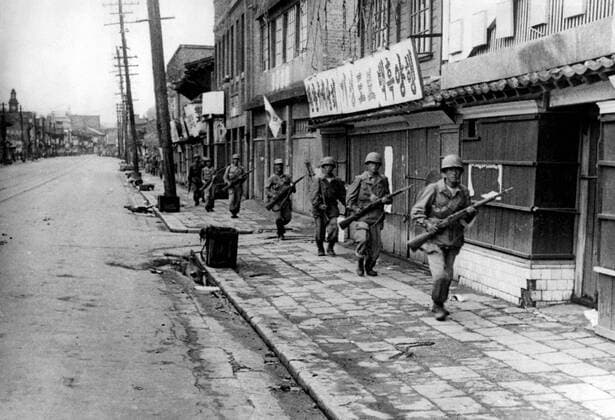
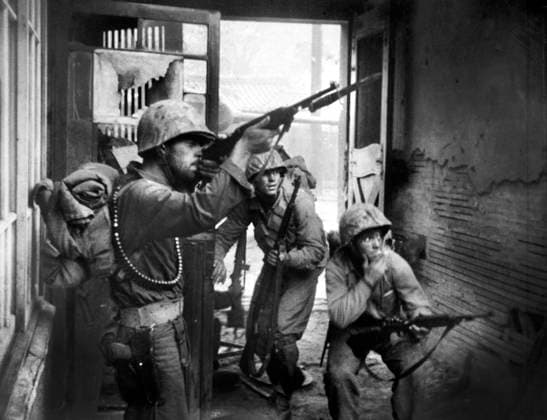
  • September 20, 1950, Seoul, South Korea: United Nations troops fighting in the streets of Seoul, Korea, U.S. Army Signal Corps, September 20, 1950 Seoul South Korea - ZUMAg145 19500920_aza_g145_001 Copyright: xJTxVintagex

    September 20, 1950, Seoul, South Korea: United Nations troops fighting in the streets of Seoul, Korea, U.S. Army Signal Corps, September 20, 1950 Seoul South Korea - ZUMAg145 19500920_aza_g145_001 Copyright: xJTxVintagex

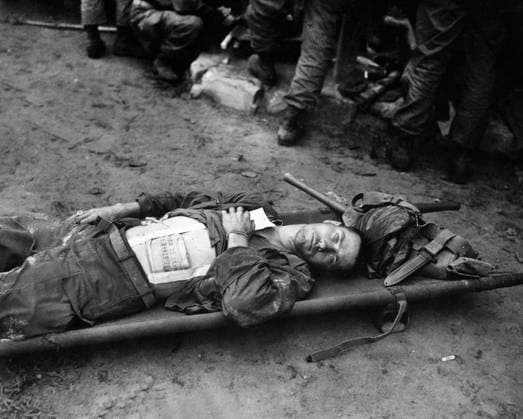
  • September 19, 1950, South Korea: Private First Class, Thomas Conlon, 21st Infantry Regiment, laying on stretcher at medical aid station, after being wounded while crossing the Nakdong River, South Korea, U.S. Army Signal Corps, September 19, 1950 South Korea - ZUMAg145 19500919_aza_g145_001 Copyright: xJTxVintagex

    September 19, 1950, South Korea: Private First Class, Thomas Conlon, 21st Infantry Regiment, laying on stretcher at medical aid station, after being wounded while crossing the Nakdong River, South Korea, U.S. Army Signal Corps, September 19, 1950 South Korea - ZUMAg145 19500919_aza_g145_001 Copyright: xJTxVintagex

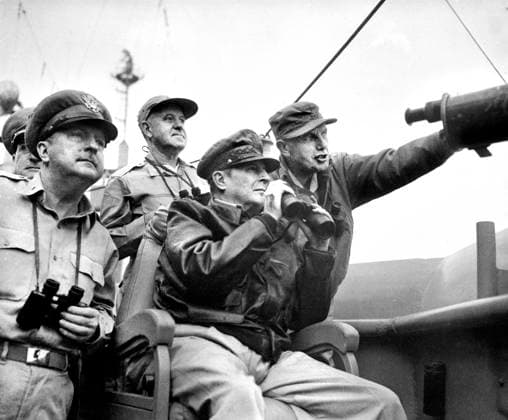
  • September 15, 1950, Incheon, South Korea: U.S. Brigadier General Courtney Whitney; U.S. General Douglas MacArthur, Commander in Chief of U.N. Forces; and U.S. Major General Edward Almond, observing the shelling of Inchon from U.S.S. Mt. McKinley, U.S. Army Signal Corps, September 15, 1950 Incheon South Korea - ZUMAg145 19500915_aza_g145_001 Copyright: xJTxVintagex

    September 15, 1950, Incheon, South Korea: U.S. Brigadier General Courtney Whitney; U.S. General Douglas MacArthur, Commander in Chief of U.N. Forces; and U.S. Major General Edward Almond, observing the shelling of Inchon from U.S.S. Mt. McKinley, U.S. Army Signal Corps, September 15, 1950 Incheon South Korea - ZUMAg145 19500915_aza_g145_001 Copyright: xJTxVintagex

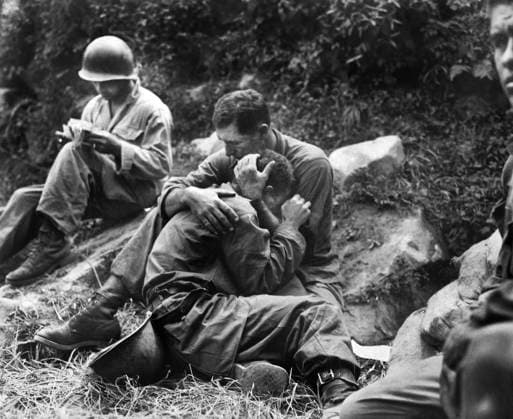
  • August 28, 1950, North Korea: Grief stricken American infantryman whose buddy had been killed in action being comforted by another soldier. In the background a corpsman methodically fills out casualty tags, Haktong-ni area, Korea, U.S. Army Signal Corps, August 28, 1950 North Korea - ZUMAg145 19500828_aza_g145_001 Copyright: xJTxVintagex

    August 28, 1950, North Korea: Grief stricken American infantryman whose buddy had been killed in action being comforted by another soldier. In the background a corpsman methodically fills out casualty tags, Haktong-ni area, Korea, U.S. Army Signal Corps, August 28, 1950 North Korea - ZUMAg145 19500828_aza_g145_001 Copyright: xJTxVintagex

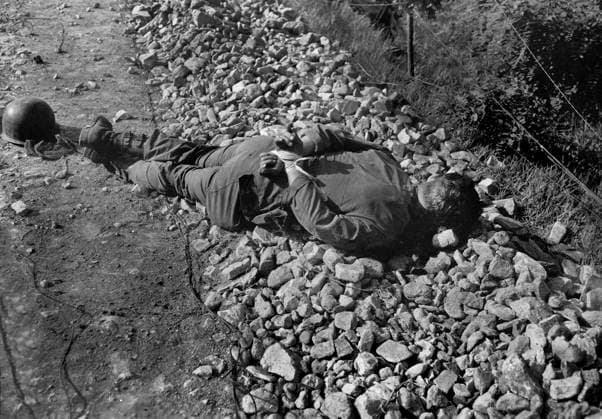
  • July 10, 1950, South Korea: One of four Americans of U.S. 21st Infantry Regiment, captured night of July 9th, and shot thru head with hands tied behind their backs, found between forward observation post and the front line, South Korea, U.S. Army Signal Corps, July 10, 1950 South Korea - ZUMAg145 19500710_aza_g145_001 Copyright: xJTxVintagex

    July 10, 1950, South Korea: One of four Americans of U.S. 21st Infantry Regiment, captured night of July 9th, and shot thru head with hands tied behind their backs, found between forward observation post and the front line, South Korea, U.S. Army Signal Corps, July 10, 1950 South Korea - ZUMAg145 19500710_aza_g145_001 Copyright: xJTxVintagex

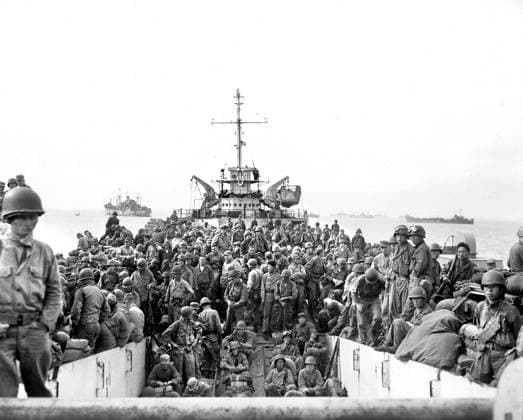
  • September 18, 1950, Incheon, South Korea: Troops of U.S. 31st Infantry Regiment aboard LST s, landing at Inchon Harbor, Korea, U.S. Army Signal Corps, September 18, 1950 Incheon South Korea - ZUMAg145 19500918_aza_g145_001 Copyright: xJTxVintagex

    September 18, 1950, Incheon, South Korea: Troops of U.S. 31st Infantry Regiment aboard LST s, landing at Inchon Harbor, Korea, U.S. Army Signal Corps, September 18, 1950 Incheon South Korea - ZUMAg145 19500918_aza_g145_001 Copyright: xJTxVintagex

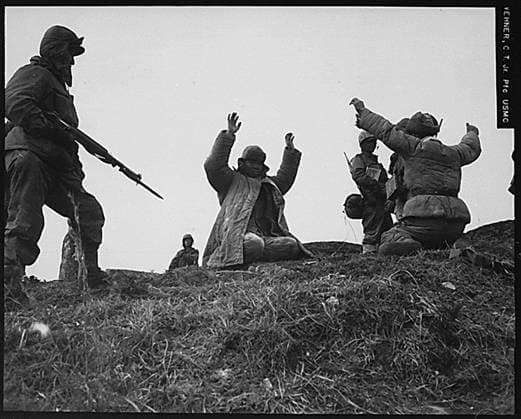
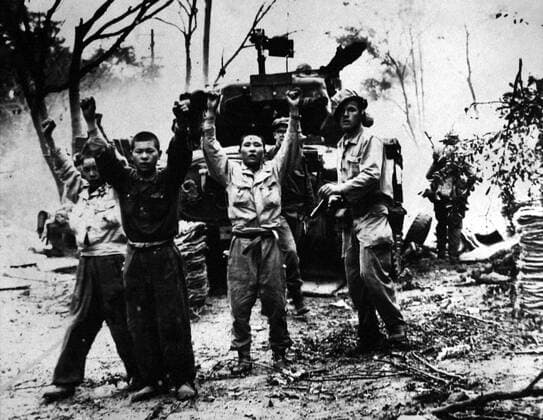
  • U.S. Marines capture Chinese soldiers during fighting at Hoengsong, Korea, March 2, 1951. (National Archives MCT) KOR EDITORIAL USE ONLY Copyright: xx NationalxArchivesx krtphotoslive313408

    U.S. Marines capture Chinese soldiers during fighting at Hoengsong, Korea, March 2, 1951. (National Archives MCT) KOR EDITORIAL USE ONLY Copyright: xx NationalxArchivesx krtphotoslive313408

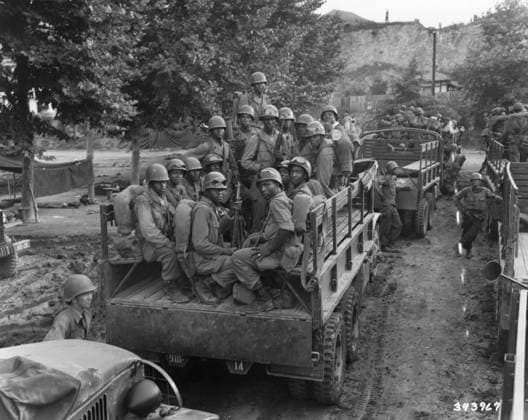
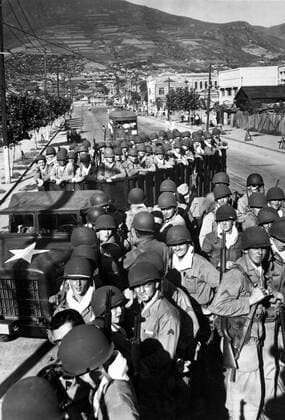
  • KOREAN WAR, 1950. Soldiers of the 25th Infantry Division moving up to the firing line in Korea. Photograph, July 1950.  Copyright: xGRANGERx xGRANGERx 0260043

    KOREAN WAR, 1950. Soldiers of the 25th Infantry Division moving up to the firing line in Korea. Photograph, July 1950. Copyright: xGRANGERx xGRANGERx 0260043

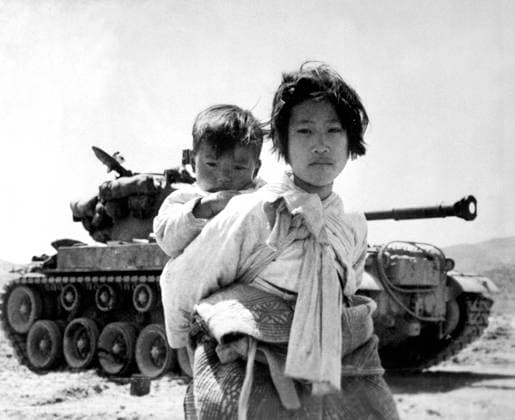
  • Korea: With her brother on her back a war-weary Korean girl trudges by a M-26 tank at Haengju. Korean War (1950-1953). The Korean War (25 June 1950 - armistice signed 27 July 1953) was a military conflict between the Republic of Korea, supported by the United Nations, and North Korea, supported by the People s Republic of China (PRC), with military material aid from the Soviet Union. The war was a result of the physical division of Korea by an agreement of the victorious Allies at the conclusion of the Pacific War at the end of World War II.<br ><br > The Korean peninsula was ruled by Japan from 1910 until the end of World War II. Following the surrender of Japan in 1945, American administrators divided the peninsula along the 38th Parall Copyright: xxPicturesxFromxHistoryx

    Korea: With her brother on her back a war-weary Korean girl trudges by a M-26 tank at Haengju. Korean War (1950-1953). The Korean War (25 June 1950 - armistice signed 27 July 1953) was a military conflict between the Republic of Korea, supported by the United Nations, and North Korea, supported by the People s Republic of China (PRC), with military material aid from the Soviet Union. The war was a result of the physical division of Korea by an agreement of the victorious Allies at the conclusion of the Pacific War at the end of World War II.<br ><br > The Korean peninsula was ruled by Japan from 1910 until the end of World War II. Following the surrender of Japan in 1945, American administrators divided the peninsula along the 38th Parall Copyright: xxPicturesxFromxHistoryx

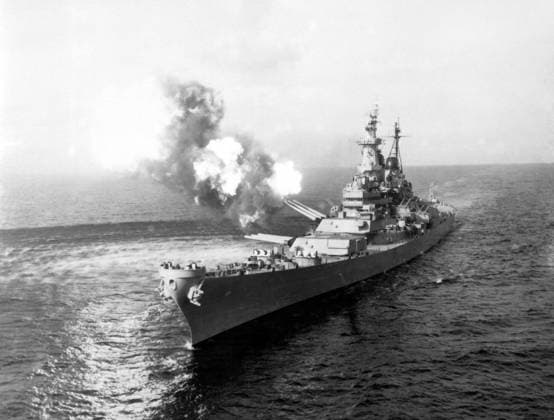
  • Korea: The USS Missouri fires a 16-inch salvo at Chong Jin, North Korea. Korean War (1950-1953). The Korean War (25 June 1950 - armistice signed 27 July 1953) was a military conflict between the Republic of Korea, supported by the United Nations, and North Korea, supported by the People s Republic of China (PRC), with military material aid from the Soviet Union. The war was a result of the physical division of Korea by an agreement of the victorious Allies at the conclusion of the Pacific War at the end of World War II.<br ><br > The Korean peninsula was ruled by Japan from 1910 until the end of World War II. Following the surrender of Japan in 1945, American administrators divided the peninsula along the 38th Parallel, with United States Copyright: xxPicturesxFromxHistoryx

    Korea: The USS Missouri fires a 16-inch salvo at Chong Jin, North Korea. Korean War (1950-1953). The Korean War (25 June 1950 - armistice signed 27 July 1953) was a military conflict between the Republic of Korea, supported by the United Nations, and North Korea, supported by the People s Republic of China (PRC), with military material aid from the Soviet Union. The war was a result of the physical division of Korea by an agreement of the victorious Allies at the conclusion of the Pacific War at the end of World War II.<br ><br > The Korean peninsula was ruled by Japan from 1910 until the end of World War II. Following the surrender of Japan in 1945, American administrators divided the peninsula along the 38th Parallel, with United States Copyright: xxPicturesxFromxHistoryx

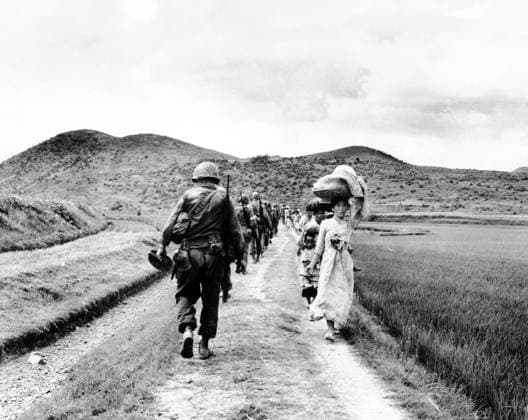
  • RECORD DATE NOT STATED Korea: During the Korean War (1950-1953), a line of US Army soldiers file past a group of Korean women and children carrying their possessions. The Korean War (25 June 1950 - armistice signed 27 July 1953) was a military conflict between the Republic of Korea, supported by the United Nations, and North Korea, supported by the People s Republic of China (PRC), with military material aid from the Soviet Union. The war was a result of the physical division of Korea by an agreement of the victorious Allies at the conclusion of the Pacific War at the end of World War II.<br ><br > The Korean peninsula was ruled by Japan from 1910 until the end of World War II. Following the surrender of Japan in 1945, American administrators divided the peninsu Copyright: xxPicturesxFromxHistoryx

    RECORD DATE NOT STATED Korea: During the Korean War (1950-1953), a line of US Army soldiers file past a group of Korean women and children carrying their possessions. The Korean War (25 June 1950 - armistice signed 27 July 1953) was a military conflict between the Republic of Korea, supported by the United Nations, and North Korea, supported by the People s Republic of China (PRC), with military material aid from the Soviet Union. The war was a result of the physical division of Korea by an agreement of the victorious Allies at the conclusion of the Pacific War at the end of World War II.<br ><br > The Korean peninsula was ruled by Japan from 1910 until the end of World War II. Following the surrender of Japan in 1945, American administrators divided the peninsu Copyright: xxPicturesxFromxHistoryx

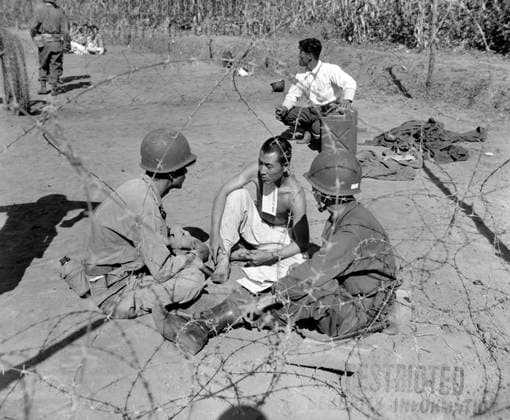
  • RECORD DATE NOT STATED Korea: During the Korean War (1950-1953) an interrogation team of the US 7th Infantry Division question a POW, Anvang-Ni, 20 September, 1950. The Korean War (25 June 1950 - armistice signed 27 July 1953) was a military conflict between the Republic of Korea, supported by the United Nations, and North Korea, supported by the People s Republic of China (PRC), with military material aid from the Soviet Union. The war was a result of the physical division of Korea by an agreement of the victorious Allies at the conclusion of the Pacific War at the end of World War II.<br ><br > The Korean peninsula was ruled by Japan from 1910 until the end of World War II. Following the surrender of Japan in 1945, American administrators divided the peninsula Copyright: xxPicturesxFromxHistoryx

    RECORD DATE NOT STATED Korea: During the Korean War (1950-1953) an interrogation team of the US 7th Infantry Division question a POW, Anvang-Ni, 20 September, 1950. The Korean War (25 June 1950 - armistice signed 27 July 1953) was a military conflict between the Republic of Korea, supported by the United Nations, and North Korea, supported by the People s Republic of China (PRC), with military material aid from the Soviet Union. The war was a result of the physical division of Korea by an agreement of the victorious Allies at the conclusion of the Pacific War at the end of World War II.<br ><br > The Korean peninsula was ruled by Japan from 1910 until the end of World War II. Following the surrender of Japan in 1945, American administrators divided the peninsula Copyright: xxPicturesxFromxHistoryx

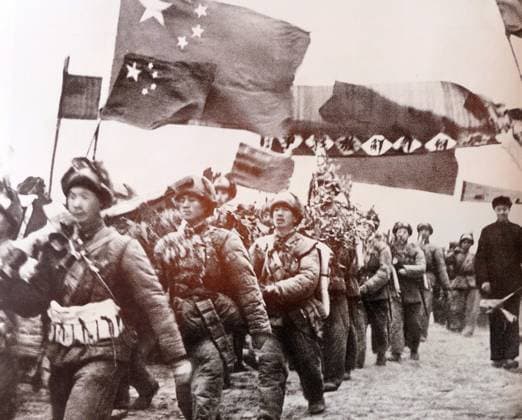
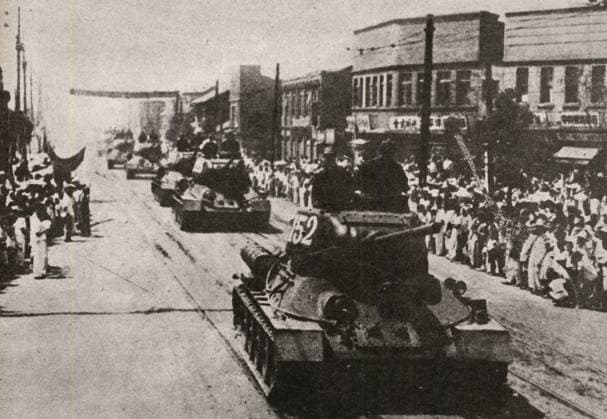
  • Chinese forces entering the Korean War, between North Korea and South Korea from 25 June 1950 to 27 July 1953. It began as an attempt by North Korean supreme leader Kim Il-sung to unify Korea under his communist regime through military force. Two powers entered the war, with the United States under President Truman fighting alongside the South and the newly established People s Republic of China fighting alongside the North., Copyright: xUnitedxArchivesx xWorldxHistoryxArchivex WHA_179_0489 EDITORIAL USE ONLY !ACHTUNG AUFNAHMEDATUM GESCHÄTZT!

    Chinese forces entering the Korean War, between North Korea and South Korea from 25 June 1950 to 27 July 1953. It began as an attempt by North Korean supreme leader Kim Il-sung to unify Korea under his communist regime through military force. Two powers entered the war, with the United States under President Truman fighting alongside the South and the newly established People s Republic of China fighting alongside the North., Copyright: xUnitedxArchivesx xWorldxHistoryxArchivex WHA_179_0489 EDITORIAL USE ONLY !ACHTUNG AUFNAHMEDATUM GESCHÄTZT!

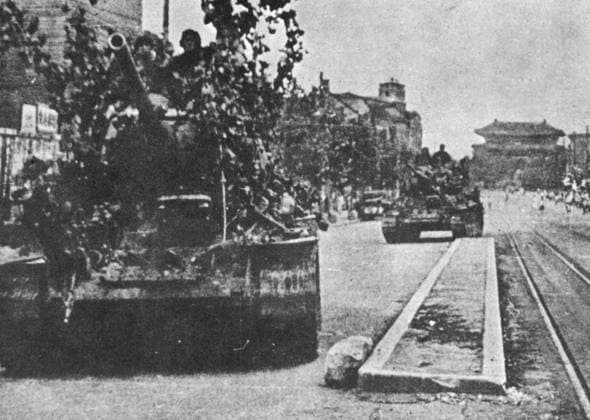
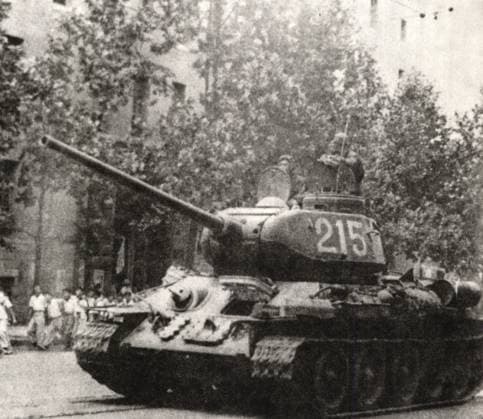
  • North Korean tanks invading Seoul, capital city of South Korea. 1950. The tanks are moving from Dongdaemun (East Gate) to Jongro, the city center., Copyright: xUnitedxArchivesx xWorldxHistoryxArchivex WHA_161_0913 !ACHTUNG AUFNAHMEDATUM GESCHÄTZT!

    North Korean tanks invading Seoul, capital city of South Korea. 1950. The tanks are moving from Dongdaemun (East Gate) to Jongro, the city center., Copyright: xUnitedxArchivesx xWorldxHistoryxArchivex WHA_161_0913 !ACHTUNG AUFNAHMEDATUM GESCHÄTZT!

  • The invasion of Seoul by the North Korean military. June 28th, 1950. The strategic invasion let them occupy Seoul in only 3 days., Copyright: xUnitedxArchivesx xWorldxHistoryxArchivex WHA_161_0910 !ACHTUNG AUFNAHMEDATUM GESCHÄTZT!

    The invasion of Seoul by the North Korean military. June 28th, 1950. The strategic invasion let them occupy Seoul in only 3 days., Copyright: xUnitedxArchivesx xWorldxHistoryxArchivex WHA_161_0910 !ACHTUNG AUFNAHMEDATUM GESCHÄTZT!

  • The invasion of Seoul by the North Korean military in June 28th, 1950. People in the street are frightened., Copyright: xUnitedxArchivesx xWorldxHistoryxArchivex WHA_161_0907 !ACHTUNG AUFNAHMEDATUM GESCHÄTZT!

    The invasion of Seoul by the North Korean military in June 28th, 1950. People in the street are frightened., Copyright: xUnitedxArchivesx xWorldxHistoryxArchivex WHA_161_0907 !ACHTUNG AUFNAHMEDATUM GESCHÄTZT!

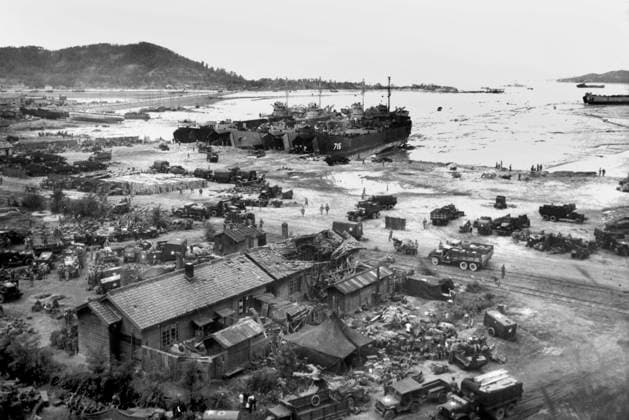
  • Korean war : Four LSTs unload on the beach at Inchon as marines gather equipment to move rapidly inland on September 15, 1950. 1700510 Korean war : Four LSTs unload on the beach at Inchon as marines gather equipment to move rapidly inland on September 15, 1950.; (add.info.: Korean war : Four LSTs unload on the beach at Inchon as marines gather equipment to move rapidly inland on September 15, 1950.). Copyright: xBridgemanxImagesx 1700510

    Korean war : Four LSTs unload on the beach at Inchon as marines gather equipment to move rapidly inland on September 15, 1950. 1700510 Korean war : Four LSTs unload on the beach at Inchon as marines gather equipment to move rapidly inland on September 15, 1950.; (add.info.: Korean war : Four LSTs unload on the beach at Inchon as marines gather equipment to move rapidly inland on September 15, 1950.). Copyright: xBridgemanxImagesx 1700510

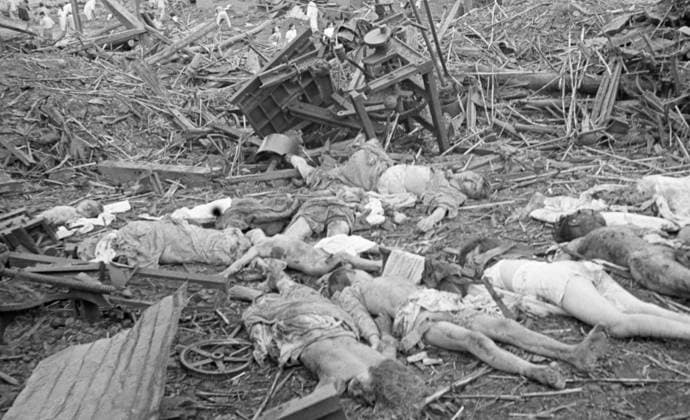
  • Pyongyang, North Korea. October 11, 1950. Victims of the aerial bombardment of American aviation during the Korean War. Anatoly Vasilyev TASS  13763014

    Pyongyang, North Korea. October 11, 1950. Victims of the aerial bombardment of American aviation during the Korean War. Anatoly Vasilyev TASS 13763014

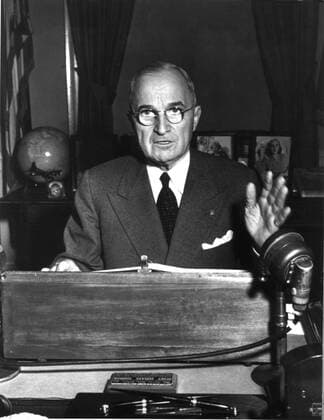
  • Korean War, President Truman declaring a state of emergency on the radio President Truman declaring a state of emergency on the radio December 1950 United States - Korean War Washington - National Archives Copyright: xPhoto12x ASI01138_H304715

    Korean War, President Truman declaring a state of emergency on the radio President Truman declaring a state of emergency on the radio December 1950 United States - Korean War Washington - National Archives Copyright: xPhoto12x ASI01138_H304715

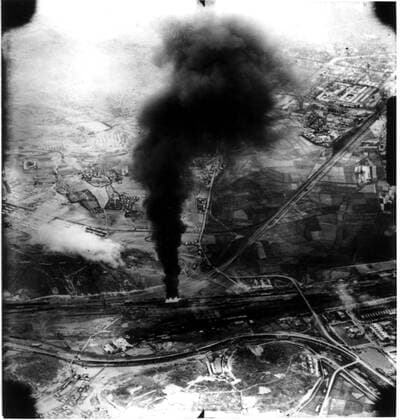
  • Korean War, Pyongyang. Bombardment by the American and British forces Pyongyang. Bombardment by the American and British forces July 1950 Korean War Washington - National Archives Copyright: xPhoto12x ASI01138_H304712

    Korean War, Pyongyang. Bombardment by the American and British forces Pyongyang. Bombardment by the American and British forces July 1950 Korean War Washington - National Archives Copyright: xPhoto12x ASI01138_H304712

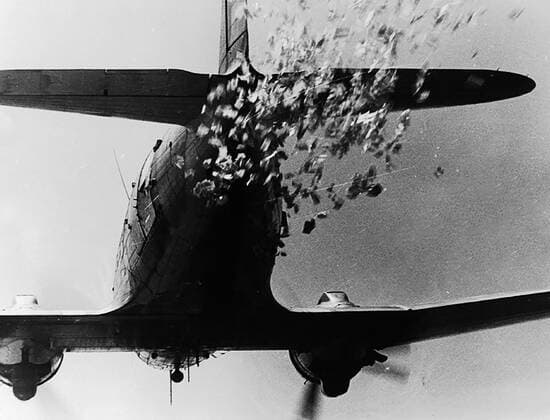
  • The workhorse of air delivery of leaflets in the Korean War was the C-47 Transport Aircraft. Also used was the B-29 Superfortress, which could distribute one million leaflets per flight. Some B-26 gunships were equipped with special pods that held several hundred pounds of leaflets, which could be dribbled out at a slow rate or dumped in bulk in a few seconds. By the end of the war, more than 2.5 billion leaflets had been dropped over enemy positions. . . 1062_33_L_-10322-

    The workhorse of air delivery of leaflets in the Korean War was the C-47 Transport Aircraft. Also used was the B-29 Superfortress, which could distribute one million leaflets per flight. Some B-26 gunships were equipped with special pods that held several hundred pounds of leaflets, which could be dribbled out at a slow rate or dumped in bulk in a few seconds. By the end of the war, more than 2.5 billion leaflets had been dropped over enemy positions. . . 1062_33_L_-10322-

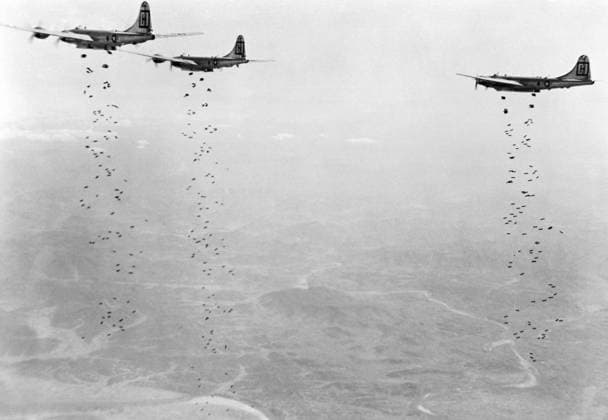
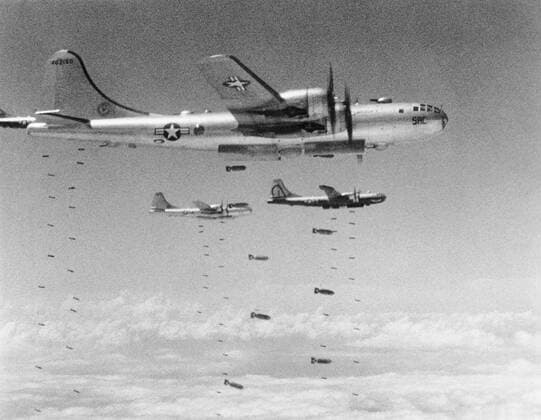
  • U.S. Air Force B-29 Superfortress bombers raining bombs on a target in Korea as part of aerial warfare in January, 1951. Copyright: VernonxLewisxGallery StocktrekxImages JPA101472M

    U.S. Air Force B-29 Superfortress bombers raining bombs on a target in Korea as part of aerial warfare in January, 1951. Copyright: VernonxLewisxGallery StocktrekxImages JPA101472M

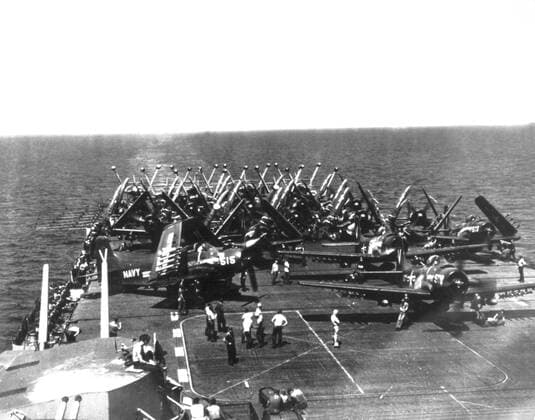
  • Korean war, on the deck of the American ship Philippine , aircrafts armed with rockets and bombs wait for the departure signal. On the deck of the American ship Philippine , aircrafts armed with rockets and bombs wait for the departure signal. September 18, 1950 Korean war National Archives - Washington Copyright: xPhoto12 ArchivesxSnarkx DFS09A11_103

    Korean war, on the deck of the American ship Philippine , aircrafts armed with rockets and bombs wait for the departure signal. On the deck of the American ship Philippine , aircrafts armed with rockets and bombs wait for the departure signal. September 18, 1950 Korean war National Archives - Washington Copyright: xPhoto12 ArchivesxSnarkx DFS09A11_103

  • U.N. soldiers during the Korean War U.N. soldiers during the Korean War 1950-1953 Copyright: xPhoto12 ArchivesxSnarkx DFS09A02149

    U.N. soldiers during the Korean War U.N. soldiers during the Korean War 1950-1953 Copyright: xPhoto12 ArchivesxSnarkx DFS09A02149

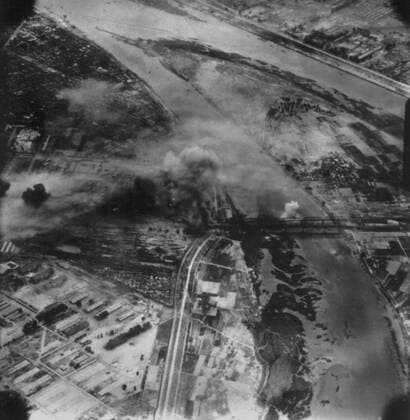
  • Korean war, July 1950, Pyongyang. Bridges and railroads bombed by American and British rapid deployment force. Korean war, July 1950, Pyongyang. Bridges and railroads bombed by American and British rapid deployment force. July 1950 Korean war. National Archives - Washington Copyright: xPhoto12 ArchivesxSnarkx DFS09A00059

    Korean war, July 1950, Pyongyang. Bridges and railroads bombed by American and British rapid deployment force. Korean war, July 1950, Pyongyang. Bridges and railroads bombed by American and British rapid deployment force. July 1950 Korean war. National Archives - Washington Copyright: xPhoto12 ArchivesxSnarkx DFS09A00059

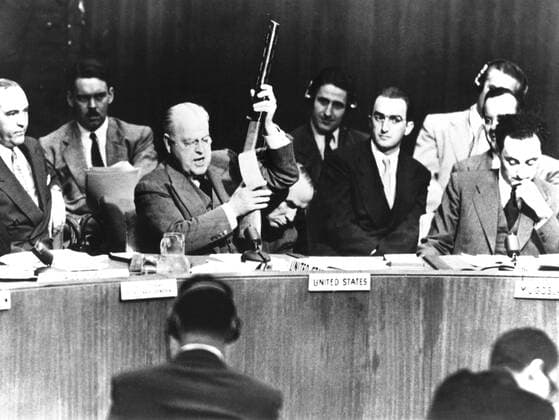
  • Korean War: meeting of the U.N. Security Council. Meeting of the U.N. Security Council. Warren Austin, the American delegate, is giving proof that the U.S.S.R. was supplying arms to an enemy of the United Nations. Machine gun captured from the Sino-Koreans in July 1950 by U.N. soldiers. September 1950 Korean War National Archives - Washington Copyright: xPhoto12 ArchivesxSnarkx DFS09A04_297

    Korean War: meeting of the U.N. Security Council. Meeting of the U.N. Security Council. Warren Austin, the American delegate, is giving proof that the U.S.S.R. was supplying arms to an enemy of the United Nations. Machine gun captured from the Sino-Koreans in July 1950 by U.N. soldiers. September 1950 Korean War National Archives - Washington Copyright: xPhoto12 ArchivesxSnarkx DFS09A04_297

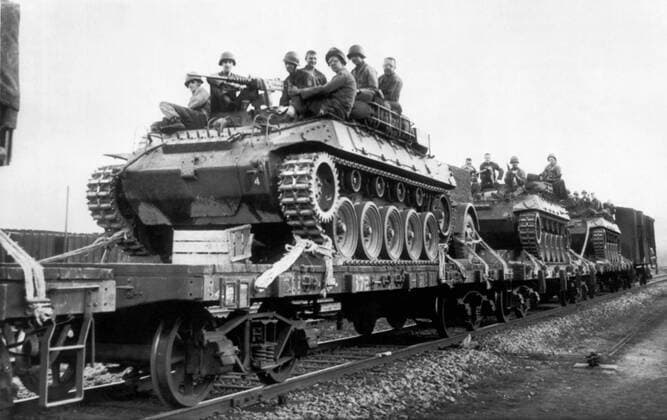
  • Korea-Krieg 1950-1953 - Aufnahmedaten geschätzt Pusan, Korea: July 27, 1950 Armored equipment is loaded on railroad cars for the blackout trip from the docks at Pusan to the war front. Troops ride along to protect against sniper attacks. xUnderwoodxArchives 4-War-Kor-US-Ar_7

    Korea-Krieg 1950-1953 - Aufnahmedaten geschätzt Pusan, Korea: July 27, 1950 Armored equipment is loaded on railroad cars for the blackout trip from the docks at Pusan to the war front. Troops ride along to protect against sniper attacks. xUnderwoodxArchives 4-War-Kor-US-Ar_7

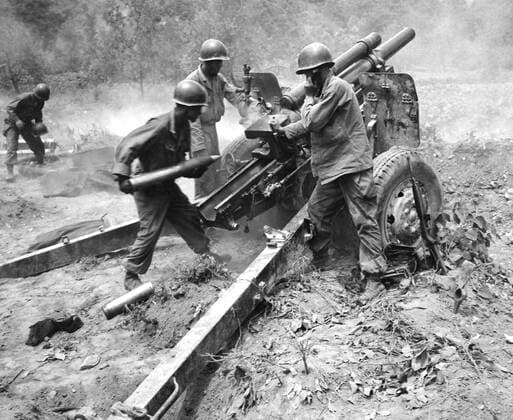
  • Korea-Krieg 1950-1953 - Aufnahmedaten geschätzt US Army artillery crew firing a 105 millimetre howitzer, against North Korean positions during the Korean War 1950 WHA  !ACHTUNG AUFNAHMEDATUM GESCHÄTZT! Copyright: WHA UnitedArchivesWHA_068_0671

    Korea-Krieg 1950-1953 - Aufnahmedaten geschätzt US Army artillery crew firing a 105 millimetre howitzer, against North Korean positions during the Korean War 1950 WHA !ACHTUNG AUFNAHMEDATUM GESCHÄTZT! Copyright: WHA UnitedArchivesWHA_068_0671

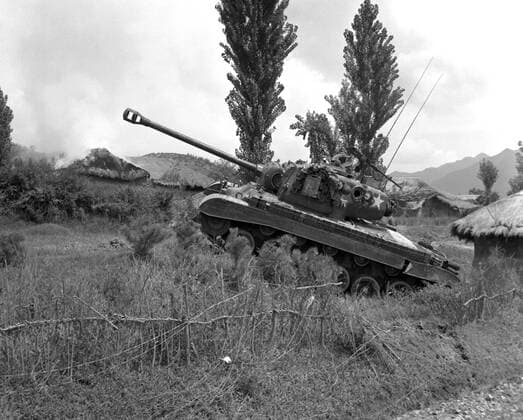
  • Korea-Krieg 1950-1953 - Aufnahmedaten geschätzt US Marine Corps Pershing tank at the edge of a village in Korea, 4 Sep 1950 WHA  !ACHTUNG AUFNAHMEDATUM GESCHÄTZT! Copyright: WHA UnitedArchivesWHA_068_0651

    Korea-Krieg 1950-1953 - Aufnahmedaten geschätzt US Marine Corps Pershing tank at the edge of a village in Korea, 4 Sep 1950 WHA !ACHTUNG AUFNAHMEDATUM GESCHÄTZT! Copyright: WHA UnitedArchivesWHA_068_0651

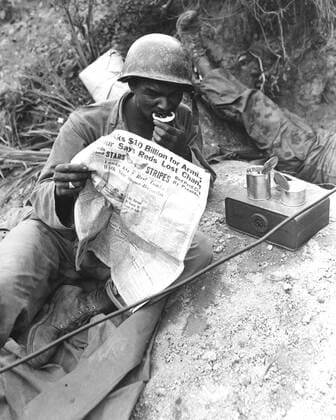
  • August 9, 1950 - U.S. soldier reads the latest news while enjoying chow during lull in battle against the Communist led North Korean invaders, somewhere in Korea.  Copyright: StocktrekxImages stk107050m

    August 9, 1950 - U.S. soldier reads the latest news while enjoying chow during lull in battle against the Communist led North Korean invaders, somewhere in Korea. Copyright: StocktrekxImages stk107050m

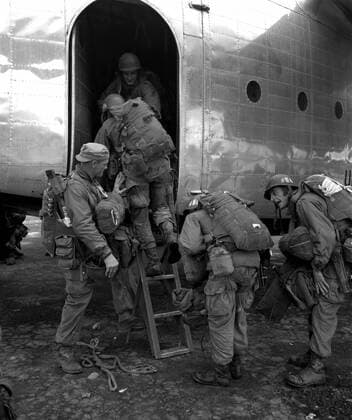
  • October 20, 1950 - Airborne troops board a plane for their drop behind enemy lines north of Pyongyang, North Korea.  Copyright: StocktrekxImages stk107049m

    October 20, 1950 - Airborne troops board a plane for their drop behind enemy lines north of Pyongyang, North Korea. Copyright: StocktrekxImages stk107049m

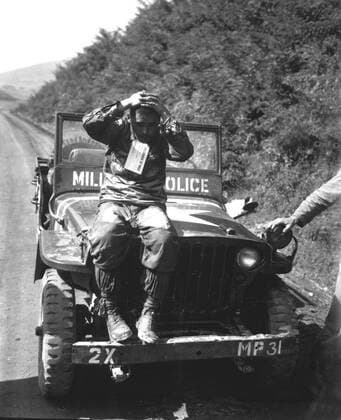
  • September 4, 1950 - North Korean prisoner of Marines who rolled enemy back in Naktong River fighting. He wears a Prisoner of War tag and was treated in accordance with United Nations rules of international warfare.  Copyright: StocktrekxImages stk106001m

    September 4, 1950 - North Korean prisoner of Marines who rolled enemy back in Naktong River fighting. He wears a Prisoner of War tag and was treated in accordance with United Nations rules of international warfare. Copyright: StocktrekxImages stk106001m

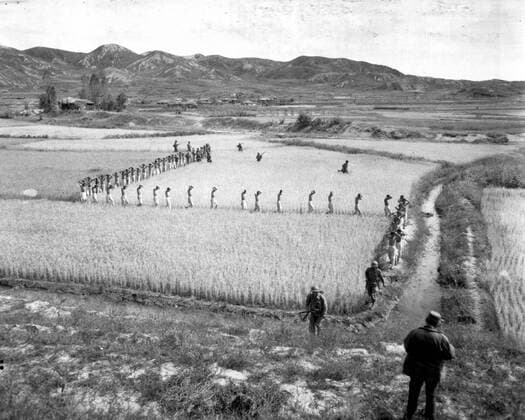
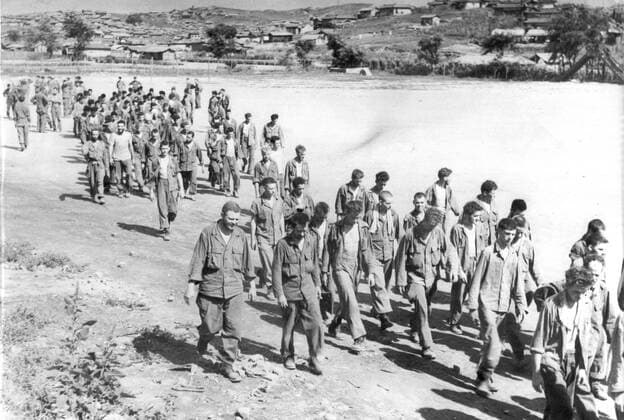
  • North Korean prisoners, taken by the Marines in a foothills fight, march single file across a rice paddy, 1950.  Copyright: StocktrekxImages stk106000m

    North Korean prisoners, taken by the Marines in a foothills fight, march single file across a rice paddy, 1950. Copyright: StocktrekxImages stk106000m

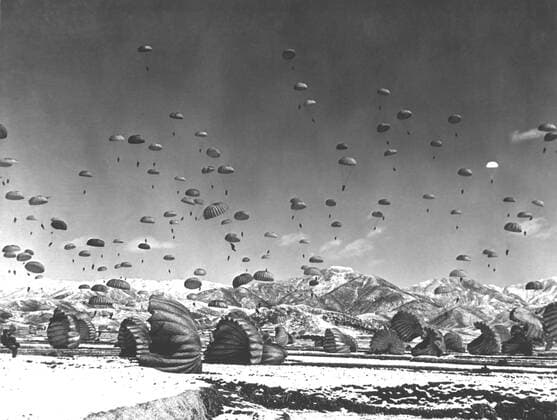
  • Korea-Krieg 1950-1953 - Aufnahmedaten geschätzt Men and equipment being parachuted to earth in an operation conducted by United Nations airborne units. Ca. 1951.  Copyright: StocktrekxImages stk105998m

    Korea-Krieg 1950-1953 - Aufnahmedaten geschätzt Men and equipment being parachuted to earth in an operation conducted by United Nations airborne units. Ca. 1951. Copyright: StocktrekxImages stk105998m

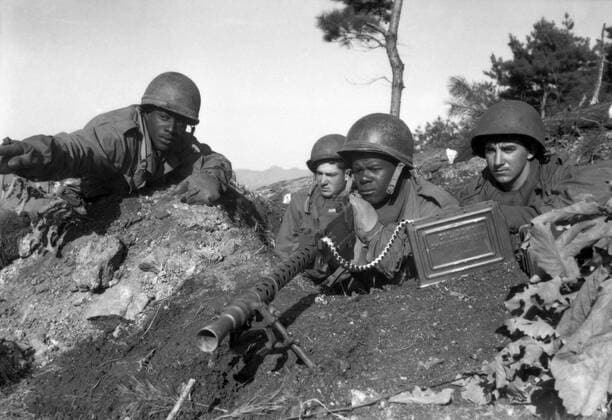
  • November 20, 1950 - Fighting with the 2nd Infantry Division north of the Chongchon River, a weapons squad leader points out communist-led North Korean position to his machine gun crew.  Copyright: StocktrekxImages stk105995m

    November 20, 1950 - Fighting with the 2nd Infantry Division north of the Chongchon River, a weapons squad leader points out communist-led North Korean position to his machine gun crew. Copyright: StocktrekxImages stk105995m

  • Korea-Krieg 1950-1953 - Aufnahmedaten geschätzt Fresh and eager U.S. Marine troops, newly-arrived at the vital southern supply port of Pusan, South Korea, are shown prior to moving up to the front lines. August 1950.  Copyright: StocktrekxImages stk105992m

    Korea-Krieg 1950-1953 - Aufnahmedaten geschätzt Fresh and eager U.S. Marine troops, newly-arrived at the vital southern supply port of Pusan, South Korea, are shown prior to moving up to the front lines. August 1950. Copyright: StocktrekxImages stk105992m

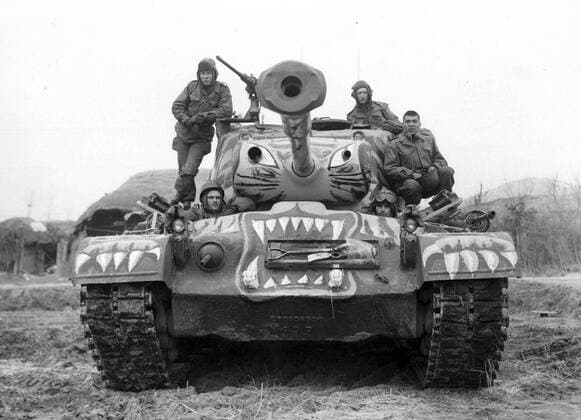
  • Korea-Krieg 1950-1953 - Aufnahmedaten geschätzt Photograph of soldiers sitting on a painted M-46 tank, the tank is painted to look like a fierce tiger. Taken during the Korean War, a war between the Republic of Korea (South Korea) and the Democratic People s Republic of Korea (North Korea), in which a United Nations force dominated by the United States of America intervened to support the South and China intervened to support the North. Dated 1951 WHA  !ACHTUNG AUFNAHMEDATUM GESCHÄTZT! Copyright: WHA UnitedArchivesWHA_047_0460

    Korea-Krieg 1950-1953 - Aufnahmedaten geschätzt Photograph of soldiers sitting on a painted M-46 tank, the tank is painted to look like a fierce tiger. Taken during the Korean War, a war between the Republic of Korea (South Korea) and the Democratic People s Republic of Korea (North Korea), in which a United Nations force dominated by the United States of America intervened to support the South and China intervened to support the North. Dated 1951 WHA !ACHTUNG AUFNAHMEDATUM GESCHÄTZT! Copyright: WHA UnitedArchivesWHA_047_0460

  • Korea-Krieg 1950-1953 - Aufnahmedaten geschätzt Koman-dong, North Korea: August 14, 1950 Boeing B-29 Superfortresses dropping bombs during a raid on a chemical plant in Koman-dong. 990_16_4-War-Kor-US-AF_1HR

    Korea-Krieg 1950-1953 - Aufnahmedaten geschätzt Koman-dong, North Korea: August 14, 1950 Boeing B-29 Superfortresses dropping bombs during a raid on a chemical plant in Koman-dong. 990_16_4-War-Kor-US-AF_1HR

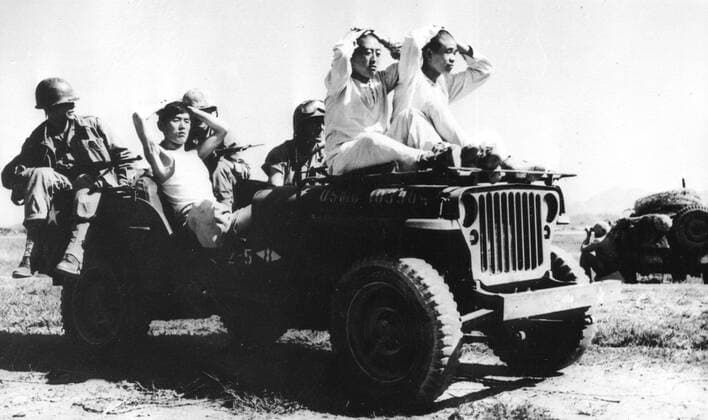
  • Korea-Krieg 1950-1953 - Aufnahmedaten geschätzt Oct. 1, 1950 - Seoul, Republic of Korea - The Korean War was an escalation of border clashes between two rival Korean regimes, each of which was supported by external powers, with each trying to topple the other through political and conventional tactics. At the end of World War II, Korea was divided at the 38th parallel into Soviet (North Korean) and U.S. (South Korean) zones of occupation. The conflict was expanded by the United States and the Soviet Union s involvement as part of the larger Cold War. The main hostilities were during the period from June 25, 1950 until the armistice (ceasefire agreement) was signed on July 27, 1953. PICTURED: North Korean prisoners of war captured by US troops. Seoul Republic of Korea  - ZUMAk09
    Korea-Krieg 1950-1953 - Aufnahmedaten geschätzt Oct. 1, 1950 - Seoul, Republic of Korea - The Korean War was an escalation of border clashes between two rival Korean regimes, each of which was supported by external powers, with each trying to topple the other through political and conventional tactics. At the end of World War II, Korea was divided at the 38th parallel into Soviet (North Korean) and U.S. (South Korean) zones of occupation. The conflict was expanded by the United States and the Soviet Union s involvement as part of the larger Cold War. The main hostilities were during the period from June 25, 1950 until the armistice (ceasefire agreement) was signed on July 27, 1953. PICTURED: North Korean prisoners of war captured by US troops. Seoul Republic of Korea - ZUMAk09
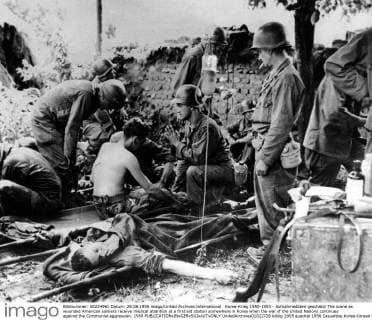
  • Korea-Krieg 1950-1953 - Aufnahmedaten geschätzt The scene as wounded American soldiers receive medical attention at a first aid station somewhere in Korea when the war of the United Nations continues against the Communist aggression. 1950  UnitedArchives01022728
    Korea-Krieg 1950-1953 - Aufnahmedaten geschätzt The scene as wounded American soldiers receive medical attention at a first aid station somewhere in Korea when the war of the United Nations continues against the Communist aggression. 1950 UnitedArchives01022728
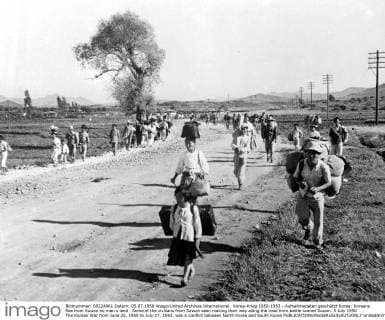
  • Korea-Krieg 1950-1953 - Aufnahmedaten geschätzt Korea: Koreans flee from Suwon no man s land . Some of the civilians from Suwon seen making their way along the road from battle scared Suwon. 5 July 1950 The Korean War from June 25, 1950 to July 27, 1953, was a conflict between North Korea and South Korea  UnitedArchives01022727
    Korea-Krieg 1950-1953 - Aufnahmedaten geschätzt Korea: Koreans flee from Suwon no man s land . Some of the civilians from Suwon seen making their way along the road from battle scared Suwon. 5 July 1950 The Korean War from June 25, 1950 to July 27, 1953, was a conflict between North Korea and South Korea UnitedArchives01022727

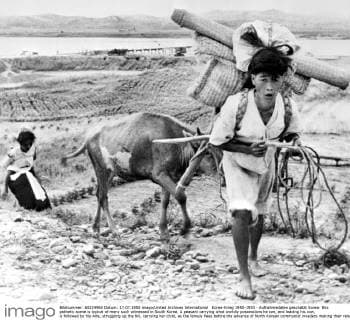
  • Korea-Krieg 1950-1953 - Aufnahmedaten geschätzt Korea: this pathetic scene is typical of many such witnessed in South Korea. A peasant carrying what worldly possessions he can, and leading his cow, is followed by his wife, struggling up the hill, carrying her child, as the famuly flees before the advance of North Korean communist invaders making their relentless way towards Taejon.. 17 July 1950 The Korean War from June 25, 1950 to July 27, 1953, was a conflict between North Korea and South Korea  UnitedArchives01022726

    Korea-Krieg 1950-1953 - Aufnahmedaten geschätzt Korea: this pathetic scene is typical of many such witnessed in South Korea. A peasant carrying what worldly possessions he can, and leading his cow, is followed by his wife, struggling up the hill, carrying her child, as the famuly flees before the advance of North Korean communist invaders making their relentless way towards Taejon.. 17 July 1950 The Korean War from June 25, 1950 to July 27, 1953, was a conflict between North Korea and South Korea UnitedArchives01022726

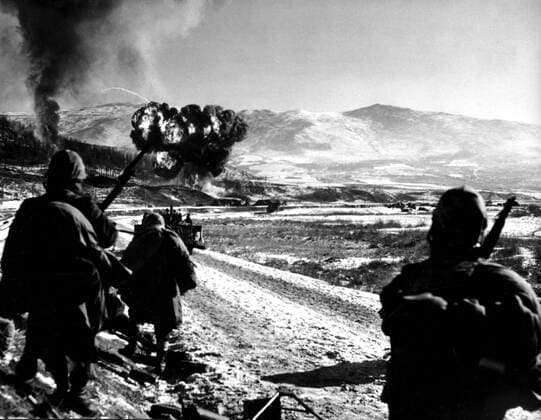
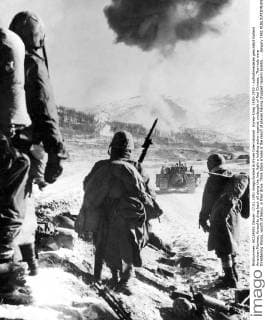
  • Korea-Krieg 1950-1953 - Aufnahmedaten geschätzt Gallant American Marines, forced to drop back all along the line, fight a holding action against onslaught of Red Chinese...The reds were threatening Wonju, wouth of Seoul, in their drive. Thick black smoke is the result of planes having dropped napalm bombs..... January 1951  UnitedArchives01022719

    Korea-Krieg 1950-1953 - Aufnahmedaten geschätzt Gallant American Marines, forced to drop back all along the line, fight a holding action against onslaught of Red Chinese...The reds were threatening Wonju, wouth of Seoul, in their drive. Thick black smoke is the result of planes having dropped napalm bombs..... January 1951 UnitedArchives01022719

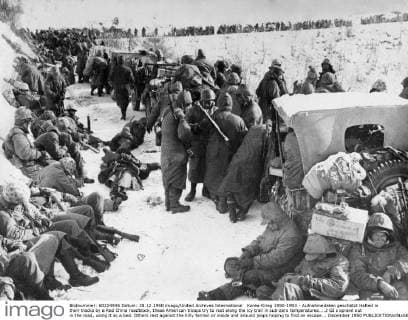
  • Korea-Krieg 1950-1953 - Aufnahmedaten geschätzt Halted in their tracks by a Red China roadblock, these American troops try to rest along the icy trail in sub-zero temperatures....2 GI s sprawl out in the road, using it as a bed. Others rest against the hilly terrain or inside and around jeaps hoping to find an escape... December 1950  UnitedArchives01022711

    Korea-Krieg 1950-1953 - Aufnahmedaten geschätzt Halted in their tracks by a Red China roadblock, these American troops try to rest along the icy trail in sub-zero temperatures....2 GI s sprawl out in the road, using it as a bed. Others rest against the hilly terrain or inside and around jeaps hoping to find an escape... December 1950 UnitedArchives01022711

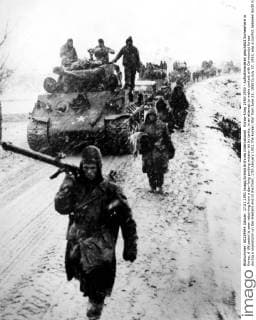
  • Korea-Krieg 1950-1953 - Aufnahmedaten geschätzt Somewhere in Korea. A UN patrol is seen returning from a day-long probing mission let by tanks, in an attempt to make contact with Communist forces during a snowstorm on the Western end of the front. 17th January 1951 The Korean War from June 25, 1950 to July 27, 1953, was a conflict between North Korea and South Korea  UnitedArchives01022710

    Korea-Krieg 1950-1953 - Aufnahmedaten geschätzt Somewhere in Korea. A UN patrol is seen returning from a day-long probing mission let by tanks, in an attempt to make contact with Communist forces during a snowstorm on the Western end of the front. 17th January 1951 The Korean War from June 25, 1950 to July 27, 1953, was a conflict between North Korea and South Korea UnitedArchives01022710

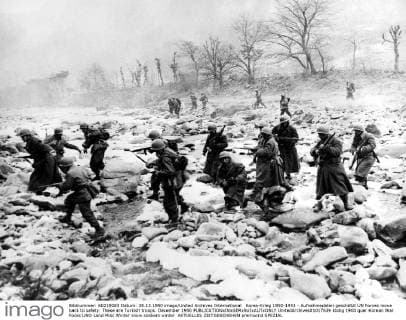
  • Korea-Krieg 1950-1953 - Aufnahmedaten geschätzt UN Forces move back to safety. These are Turkish troops. December 1950  UnitedArchives01017639

    Korea-Krieg 1950-1953 - Aufnahmedaten geschätzt UN Forces move back to safety. These are Turkish troops. December 1950 UnitedArchives01017639

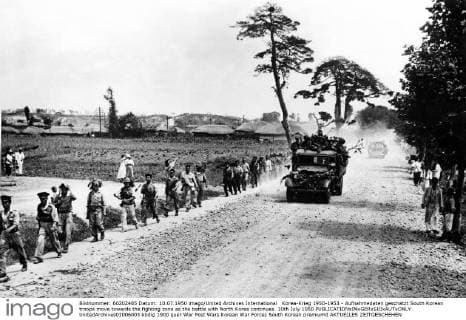
  • Korea-Krieg 1950-1953 - Aufnahmedaten geschätzt South Korean troops move towards the fighting zone as the battle with North Korea continues. 10th July 1950  UnitedArchives01006003

    Korea-Krieg 1950-1953 - Aufnahmedaten geschätzt South Korean troops move towards the fighting zone as the battle with North Korea continues. 10th July 1950 UnitedArchives01006003

  • Korea-Krieg 1950-1953 - Aufnahmedaten geschätzt Infantrymen of the South Korean 1st Division on the main street of the captured North Korean capital Pyongyang. 25th October 1950  UnitedArchives01005991

    Korea-Krieg 1950-1953 - Aufnahmedaten geschätzt Infantrymen of the South Korean 1st Division on the main street of the captured North Korean capital Pyongyang. 25th October 1950 UnitedArchives01005991

  • Korea-Krieg 1950-1953 - Aufnahmedaten geschätzt American Prisoners of War in North Korea, Pyongyang 28th September 1950 UnitedArchives00193163

    Korea-Krieg 1950-1953 - Aufnahmedaten geschätzt American Prisoners of War in North Korea, Pyongyang 28th September 1950 UnitedArchives00193163

  • Korea-Krieg 1950-1953 - Aufnahmedaten geschätzt US-Marines nehmen Nordkoreanische Soldaten fest im Korea-Krieg -  (WAX2000062399)

    Korea-Krieg 1950-1953 - Aufnahmedaten geschätzt US-Marines nehmen Nordkoreanische Soldaten fest im Korea-Krieg - (WAX2000062399)

Collections