EditorialCreativeSportsCollectionsVideos
Prices
0Log in

Visual content for professionals.
800M+ images and videos.

Content Hub

  • Current Events
  • Pictures of the Year
  • Sports
  • Editorial
  • Creative
  • Collections
  • Videos

Offers

  • Prices & Packages
  • Promotions
  • Enterprise
  • Newsletter
  • Blog
  • The Game Magazine

Services

  • Content Research
  • Contract Photography
  • API & FTP Push
  • my-picturemaxx
  • Become a Partner

Company

  • About IMAGO
  • Careers
  • News

Help Center

  • FAQ
  • Contact Us
Legal NoticeTerms & ConditionsLicense InformationData PrivacyPrivacy Settings
© 2026 IMAGO
CEPICBAPLABVPA
  1. IMAGO International History, World War II, Soviet Union declares war on Japan, 80th anniversary on 8 August

IMAGO International History, World War II, Soviet Union declares war on Japan, 80th anniversary on 8 August

Aug 8, 2025

The following photos have been selected for you by the IMAGO picture desk on this topic. For more pictures please use the search function.

Images in this collection
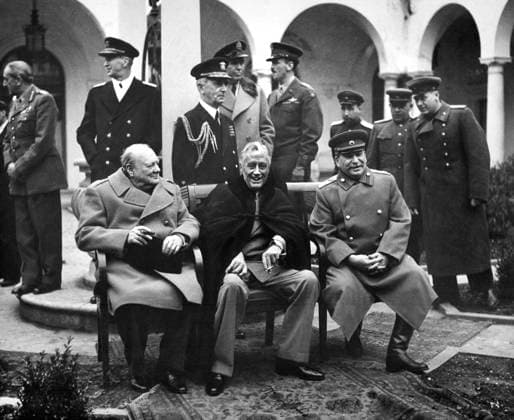
  • February 9, 1945, Yalta, Crimea, Ukraine: British Prime Minister Winston Churchill, U.S. President Franklin D. Roosevelt and Soviet General Secretary Josef Stalin at Yalta Conference, Livadia Palace, Yalta, USSR, U.S. Army Signal Corps, February 1945 Yalta Ukraine  - ZUMAg145 19450209_aza_g145_002 Copyright: xJTxVintagex

    February 9, 1945, Yalta, Crimea, Ukraine: British Prime Minister Winston Churchill, U.S. President Franklin D. Roosevelt and Soviet General Secretary Josef Stalin at Yalta Conference, Livadia Palace, Yalta, USSR, U.S. Army Signal Corps, February 1945 Yalta Ukraine - ZUMAg145 19450209_aza_g145_002 Copyright: xJTxVintagex
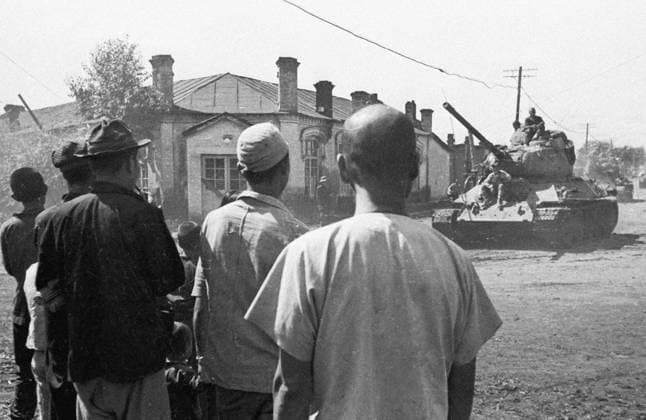
  • TANKS 60119 01.09.1945 Soviet tanks passing a Manchurian village. Israel Sputnik China  Copyright: xIsraelx

    TANKS 60119 01.09.1945 Soviet tanks passing a Manchurian village. Israel Sputnik China Copyright: xIsraelx

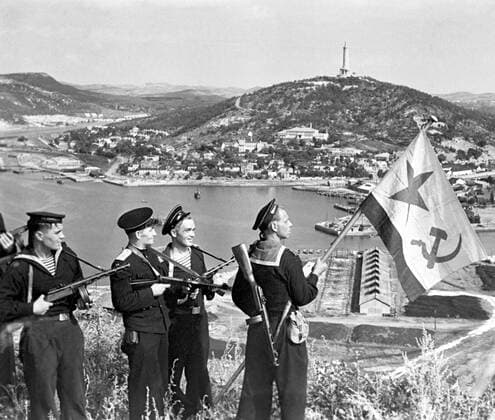
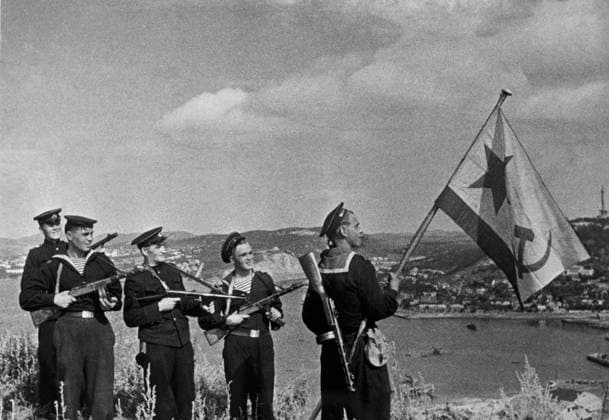
  • Soviet marines in Port Arthur 5509808 24.10.1945 Soviet marines in Port Arthur in 1956. After the end of the Soviet-Japanese War (August-September, 1956) Port Arthur became a joint Soviet-Chinese military base for the next 20 years (until 1955). N. Verinchuk Sputnik Dalian China  Copyright: xN.xVerinchukx

    Soviet marines in Port Arthur 5509808 24.10.1945 Soviet marines in Port Arthur in 1956. After the end of the Soviet-Japanese War (August-September, 1956) Port Arthur became a joint Soviet-Chinese military base for the next 20 years (until 1955). N. Verinchuk Sputnik Dalian China Copyright: xN.xVerinchukx

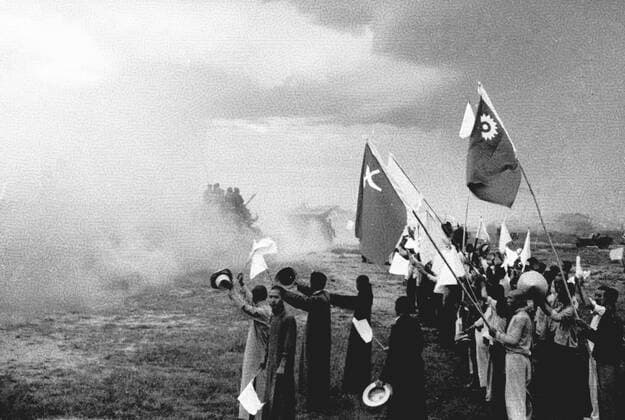
  • Soviet-Japanese War 5567490 30.08.1945 The Soviet-Japanese War (August 9-September 2, 1945). Chinese and Korean residents of Dunhua, Manchuria, welcome soldiers of the Red Army s 1st Far Eastern Front who have liberated Manchuria from Japanese invaders. Alexander Stanovov Sputnik China  Copyright: xAlexanderxStanovovx

    Soviet-Japanese War 5567490 30.08.1945 The Soviet-Japanese War (August 9-September 2, 1945). Chinese and Korean residents of Dunhua, Manchuria, welcome soldiers of the Red Army s 1st Far Eastern Front who have liberated Manchuria from Japanese invaders. Alexander Stanovov Sputnik China Copyright: xAlexanderxStanovovx

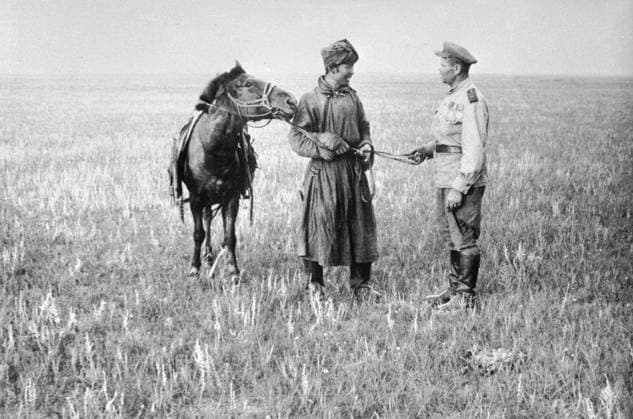
  • SOLDIER MONGOLIAN ARMY 1907 02.09.1945 A Soviet soldier talking to a fighter of the Mongolian national-revolutionary army in the Gobi desert. The Manchu offensive operation (August 9 - September 2, 1945) was carried out by the Soviet troops and the Mongolian national-revolutionary army. The Guandong army of Imperialist Japan was defeated as a result. Simon Raskin Sputnik Manchzhuriya China  Copyright: xSimonxRaskinx

    SOLDIER MONGOLIAN ARMY 1907 02.09.1945 A Soviet soldier talking to a fighter of the Mongolian national-revolutionary army in the Gobi desert. The Manchu offensive operation (August 9 - September 2, 1945) was carried out by the Soviet troops and the Mongolian national-revolutionary army. The Guandong army of Imperialist Japan was defeated as a result. Simon Raskin Sputnik Manchzhuriya China Copyright: xSimonxRaskinx

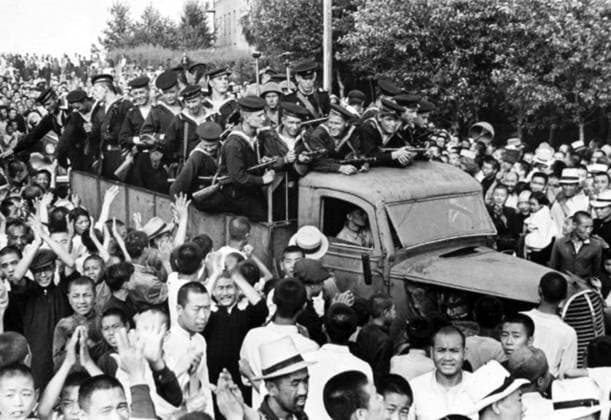
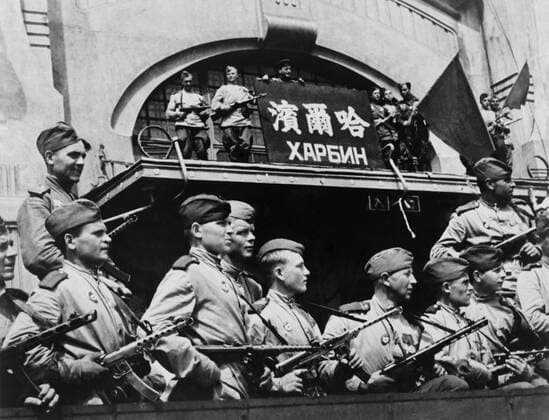
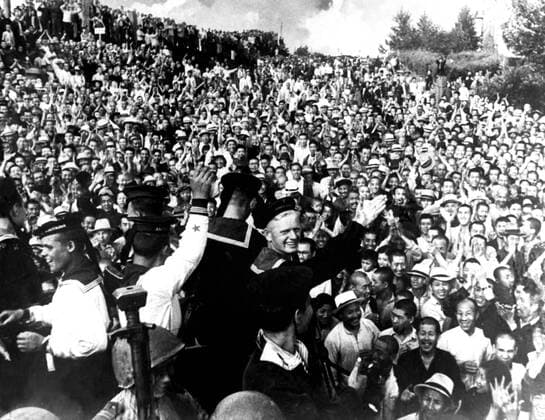
  • China USSR: Chinese residents of the city of Harbin welcome Soviet liberators from Japanese occupation, August 1945 Chinese residents of the city of Harbin welcome Soviet sailors of the Amur Military Flotilla, 1st Brigade following the Manchurian Strategic Offensive Operation.<br ><br > The campaign began on 9 August 1945, with the Soviet and Mongolian invasion of the Japanese puppet state of Manchukuo in northeastern China and was the largest campaign of the 1945 Soviet-Japanese War, which resumed hostilities between the Soviet Union and the Empire of Japan after almost six years of peace.<br ><br > The rapid defeat of Japan™s Kwantung Army has been argued to be a significant factor in the Japanese surrender and the end of World Wa Copyright: xxPicturesxFromxHistoryx

    China USSR: Chinese residents of the city of Harbin welcome Soviet liberators from Japanese occupation, August 1945 Chinese residents of the city of Harbin welcome Soviet sailors of the Amur Military Flotilla, 1st Brigade following the Manchurian Strategic Offensive Operation.<br ><br > The campaign began on 9 August 1945, with the Soviet and Mongolian invasion of the Japanese puppet state of Manchukuo in northeastern China and was the largest campaign of the 1945 Soviet-Japanese War, which resumed hostilities between the Soviet Union and the Empire of Japan after almost six years of peace.<br ><br > The rapid defeat of Japan™s Kwantung Army has been argued to be a significant factor in the Japanese surrender and the end of World Wa Copyright: xxPicturesxFromxHistoryx

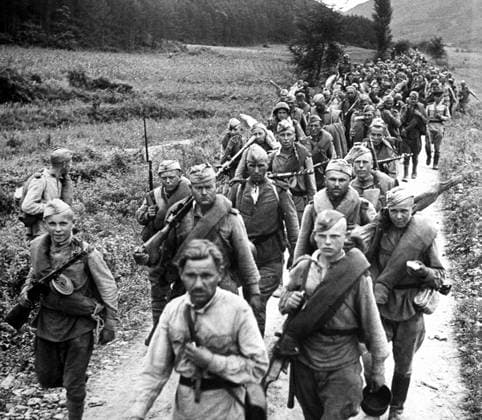
  • Korea Russia: Soviet soldiers on the march in northern Korea after the USSR entered the war against Japan, World War II, October 1945 The Pacific War, also sometimes called the Asia-Pacific War, refers broadly to the parts of World War II that took place in the Pacific Ocean, its islands, and in the Far East. The term Pacific War is used to encompass the Pacific Ocean theatre, the South West Pacific theatre, the South-East Asian theatre and the Second Sino-Japanese War, also including the 1945 Soviet-Japanese conflict.<br ><br > It is generally considered that the Pacific War began on 7 8 December 1941 with the Japanese invasion of Thailand for the invasion of British Malaya, and the attack on Pearl Harbor in the United States Territory Copyright: xxPicturesxFromxHistoryx
    Korea Russia: Soviet soldiers on the march in northern Korea after the USSR entered the war against Japan, World War II, October 1945 The Pacific War, also sometimes called the Asia-Pacific War, refers broadly to the parts of World War II that took place in the Pacific Ocean, its islands, and in the Far East. The term Pacific War is used to encompass the Pacific Ocean theatre, the South West Pacific theatre, the South-East Asian theatre and the Second Sino-Japanese War, also including the 1945 Soviet-Japanese conflict.<br ><br > It is generally considered that the Pacific War began on 7 8 December 1941 with the Japanese invasion of Thailand for the invasion of British Malaya, and the attack on Pearl Harbor in the United States Territory Copyright: xxPicturesxFromxHistoryx

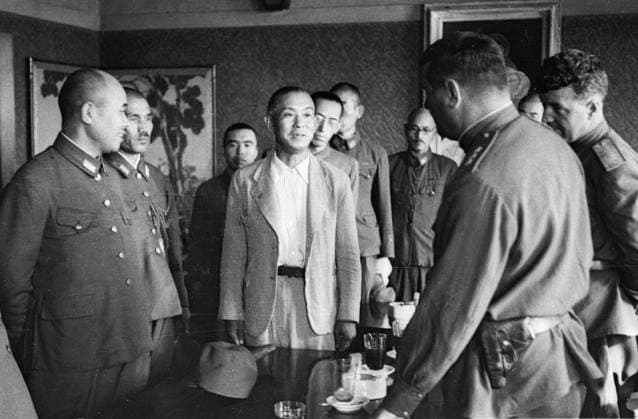
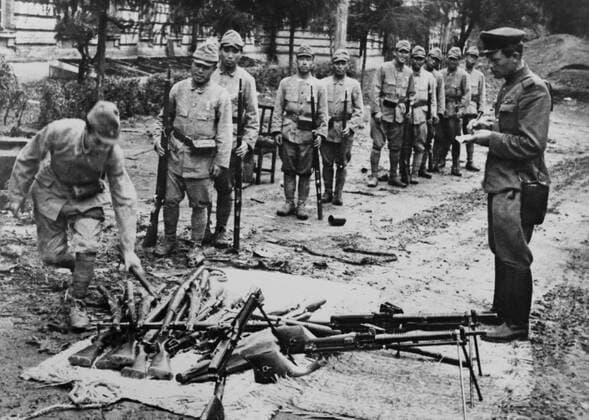
  • CAPITULATION JAPAN WWII 65856 01.09.1945 Soviet Command accepts capitulation of the Japanese army units. Simon Raskin Sputnik Manchzhuriya China  Copyright: xSimonxRaskinx

    CAPITULATION JAPAN WWII 65856 01.09.1945 Soviet Command accepts capitulation of the Japanese army units. Simon Raskin Sputnik Manchzhuriya China Copyright: xSimonxRaskinx

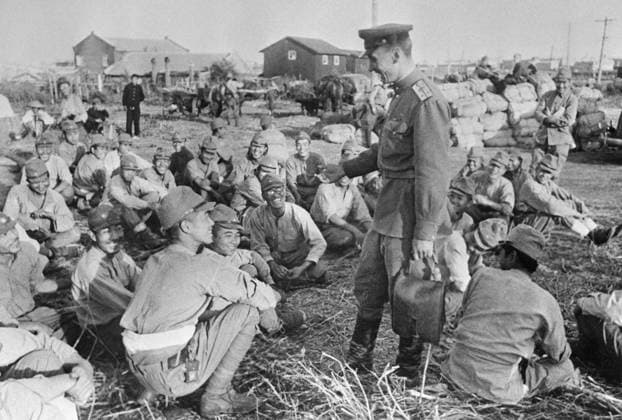
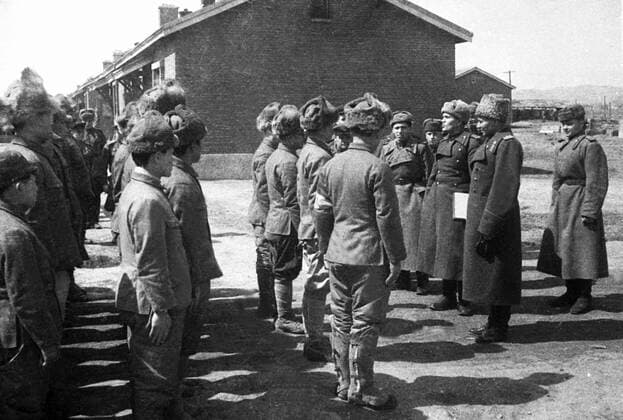
  • MANCHURIA PRISONERS 1761 03.09.1945 Soviet soldiers and officers talking to captive Japanese soldiers. San Sputnik Manchzhuriya China  Copyright: xSanx

    MANCHURIA PRISONERS 1761 03.09.1945 Soviet soldiers and officers talking to captive Japanese soldiers. San Sputnik Manchzhuriya China Copyright: xSanx

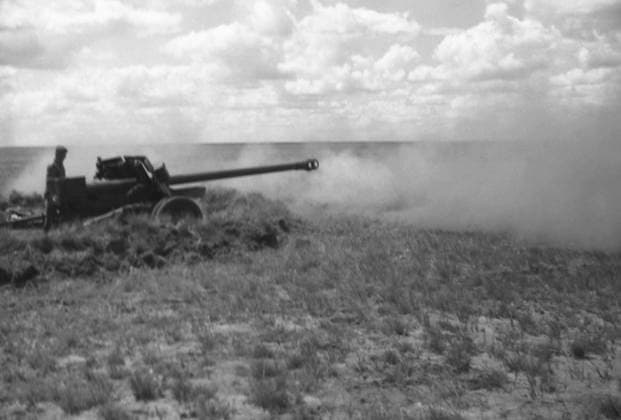
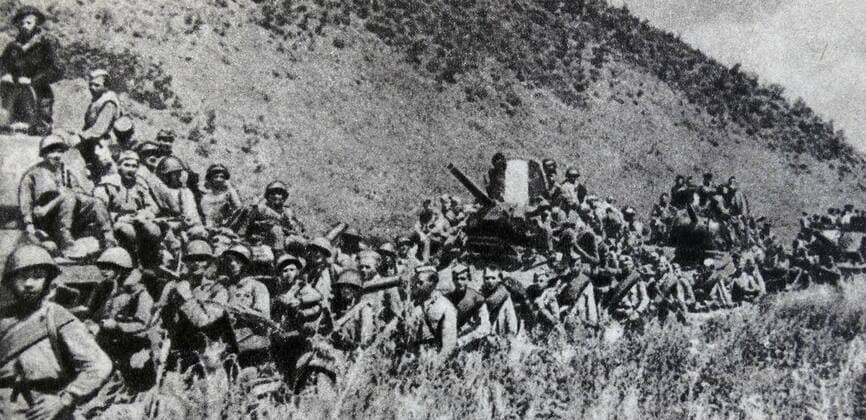
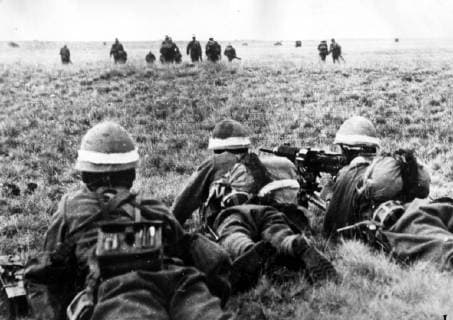
  • Soviet-Japanese War 6051476 09.08.1945 The Soviet-Japanese War of August-September 1945. Photo: Soviet forces attack the Kwantung Army in Manchuria, China. Simon Raskin Manchzhuriya China  Copyright: xSimonxRaskinx

    Soviet-Japanese War 6051476 09.08.1945 The Soviet-Japanese War of August-September 1945. Photo: Soviet forces attack the Kwantung Army in Manchuria, China. Simon Raskin Manchzhuriya China Copyright: xSimonxRaskinx

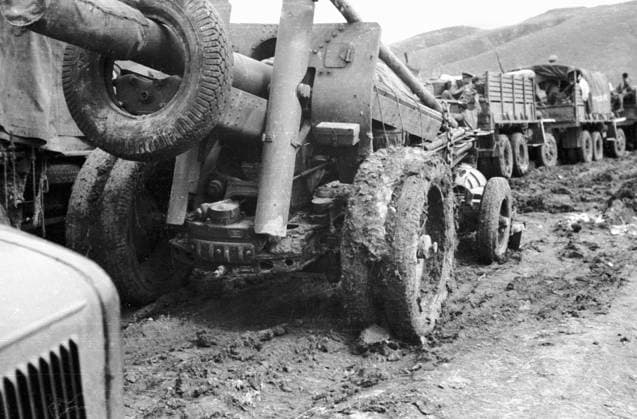
  • TROOPS ROAD CARS 57044 10.08.1945 Soviet troops advancing along the wartime roads of Manchuria Peter Sputnik China  Copyright: xPeterx

    TROOPS ROAD CARS 57044 10.08.1945 Soviet troops advancing along the wartime roads of Manchuria Peter Sputnik China Copyright: xPeterx

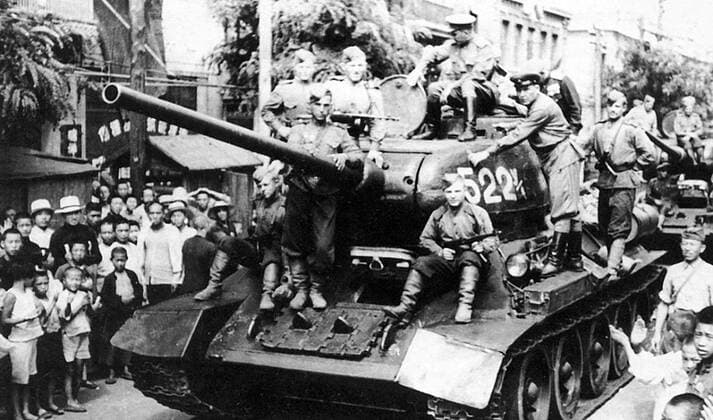
  • SOVIET TANKMEN MANCHURIA PEOPLE GREETING 1875 15.08.1945 People of Manchuria greeting Soviet tankmen. Simon Raskin Sputnik Manchzhuriya China  Copyright: xSimonxRaskinx

    SOVIET TANKMEN MANCHURIA PEOPLE GREETING 1875 15.08.1945 People of Manchuria greeting Soviet tankmen. Simon Raskin Sputnik Manchzhuriya China Copyright: xSimonxRaskinx

  • Soviet troops liberated the Chinese port city of Dalian from Japanese occupation in August, 1945, as part of the Manchurian Strategic Offensive.<br ><br > The campaign began on 9 August 1945, with the Soviet and Mongolian invasion of the Japanese puppet state of Manchukuo in northeastern China and was the largest campaign of the 1945 Soviet-Japanese War, which resumed hostilities between the Soviet Union and the Empire of Japan after almost six years of peace.<br ><br > The rapid defeat of Japan™s Kwantung Army has been argued to be a significant factor in the Japanese surrender and the end of World War II, as Japan realized the Soviets were willing and able to take the cost of invasion of its Japanese Home Islands, after their rapid Supplier:xCPAxMediaxCo.xLtd. 1060_05_CPA0031436

    Soviet troops liberated the Chinese port city of Dalian from Japanese occupation in August, 1945, as part of the Manchurian Strategic Offensive.<br ><br > The campaign began on 9 August 1945, with the Soviet and Mongolian invasion of the Japanese puppet state of Manchukuo in northeastern China and was the largest campaign of the 1945 Soviet-Japanese War, which resumed hostilities between the Soviet Union and the Empire of Japan after almost six years of peace.<br ><br > The rapid defeat of Japan™s Kwantung Army has been argued to be a significant factor in the Japanese surrender and the end of World War II, as Japan realized the Soviets were willing and able to take the cost of invasion of its Japanese Home Islands, after their rapid Supplier:xCPAxMediaxCo.xLtd. 1060_05_CPA0031436

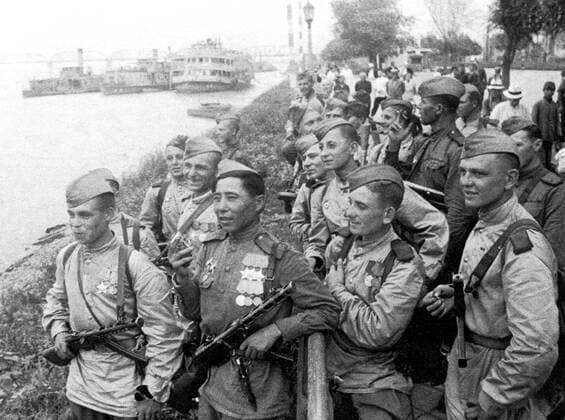
  • The Manchurian Strategic Offensive Operation began on 9 August 1945 with the Soviet invasion of the Japanese puppet state of Manchukuo. It was the last campaign of the Second World War, and the largest of the 1945 Soviet Japanese War which resumed hostilities between the Soviet Union and the Empire of Japan after almost six years of peace.<br ><br > Temporary Soviet gains on the continent were Manchukuo, Inner Mongolia and northern Korea. The Soviet entry into the war and the defeat of the Kwantung Army was a significant factor in the Japanese government s decision to surrender. China USSR: Soviet troops by the Songhua River in Harbin, China, August-September 1945 xSupplier:xCPAxMediaxCo.xLtd.x Copyright: xx

    The Manchurian Strategic Offensive Operation began on 9 August 1945 with the Soviet invasion of the Japanese puppet state of Manchukuo. It was the last campaign of the Second World War, and the largest of the 1945 Soviet Japanese War which resumed hostilities between the Soviet Union and the Empire of Japan after almost six years of peace.<br ><br > Temporary Soviet gains on the continent were Manchukuo, Inner Mongolia and northern Korea. The Soviet entry into the war and the defeat of the Kwantung Army was a significant factor in the Japanese government s decision to surrender. China USSR: Soviet troops by the Songhua River in Harbin, China, August-September 1945 xSupplier:xCPAxMediaxCo.xLtd.x Copyright: xx

  • The Manchurian Strategic Offensive Operation began on 9 August 1945 with the Soviet invasion of the Japanese puppet state of Manchukuo. It was the last campaign of the Second World War, and the largest of the 1945 Soviet Japanese War which resumed hostilities between the Soviet Union and the Empire of Japan after almost six years of peace.<br ><br > Temporary Soviet gains on the continent were Manchukuo, Inner Mongolia and northern Korea. The Soviet entry into the war and the defeat of the Kwantung Army was a significant factor in the Japanese government s decision to surrender. China USSR: Pacific Fleet marines of the Soviet Navy hoisting the Soviet naval ensign in Dalian (Port Arthur), on October 1, 1945. Photo by Haldei RIA Novosti xSupplier:xCPAxMediaxCo.xLtd.x Copyright: xHaldei RIAxNovostix(CCxBY-SAx3.0x

    The Manchurian Strategic Offensive Operation began on 9 August 1945 with the Soviet invasion of the Japanese puppet state of Manchukuo. It was the last campaign of the Second World War, and the largest of the 1945 Soviet Japanese War which resumed hostilities between the Soviet Union and the Empire of Japan after almost six years of peace.<br ><br > Temporary Soviet gains on the continent were Manchukuo, Inner Mongolia and northern Korea. The Soviet entry into the war and the defeat of the Kwantung Army was a significant factor in the Japanese government s decision to surrender. China USSR: Pacific Fleet marines of the Soviet Navy hoisting the Soviet naval ensign in Dalian (Port Arthur), on October 1, 1945. Photo by Haldei RIA Novosti xSupplier:xCPAxMediaxCo.xLtd.x Copyright: xHaldei RIAxNovostix(CCxBY-SAx3.0x

  • Soviet troops on the roads of Manchuria. 1945 Soviet troops on the roads of Manchuria. 1945 Copyright: WorldxHistoryxArchive 917_05_WHA_153_0426

    Soviet troops on the roads of Manchuria. 1945 Soviet troops on the roads of Manchuria. 1945 Copyright: WorldxHistoryxArchive 917_05_WHA_153_0426

  • Soviet soldiers in Harbin, China, during the last days of World War 2. The Soviet Union declared war on Japan on Aug. 8, 1945, and invaded Manchuria, and Japanese held north east China. Photo by Yevgeny Khaldei. (BSLOC_2013-12_26) Courtesy Everett Collection PUBLICATIONXNOTxINxCANxCHNxFRAxITAxJPNxNORxPOLxRUSxESPxUKxUSA Copyright: xCourtesyxEverettxCollectionx HISL036 EC593

    Soviet soldiers in Harbin, China, during the last days of World War 2. The Soviet Union declared war on Japan on Aug. 8, 1945, and invaded Manchuria, and Japanese held north east China. Photo by Yevgeny Khaldei. (BSLOC_2013-12_26) Courtesy Everett Collection PUBLICATIONXNOTxINxCANxCHNxFRAxITAxJPNxNORxPOLxRUSxESPxUKxUSA Copyright: xCourtesyxEverettxCollectionx HISL036 EC593

  • World War 2 surrender of Japanese troops to Russian soldiers in Manchuria, Aug. 1945. As they promised the Allies at Yalta, the Soviet union declared war on Japan on Aug. 8, 1945, and invaded Manchuria. Photo by Yevgeny Khaldei. (BSLOC_2013-12_25) Courtesy Everett Collection PUBLICATIONXNOTxINxCANxCHNxFRAxITAxJPNxNORxPOLxRUSxESPxUKxUSA Copyright: xCourtesyxEverettxCollectionx HISL036 EC592

    World War 2 surrender of Japanese troops to Russian soldiers in Manchuria, Aug. 1945. As they promised the Allies at Yalta, the Soviet union declared war on Japan on Aug. 8, 1945, and invaded Manchuria. Photo by Yevgeny Khaldei. (BSLOC_2013-12_25) Courtesy Everett Collection PUBLICATIONXNOTxINxCANxCHNxFRAxITAxJPNxNORxPOLxRUSxESPxUKxUSA Copyright: xCourtesyxEverettxCollectionx HISL036 EC592

  • Troops of Japan s Manchurian army fire at Soviet forces on the Manchurian border before the outbreak of World War II, China Copyright: Topfoto  !ACHTUNG AUFNAHMEDATUM GESCHÄTZT! UnitedArchives1320050

    Troops of Japan s Manchurian army fire at Soviet forces on the Manchurian border before the outbreak of World War II, China Copyright: Topfoto !ACHTUNG AUFNAHMEDATUM GESCHÄTZT! UnitedArchives1320050

  • File photo taken on Sept. 2, 1945 shows Japan s surrender ceremony aboard the United States Navy battleship USS Missouri anchored in Tokyo Bay. On Aug. 15, 1945, Japanese Emperor Hirohito delivered a recorded radio address to the nation, announcing the surrender of Japan in World War II, one day after Japan declared its acceptance of the provisions of the Potsdam Proclamation jointly issued by China, the United States and Britain on July 26, 1945, with the Soviet Union joining later. The proclamation, which radicated Japan s crimes of aggressions during WWII and determined the principles under which Japan is required to behave after the war, is an important document for laying the foundation for the post-war world order and safeguarding peace in Asia and the rest of the world. More than 35 million Chinese were killed or injured in the war of r
    File photo taken on Sept. 2, 1945 shows Japan s surrender ceremony aboard the United States Navy battleship USS Missouri anchored in Tokyo Bay. On Aug. 15, 1945, Japanese Emperor Hirohito delivered a recorded radio address to the nation, announcing the surrender of Japan in World War II, one day after Japan declared its acceptance of the provisions of the Potsdam Proclamation jointly issued by China, the United States and Britain on July 26, 1945, with the Soviet Union joining later. The proclamation, which radicated Japan s crimes of aggressions during WWII and determined the principles under which Japan is required to behave after the war, is an important document for laying the foundation for the post-war world order and safeguarding peace in Asia and the rest of the world. More than 35 million Chinese were killed or injured in the war of r
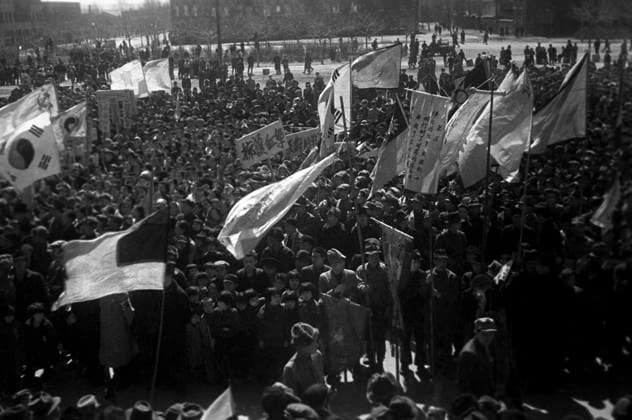
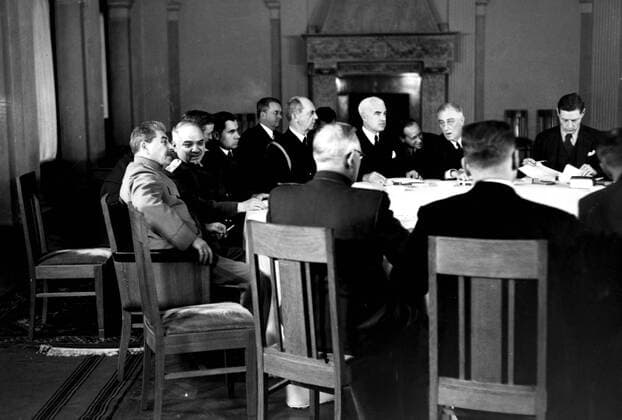
  • WW2: Conference in session; Stalin listening to Maisky on the left, on the right is President F D Roosevelt, Hopkins and Stettinus (Steltinus?). Yalta Conference. !AUFNAHMEDATUM GESCHÄTZT! Mono Print UnitedArchives0782396

    WW2: Conference in session; Stalin listening to Maisky on the left, on the right is President F D Roosevelt, Hopkins and Stettinus (Steltinus?). Yalta Conference. !AUFNAHMEDATUM GESCHÄTZT! Mono Print UnitedArchives0782396

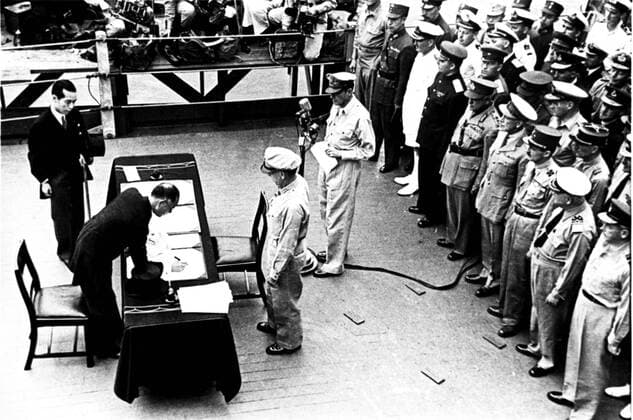
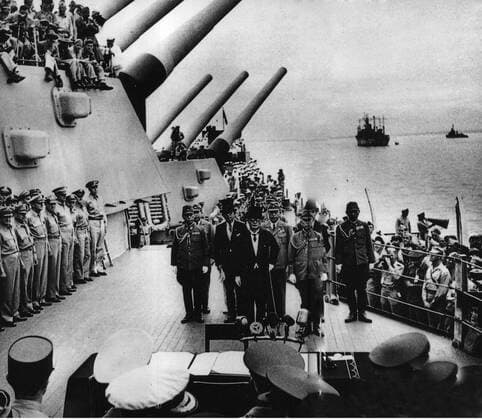
  • General Douglas MacArthur (at the microphone) watches the japanese representative, Mamoru Shigemitsu, sign the official Instrument of Surrender, documents on complete capitulation of Japan, September 2, 1945. The photo from the USSR central archives. Repro photo .  TASS_268963

    General Douglas MacArthur (at the microphone) watches the japanese representative, Mamoru Shigemitsu, sign the official Instrument of Surrender, documents on complete capitulation of Japan, September 2, 1945. The photo from the USSR central archives. Repro photo . TASS_268963

  • A camp for Japanese captives in Manchuria. Reproduction.  TASS_268928

    A camp for Japanese captives in Manchuria. Reproduction. TASS_268928

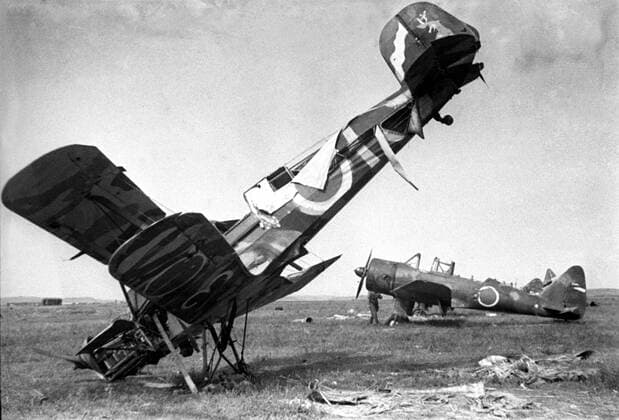
  • The victory of Soviet soldiers in the Manchuria operation forced Japan to sign the instrument of the surrender. A Japanese aircraft.  TASS_267068

    The victory of Soviet soldiers in the Manchuria operation forced Japan to sign the instrument of the surrender. A Japanese aircraft. TASS_267068

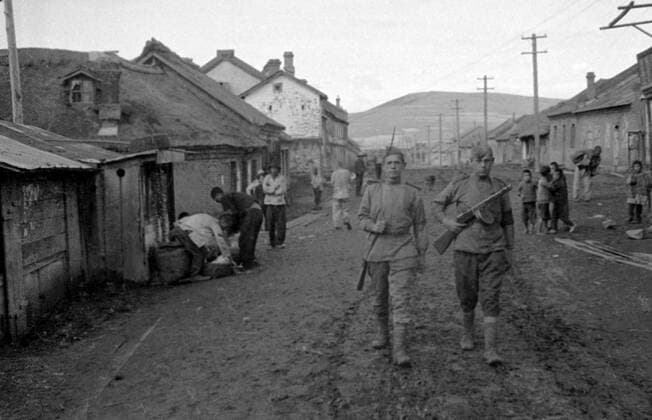
  • Soviet soldiers are pictured in patrol in Manchuria.  TASS_203218

    Soviet soldiers are pictured in patrol in Manchuria. TASS_203218

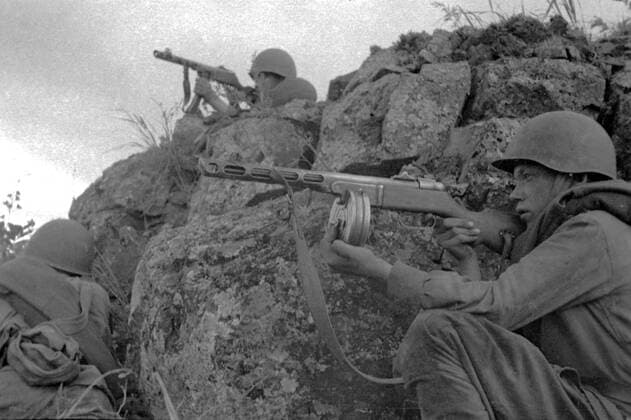
  • Soviet soldiers combat in Manchuria (the 9th of August 1945). Reproduction.  TASS_203214

    Soviet soldiers combat in Manchuria (the 9th of August 1945). Reproduction. TASS_203214

  • Great Patriotic War in photography . Manchuria. 1945. Soviet sailors are greeted in Haerbin. Reproduction.  TASS_190922

    Great Patriotic War in photography . Manchuria. 1945. Soviet sailors are greeted in Haerbin. Reproduction. TASS_190922

Collections