EditorialCreativeSportsCollectionsVideos
Prices
0Log in

Visual content for professionals.
800M+ images and videos.

Content Hub

  • Current Events
  • Pictures of the Year
  • Sports
  • Editorial
  • Creative
  • Collections
  • Videos

Offers

  • Prices & Packages
  • Promotions
  • Enterprise
  • Newsletter
  • Blog
  • The Game Magazine

Services

  • Content Research
  • Contract Photography
  • API & FTP Push
  • my-picturemaxx
  • Become a Partner

Company

  • About IMAGO
  • Careers
  • News

Help Center

  • FAQ
  • Contact Us
Legal NoticeTerms & ConditionsLicense InformationData PrivacyPrivacy Settings
© 2026 IMAGO
CEPICBAPLABVPA
Back to collections

IMAGO International History, Archive, India, Sepoy Uprising and the End of the East India Company 1857-1858

Feb 5, 2026

The following photos have been selected for you by the IMAGO picture desk on this topic. For more pictures please use the search function.
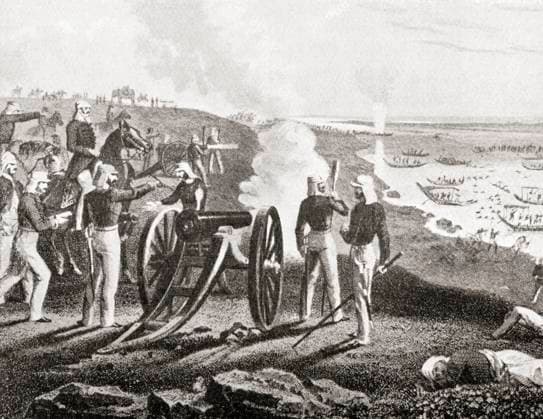
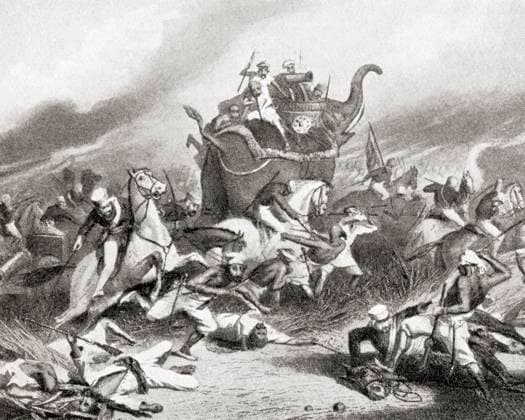
  • RECORD DATE NOT STATED Vincent Eyre at the Siege of Arrah during the Indian Rebellion of 1857, seen here driving the mutineers into the Ganges. Major-General Sir Vincent Eyre, 1811â€1881. Bengal artillery officer in the Indian Army. From Hutchinson s History of the Nations, published 1915. Copyright: DesignxPicsx xKenxWelsh 902_05_12333169HighRes
  • RECORD DATE NOT STATED The defeat of Tantya Tope by the British at Jhansi, India during the Indian Rebellion of 1857. From Hutchinson s History of the Nations, published 1915. Copyright: DesignxPicsx xKenxWelsh 902_05_12333168HighRes
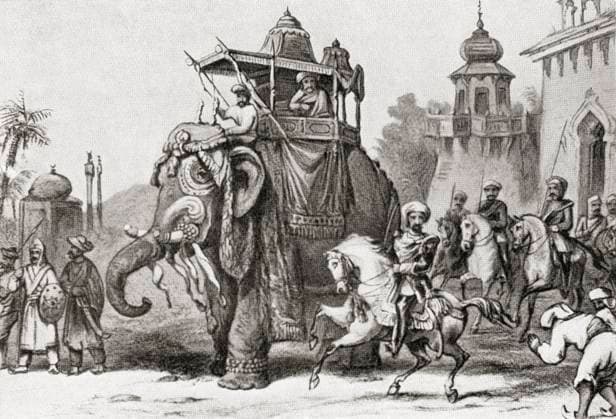
  • RECORD DATE NOT STATED The Nana Sahib leaving Lucknow for Cawnpore in 1857. Nana Sahib, 1824 †disappeared 1857, born as Dhondu Pant. Indian Maratha aristocrat and fighter, leader of the rebellion in Cawnpore (Kanpur) during the 1857 uprising. From Hutchinson s History of the Nations, published 1915. Copyright: DesignxPicsx xKenxWelsh 902_05_12333166HighRes
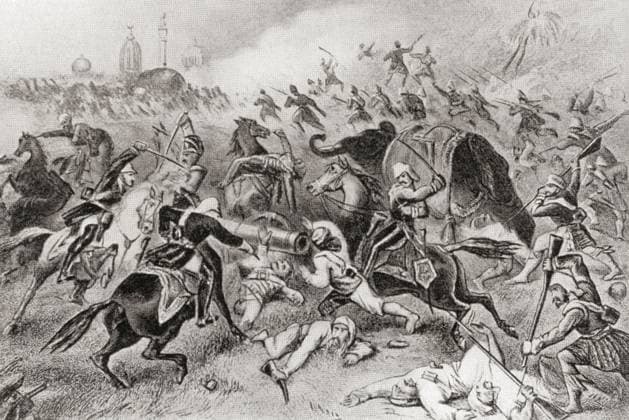
  • RECORD DATE NOT STATED The defeat of Tantya Tope by the British at Cawnpore, India during the Indian Rebellion of 1857. Ramachandra Pandurang Tope, aka Tatya Tope, Tantya Tope or Tantia Topi, 1814 †1859. Indian leader in the Indian Rebellion of 1857 and one of its notable generals. From Hutchinson s History of the Nations, published 1915. Copyright: DesignxPicsx xKenxWelsh 902_05_12333165HighRes
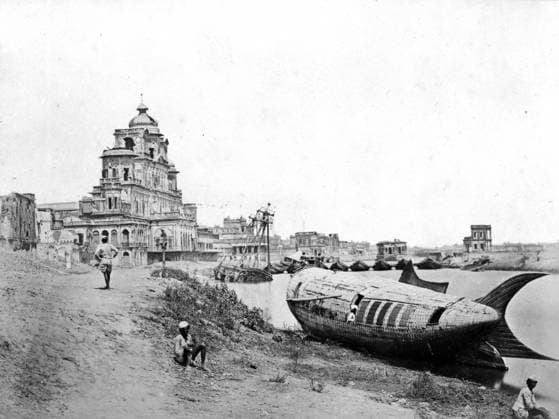
  • View of the Chattar Manzil Palace, on the River Gumti, Lucknow, during the Indian Rebellion, 1858 (b w photo) XJF466211 View of the Chattar Manzil Palace, on the River Gumti, Lucknow, during the Indian Rebellion, 1858 (b w photo) by Beato, Felice (Felix) (1825-c.1908); Private Collection; (add.info.: The royal boat of Nawab Sadaat Ali Khan can be seen on the riverbank; the palace was used as a field hospital during the rebellion; Indian Rebellion (1857-59); the fish shaped boat, ancient symbol of sovereignty;). Copyright: xBridgemanxImagesx 466211
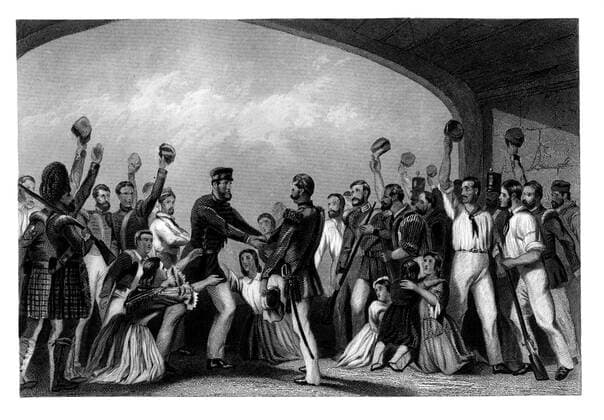
  • RECORD DATE NOT STATED Group from Mr. Barker s picture, The Relief of Lucknow, 1860. Engraving of a painting, depicting ...that grand event, the meeting of Generals Havelock and Campbell beneath the walls of the rebel and now captured city...What attaches a peculiar and enduring value to this performance are the admirably truthful portraits of the heroes who took part in that memorable day, and which have all been prepared from materials obtained from actual sittings by Mr. Lundgren - amongst them those of Sir Cohn Campbell (now Lord Clyde), General Outram, General Mansfield, Sir Hope Grant, Brigadier Russell, and the officers of their respective staffs, and, as a hideous set-off, one of that double traitor, Maun Sing...We select an episode from this picture as  Copyright:ThexPrintxCollector HeritagexImagesxUnknownx IMAGO
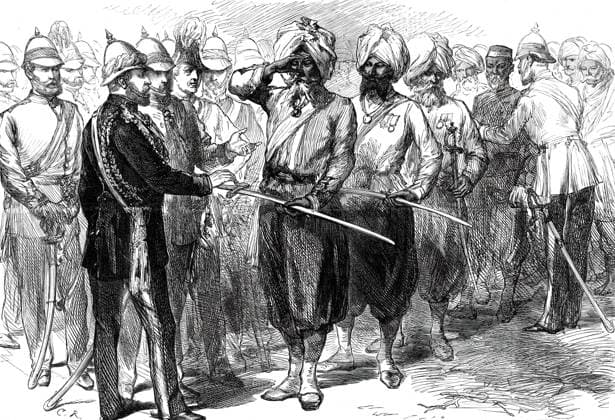
  • RECORD DATE NOT STATED The Prince of Wales receiving the survivors of the Defence of Lucknow, from a sketch by one of our special artists, 1876. In order to give more effect to the ceremony of laying the stone, which the Prince performed, the troops presenting arms and artillery saluting, the survivors of the native defenders had been collected from Oude and other parts of India. These, in their old uniforms, were drawn up close at hand...Among those present was old Ungud, the famous spy, and Carronjee Lai , the companion of Kavanagh in his daring venture. The Prince spoke very kindly of them at the native entertainment on the next evening. Altogether, taking all the circumstances into consideration, the scene was most touching; and more than one eye filled with  Copyright:ThexPrintxCollector HeritagexImagesxC.R.x IMAGO
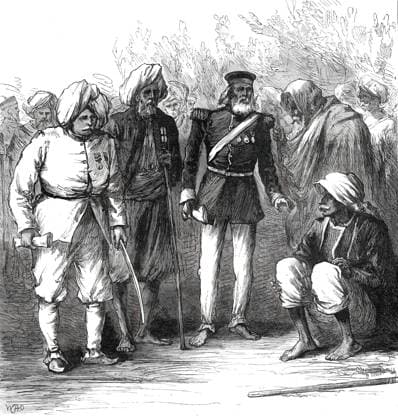
  • RECORD DATE NOT STATED The Prince of Wales in India: group of survivors of the Defence of Lucknow 1857 , from a sketch by one of our special artists, 1876. A happy thought of the Prince of Wales, future King Edward VII suggested that the veterans should be presented to him....The delight of these brave men was expressed in their faces; and as...each looked up to the Prince, they seemed for the moment supremely happy, in spite of age and infirmity and poor clothing. One, nearly blind, exclaimed, Let me see him; and the Prince, understanding what he meant, told the officers to permit him to approach. The veteran, with his hand at the salute...peered into the Prince s face, drew a deep sigh, and said, I thank Heaven I have lived to see this day and the Prince s  Copyright:ThexPrintxCollector HeritagexImagesxW.xH.xO.x IMAGO
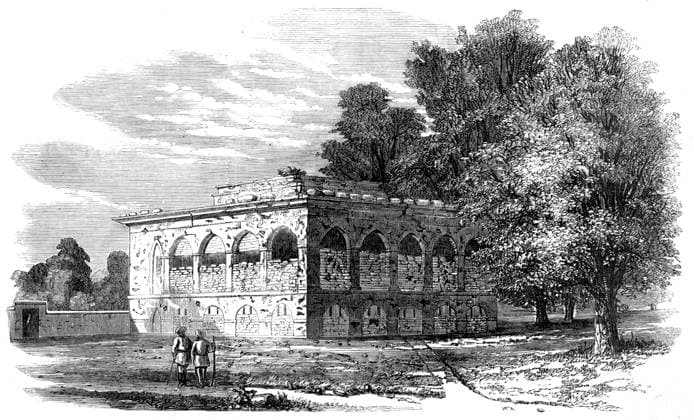
  • RECORD DATE NOT STATED House at Arrah Fortified against the Dinapore Mutineers - from a sketch by Major V. Eyre, 1857. A lithograph of the house, from a sketch by Major V. Eyre, has been published at Calcutta, whence our View has been engraved. The lithograph bears the following superscription: Sketch of the House at Arrah. Fortified by Mr. Boyle, District Engineer, E. I. East India Railway, and defended by him and Mr. Wake, Magistrate, with 50 Sikhs and the English residents, for seven days against three mutinous regiments from Dinapore. Siege raised 3rd August, 1857. Print dedicated to the heroic garrison. After Indian troops in the cantonments at Danapur (in Bihar) mutinied and deserted, Irish civil engineer Richard Vicars Boyle fortified a detached two-st  Copyright:ThexPrintxCollector HeritagexImagesxUnknownx IMAGO
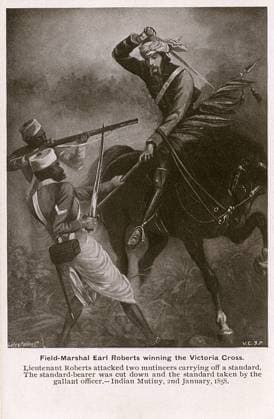
  • 1st Earl Roberts winning the Victoria Cross - Indian Mutiny Frederick Sleigh Roberts, 1st Earl Roberts (1832-1914), awarded a Victoria Cross medal after his service in Khudagani (Khodagunge) on 2nd January 1858 during the Indian Mutiny. Date: 1858  Copyright: Copyrightx(c)Geminix2023.xCredit:xGemini 10921323
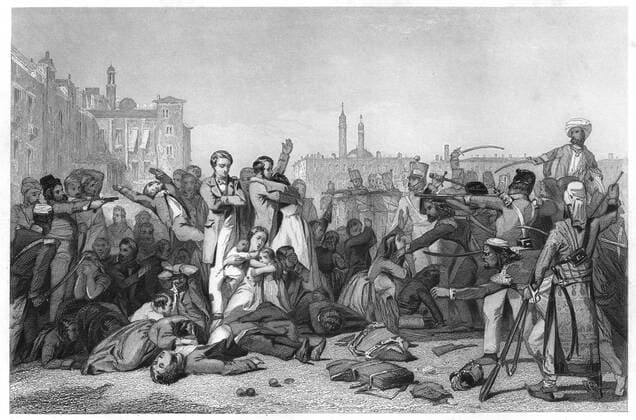
  • RECORD DATE NOT STATED Massacre at Cawnpore , 1857, (c1860). Artist: Unknown Copyright:xThexPrintxCollector HeritagexImagesx IMAGO ,1648773 ! ACHTUNG: AUFNAHMEDATUM GESCHÄTZT!  Copyright:ThexPrintxCollector HeritagexImagesx IMAGO
  • RECORD DATE NOT STATED The Relief of Lucknow by General Havelock, Indian Mutiny, 15 September 1857, (1880). The siege of Lucknow was one of the major engagements of the uprising against British rule in India which began in 1857. The mutiny had many underlying causes, but was sparked by the introduction of cartridges which were greased with animal fat. This outraged both Muslim and Hindu soldiers (sepoys), who made up the majority of the Indian army at the time. Although the mutiny was defeated in 1859, it led to the administration of India passing from the East India Company to the Crown. Lucknow itself was besieged by mutineers for 87 days from the outbreak of the mutiny until a column commanded by General Sir Henry Havelock broke through on 25th September 1857.
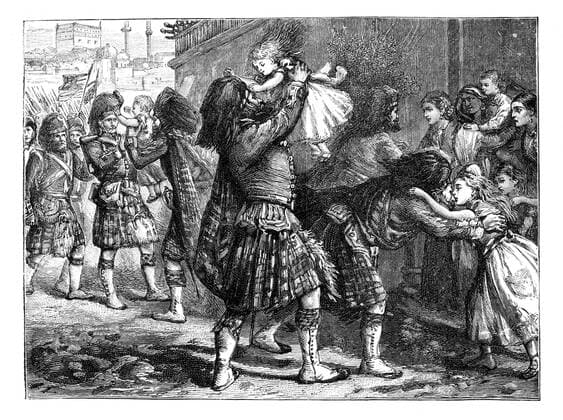
  • RECORD DATE NOT STATED The first relief of Lucknow during the Indian Mutiny, 25 September 1857, (1888). Soldiers of a Highland Regiment entering the city. The siege of Lucknow was one of the major engagements of the uprising against British rule in India which began in 1857. The mutiny had many underlying causes, but was sparked by the introduction of cartridges which were greased with animal fat. This outraged both Muslim and Hindu soldiers (sepoys), who made up the majority of the Indian army at the time. Although the mutiny was defeated in 1859, it led to the administration of India passing from the East India Company to the Crown. Lucknow itself was besieged by mutineers for 87 days from the outbreak of the mutiny until a column commanded by General Sir Henry
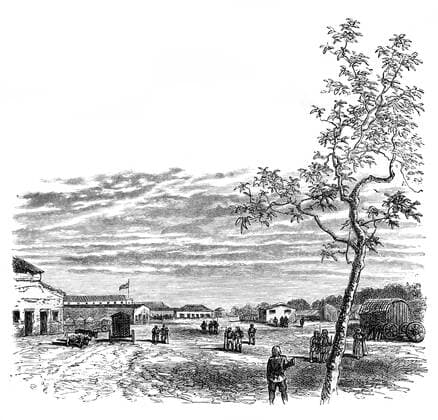
  • RECORD DATE NOT STATED The Barracks at Meerut, India, c1850s, (1888). Site of the start of the Indian Mutiny in 1857. Illustration from The Life & Times of Queen Victoria, Vol II, by Robert Wilson, (1888). The Barracks at Meerut, India, c1850s, (1888). Artist: Unknown
Page 2 of 2