EditorialCreativeSportsCollectionsVideos
Prices
0Log in

Visual content for professionals.
800M+ images and videos.

Content Hub

  • Current Events
  • Pictures of the Year
  • Sports
  • Editorial
  • Creative
  • Collections
  • Videos

Offers

  • Prices & Packages
  • Promotions
  • Enterprise
  • Newsletter
  • Blog
  • The Game Magazine

Services

  • Content Research
  • Contract Photography
  • API & FTP Push
  • my-picturemaxx
  • Become a Partner

Company

  • About IMAGO
  • Careers
  • News

Help Center

  • FAQ
  • Contact Us
Legal NoticeTerms & ConditionsLicense InformationData PrivacyPrivacy Settings
© 2026 IMAGO
CEPICBAPLABVPA
  1. Mexico, Mexico City, search for over 500 skeletal remains in Lagunas de La Habana

Mexico, Mexico City, search for over 500 skeletal remains in Lagunas de La Habana

Apr 14, 2026

The following photos have been selected for you by the IMAGO picture desk on this topic. For more pictures please use the search function.

Images in this collection
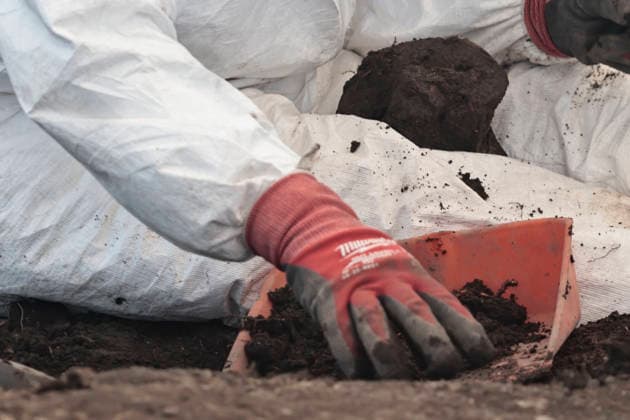
  • April 14, 2026, Mexico City, Cdmx, Mexico: Between the borders of the Tlahuac region of Mexico City and Chalco, State of Mexico, lie the lagoons that divide these areas. Within a particular zone known as Lagunas de La Habana (Havana Lagoons), more than 500 human skeletal remains (teeth and bones from different parts of the body) have been found to date, buried in the mud at a very shallow depth. This is because it is a chinampa (floating garden) area, making it impossible that this area was used as a cemetery. The remains are found at a very shallow depth; after only 20 centimeters, the water reaches the lagoon. The search continues, carried out by personnel from the Attorney General s Offices, police, the National Guard, and the State - ZUMAp204 20260414_zip_p204_041 Copyright: xJosuexPerezx

    April 14, 2026, Mexico City, Cdmx, Mexico: Between the borders of the Tlahuac region of Mexico City and Chalco, State of Mexico, lie the lagoons that divide these areas. Within a particular zone known as Lagunas de La Habana (Havana Lagoons), more than 500 human skeletal remains (teeth and bones from different parts of the body) have been found to date, buried in the mud at a very shallow depth. This is because it is a chinampa (floating garden) area, making it impossible that this area was used as a cemetery. The remains are found at a very shallow depth; after only 20 centimeters, the water reaches the lagoon. The search continues, carried out by personnel from the Attorney General s Offices, police, the National Guard, and the State - ZUMAp204 20260414_zip_p204_041 Copyright: xJosuexPerezx

  • April 14, 2026, Mexico City, Cdmx, Mexico: Between the borders of the Tlahuac region of Mexico City and Chalco, State of Mexico, lie the lagoons that divide these areas. Within a particular zone known as Lagunas de La Habana (Havana Lagoons), more than 500 human skeletal remains (teeth and bones from different parts of the body) have been found to date, buried in the mud at a very shallow depth. This is because it is a chinampa (floating garden) area, making it impossible that this area was used as a cemetery. The remains are found at a very shallow depth; after only 20 centimeters, the water reaches the lagoon. The search continues, carried out by personnel from the Attorney General s Offices, police, the National Guard, and the State - ZUMAp204 20260414_zip_p204_045 Copyright: xJosuexPerezx
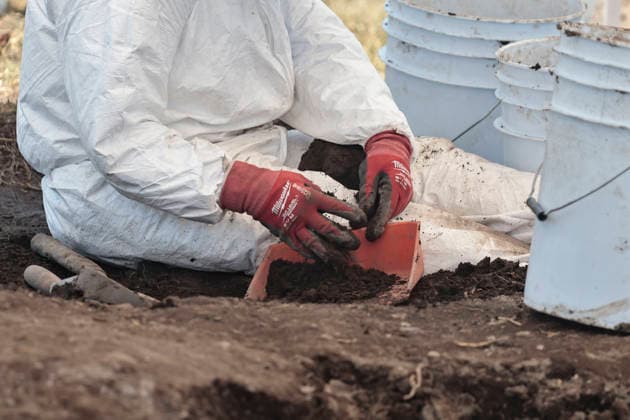
    April 14, 2026, Mexico City, Cdmx, Mexico: Between the borders of the Tlahuac region of Mexico City and Chalco, State of Mexico, lie the lagoons that divide these areas. Within a particular zone known as Lagunas de La Habana (Havana Lagoons), more than 500 human skeletal remains (teeth and bones from different parts of the body) have been found to date, buried in the mud at a very shallow depth. This is because it is a chinampa (floating garden) area, making it impossible that this area was used as a cemetery. The remains are found at a very shallow depth; after only 20 centimeters, the water reaches the lagoon. The search continues, carried out by personnel from the Attorney General s Offices, police, the National Guard, and the State - ZUMAp204 20260414_zip_p204_045 Copyright: xJosuexPerezx

  • April 14, 2026, Mexico City, Cdmx, Mexico: Between the borders of the Tlahuac region of Mexico City and Chalco, State of Mexico, lie the lagoons that divide these areas. Within a particular zone known as Lagunas de La Habana (Havana Lagoons), more than 500 human skeletal remains (teeth and bones from different parts of the body) have been found to date, buried in the mud at a very shallow depth. This is because it is a chinampa (floating garden) area, making it impossible that this area was used as a cemetery. The remains are found at a very shallow depth; after only 20 centimeters, the water reaches the lagoon. The search continues, carried out by personnel from the Attorney General s Offices, police, the National Guard, and the State - ZUMAp204 20260414_zip_p204_040 Copyright: xJosuexPerezx
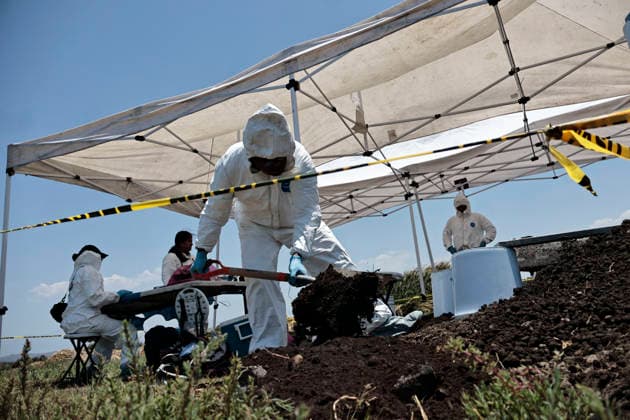
    April 14, 2026, Mexico City, Cdmx, Mexico: Between the borders of the Tlahuac region of Mexico City and Chalco, State of Mexico, lie the lagoons that divide these areas. Within a particular zone known as Lagunas de La Habana (Havana Lagoons), more than 500 human skeletal remains (teeth and bones from different parts of the body) have been found to date, buried in the mud at a very shallow depth. This is because it is a chinampa (floating garden) area, making it impossible that this area was used as a cemetery. The remains are found at a very shallow depth; after only 20 centimeters, the water reaches the lagoon. The search continues, carried out by personnel from the Attorney General s Offices, police, the National Guard, and the State - ZUMAp204 20260414_zip_p204_040 Copyright: xJosuexPerezx

  • April 14, 2026, Mexico City, Cdmx, Mexico: Between the borders of the Tlahuac region of Mexico City and Chalco, State of Mexico, lie the lagoons that divide these areas. Within a particular zone known as Lagunas de La Habana (Havana Lagoons), more than 500 human skeletal remains (teeth and bones from different parts of the body) have been found to date, buried in the mud at a very shallow depth. This is because it is a chinampa (floating garden) area, making it impossible that this area was used as a cemetery. The remains are found at a very shallow depth; after only 20 centimeters, the water reaches the lagoon. The search continues, carried out by personnel from the Attorney General s Offices, police, the National Guard, and the State - ZUMAp204 20260414_zip_p204_039 Copyright: xJosuexPerezx
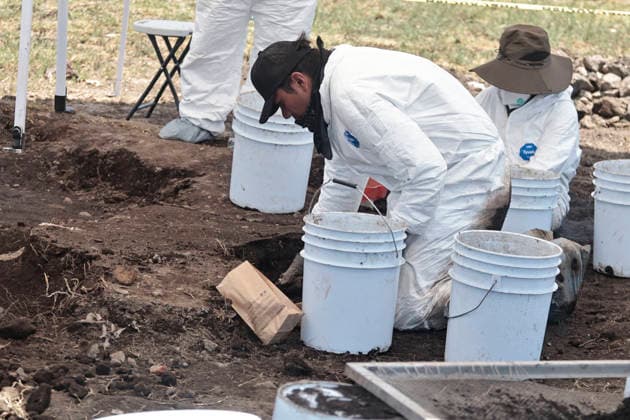
    April 14, 2026, Mexico City, Cdmx, Mexico: Between the borders of the Tlahuac region of Mexico City and Chalco, State of Mexico, lie the lagoons that divide these areas. Within a particular zone known as Lagunas de La Habana (Havana Lagoons), more than 500 human skeletal remains (teeth and bones from different parts of the body) have been found to date, buried in the mud at a very shallow depth. This is because it is a chinampa (floating garden) area, making it impossible that this area was used as a cemetery. The remains are found at a very shallow depth; after only 20 centimeters, the water reaches the lagoon. The search continues, carried out by personnel from the Attorney General s Offices, police, the National Guard, and the State - ZUMAp204 20260414_zip_p204_039 Copyright: xJosuexPerezx

  • April 14, 2026, Mexico City, Cdmx, Mexico: Between the borders of the Tlahuac region of Mexico City and Chalco, State of Mexico, lie the lagoons that divide these areas. Within a particular zone known as Lagunas de La Habana (Havana Lagoons), more than 500 human skeletal remains (teeth and bones from different parts of the body) have been found to date, buried in the mud at a very shallow depth. This is because it is a chinampa (floating garden) area, making it impossible that this area was used as a cemetery. The remains are found at a very shallow depth; after only 20 centimeters, the water reaches the lagoon. The search continues, carried out by personnel from the Attorney General s Offices, police, the National Guard, and the State - ZUMAp204 20260414_zip_p204_034 Copyright: xJosuexPerezx
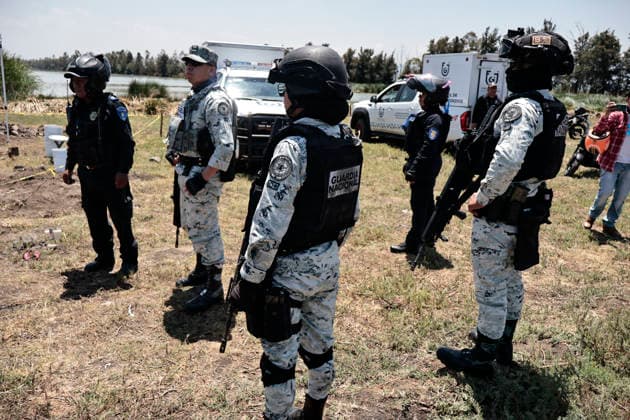
    April 14, 2026, Mexico City, Cdmx, Mexico: Between the borders of the Tlahuac region of Mexico City and Chalco, State of Mexico, lie the lagoons that divide these areas. Within a particular zone known as Lagunas de La Habana (Havana Lagoons), more than 500 human skeletal remains (teeth and bones from different parts of the body) have been found to date, buried in the mud at a very shallow depth. This is because it is a chinampa (floating garden) area, making it impossible that this area was used as a cemetery. The remains are found at a very shallow depth; after only 20 centimeters, the water reaches the lagoon. The search continues, carried out by personnel from the Attorney General s Offices, police, the National Guard, and the State - ZUMAp204 20260414_zip_p204_034 Copyright: xJosuexPerezx

  • April 14, 2026, Mexico City, Cdmx, Mexico: Between the borders of the Tlahuac region of Mexico City and Chalco, State of Mexico, lie the lagoons that divide these areas. Within a particular zone known as Lagunas de La Habana (Havana Lagoons), more than 500 human skeletal remains (teeth and bones from different parts of the body) have been found to date, buried in the mud at a very shallow depth. This is because it is a chinampa (floating garden) area, making it impossible that this area was used as a cemetery. The remains are found at a very shallow depth; after only 20 centimeters, the water reaches the lagoon. The search continues, carried out by personnel from the Attorney General s Offices, police, the National Guard, and the State - ZUMAp204 20260414_zip_p204_028 Copyright: xJosuexPerezx
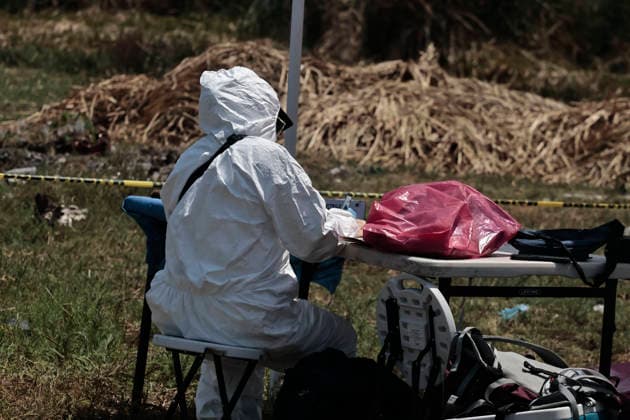
    April 14, 2026, Mexico City, Cdmx, Mexico: Between the borders of the Tlahuac region of Mexico City and Chalco, State of Mexico, lie the lagoons that divide these areas. Within a particular zone known as Lagunas de La Habana (Havana Lagoons), more than 500 human skeletal remains (teeth and bones from different parts of the body) have been found to date, buried in the mud at a very shallow depth. This is because it is a chinampa (floating garden) area, making it impossible that this area was used as a cemetery. The remains are found at a very shallow depth; after only 20 centimeters, the water reaches the lagoon. The search continues, carried out by personnel from the Attorney General s Offices, police, the National Guard, and the State - ZUMAp204 20260414_zip_p204_028 Copyright: xJosuexPerezx

  • April 14, 2026, Mexico City, Cdmx, Mexico: Between the borders of the Tlahuac region of Mexico City and Chalco, State of Mexico, lie the lagoons that divide these areas. Within a particular zone known as Lagunas de La Habana (Havana Lagoons), more than 500 human skeletal remains (teeth and bones from different parts of the body) have been found to date, buried in the mud at a very shallow depth. This is because it is a chinampa (floating garden) area, making it impossible that this area was used as a cemetery. The remains are found at a very shallow depth; after only 20 centimeters, the water reaches the lagoon. The search continues, carried out by personnel from the Attorney General s Offices, police, the National Guard, and the State - ZUMAp204 20260414_zip_p204_024 Copyright: xJosuexPerezx
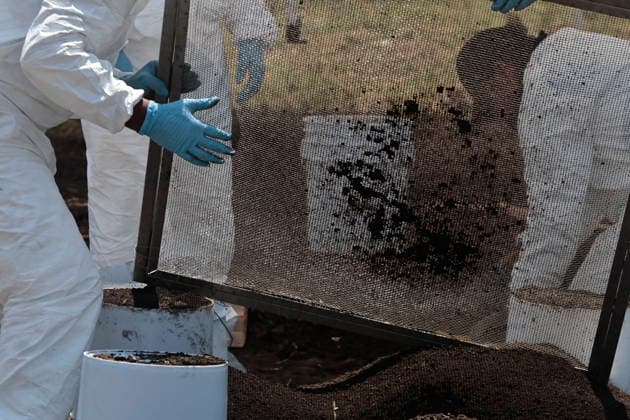
    April 14, 2026, Mexico City, Cdmx, Mexico: Between the borders of the Tlahuac region of Mexico City and Chalco, State of Mexico, lie the lagoons that divide these areas. Within a particular zone known as Lagunas de La Habana (Havana Lagoons), more than 500 human skeletal remains (teeth and bones from different parts of the body) have been found to date, buried in the mud at a very shallow depth. This is because it is a chinampa (floating garden) area, making it impossible that this area was used as a cemetery. The remains are found at a very shallow depth; after only 20 centimeters, the water reaches the lagoon. The search continues, carried out by personnel from the Attorney General s Offices, police, the National Guard, and the State - ZUMAp204 20260414_zip_p204_024 Copyright: xJosuexPerezx

  • April 14, 2026, Mexico City, Cdmx, Mexico: Between the borders of the Tlahuac region of Mexico City and Chalco, State of Mexico, lie the lagoons that divide these areas. Within a particular zone known as Lagunas de La Habana (Havana Lagoons), more than 500 human skeletal remains (teeth and bones from different parts of the body) have been found to date, buried in the mud at a very shallow depth. This is because it is a chinampa (floating garden) area, making it impossible that this area was used as a cemetery. The remains are found at a very shallow depth; after only 20 centimeters, the water reaches the lagoon. The search continues, carried out by personnel from the Attorney General s Offices, police, the National Guard, and the State - ZUMAp204 20260414_zip_p204_022 Copyright: xJosuexPerezx
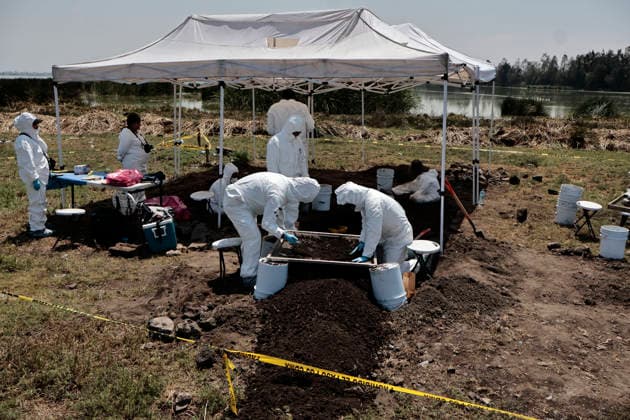
    April 14, 2026, Mexico City, Cdmx, Mexico: Between the borders of the Tlahuac region of Mexico City and Chalco, State of Mexico, lie the lagoons that divide these areas. Within a particular zone known as Lagunas de La Habana (Havana Lagoons), more than 500 human skeletal remains (teeth and bones from different parts of the body) have been found to date, buried in the mud at a very shallow depth. This is because it is a chinampa (floating garden) area, making it impossible that this area was used as a cemetery. The remains are found at a very shallow depth; after only 20 centimeters, the water reaches the lagoon. The search continues, carried out by personnel from the Attorney General s Offices, police, the National Guard, and the State - ZUMAp204 20260414_zip_p204_022 Copyright: xJosuexPerezx

  • April 14, 2026, Mexico City, Cdmx, Mexico: Between the borders of the Tlahuac region of Mexico City and Chalco, State of Mexico, lie the lagoons that divide these areas. Within a particular zone known as Lagunas de La Habana (Havana Lagoons), more than 500 human skeletal remains (teeth and bones from different parts of the body) have been found to date, buried in the mud at a very shallow depth. This is because it is a chinampa (floating garden) area, making it impossible that this area was used as a cemetery. The remains are found at a very shallow depth; after only 20 centimeters, the water reaches the lagoon. The search continues, carried out by personnel from the Attorney General s Offices, police, the National Guard, and the State - ZUMAp204 20260414_zip_p204_021 Copyright: xJosuexPerezx
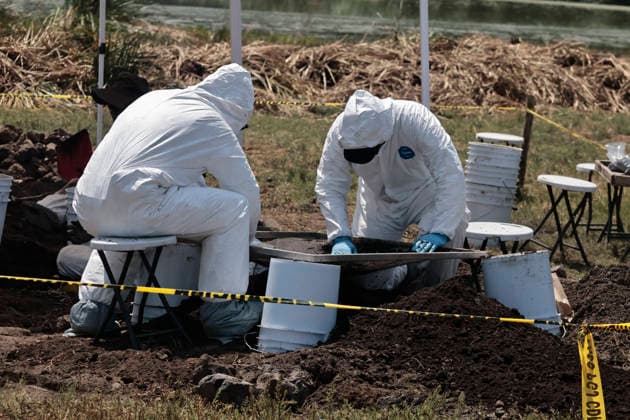
    April 14, 2026, Mexico City, Cdmx, Mexico: Between the borders of the Tlahuac region of Mexico City and Chalco, State of Mexico, lie the lagoons that divide these areas. Within a particular zone known as Lagunas de La Habana (Havana Lagoons), more than 500 human skeletal remains (teeth and bones from different parts of the body) have been found to date, buried in the mud at a very shallow depth. This is because it is a chinampa (floating garden) area, making it impossible that this area was used as a cemetery. The remains are found at a very shallow depth; after only 20 centimeters, the water reaches the lagoon. The search continues, carried out by personnel from the Attorney General s Offices, police, the National Guard, and the State - ZUMAp204 20260414_zip_p204_021 Copyright: xJosuexPerezx

  • April 14, 2026, Mexico City, Cdmx, Mexico: Between the borders of the Tlahuac region of Mexico City and Chalco, State of Mexico, lie the lagoons that divide these areas. Within a particular zone known as Lagunas de La Habana (Havana Lagoons), more than 500 human skeletal remains (teeth and bones from different parts of the body) have been found to date, buried in the mud at a very shallow depth. This is because it is a chinampa (floating garden) area, making it impossible that this area was used as a cemetery. The remains are found at a very shallow depth; after only 20 centimeters, the water reaches the lagoon. The search continues, carried out by personnel from the Attorney General s Offices, police, the National Guard, and the State - ZUMAp204 20260414_zip_p204_018 Copyright: xJosuexPerezx
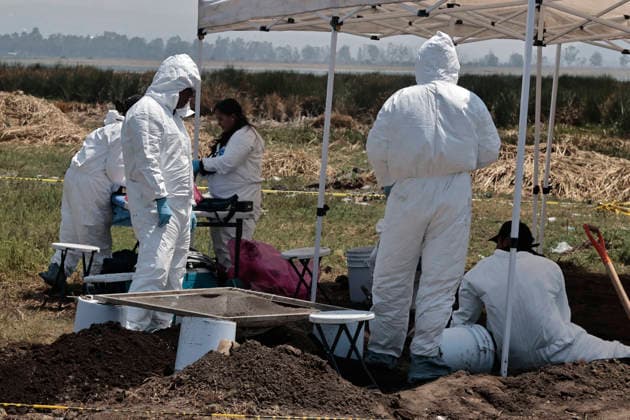
    April 14, 2026, Mexico City, Cdmx, Mexico: Between the borders of the Tlahuac region of Mexico City and Chalco, State of Mexico, lie the lagoons that divide these areas. Within a particular zone known as Lagunas de La Habana (Havana Lagoons), more than 500 human skeletal remains (teeth and bones from different parts of the body) have been found to date, buried in the mud at a very shallow depth. This is because it is a chinampa (floating garden) area, making it impossible that this area was used as a cemetery. The remains are found at a very shallow depth; after only 20 centimeters, the water reaches the lagoon. The search continues, carried out by personnel from the Attorney General s Offices, police, the National Guard, and the State - ZUMAp204 20260414_zip_p204_018 Copyright: xJosuexPerezx

  • April 14, 2026, Mexico City, Cdmx, Mexico: Between the borders of the Tlahuac region of Mexico City and Chalco, State of Mexico, lie the lagoons that divide these areas. Within a particular zone known as Lagunas de La Habana (Havana Lagoons), more than 500 human skeletal remains (teeth and bones from different parts of the body) have been found to date, buried in the mud at a very shallow depth. This is because it is a chinampa (floating garden) area, making it impossible that this area was used as a cemetery. The remains are found at a very shallow depth; after only 20 centimeters, the water reaches the lagoon. The search continues, carried out by personnel from the Attorney General s Offices, police, the National Guard, and the State - ZUMAp204 20260414_zip_p204_016 Copyright: xJosuexPerezx
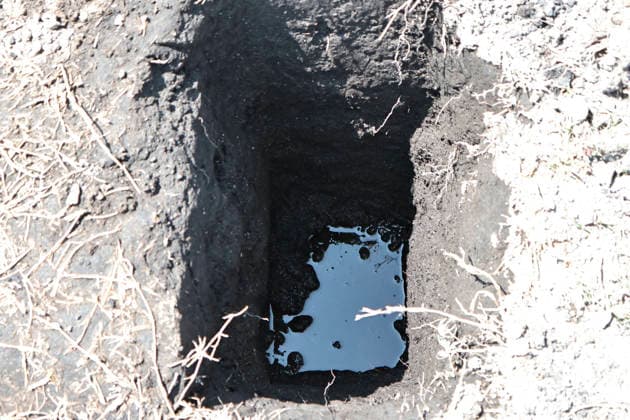
    April 14, 2026, Mexico City, Cdmx, Mexico: Between the borders of the Tlahuac region of Mexico City and Chalco, State of Mexico, lie the lagoons that divide these areas. Within a particular zone known as Lagunas de La Habana (Havana Lagoons), more than 500 human skeletal remains (teeth and bones from different parts of the body) have been found to date, buried in the mud at a very shallow depth. This is because it is a chinampa (floating garden) area, making it impossible that this area was used as a cemetery. The remains are found at a very shallow depth; after only 20 centimeters, the water reaches the lagoon. The search continues, carried out by personnel from the Attorney General s Offices, police, the National Guard, and the State - ZUMAp204 20260414_zip_p204_016 Copyright: xJosuexPerezx

  • April 14, 2026, Mexico City, Cdmx, Mexico: Between the borders of the Tlahuac region of Mexico City and Chalco, State of Mexico, lie the lagoons that divide these areas. Within a particular zone known as Lagunas de La Habana (Havana Lagoons), more than 500 human skeletal remains (teeth and bones from different parts of the body) have been found to date, buried in the mud at a very shallow depth. This is because it is a chinampa (floating garden) area, making it impossible that this area was used as a cemetery. The remains are found at a very shallow depth; after only 20 centimeters, the water reaches the lagoon. The search continues, carried out by personnel from the Attorney General s Offices, police, the National Guard, and the State - ZUMAp204 20260414_zip_p204_012 Copyright: xJosuexPerezx
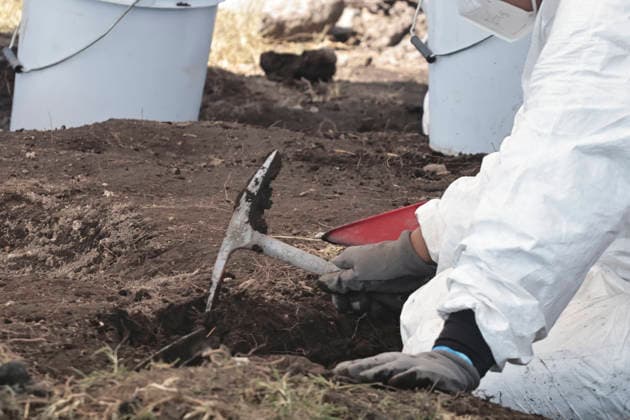
    April 14, 2026, Mexico City, Cdmx, Mexico: Between the borders of the Tlahuac region of Mexico City and Chalco, State of Mexico, lie the lagoons that divide these areas. Within a particular zone known as Lagunas de La Habana (Havana Lagoons), more than 500 human skeletal remains (teeth and bones from different parts of the body) have been found to date, buried in the mud at a very shallow depth. This is because it is a chinampa (floating garden) area, making it impossible that this area was used as a cemetery. The remains are found at a very shallow depth; after only 20 centimeters, the water reaches the lagoon. The search continues, carried out by personnel from the Attorney General s Offices, police, the National Guard, and the State - ZUMAp204 20260414_zip_p204_012 Copyright: xJosuexPerezx

  • April 14, 2026, Mexico City, Cdmx, Mexico: Between the borders of the Tlahuac region of Mexico City and Chalco, State of Mexico, lie the lagoons that divide these areas. Within a particular zone known as Lagunas de La Habana (Havana Lagoons), more than 500 human skeletal remains (teeth and bones from different parts of the body) have been found to date, buried in the mud at a very shallow depth. This is because it is a chinampa (floating garden) area, making it impossible that this area was used as a cemetery. The remains are found at a very shallow depth; after only 20 centimeters, the water reaches the lagoon. The search continues, carried out by personnel from the Attorney General s Offices, police, the National Guard, and the State - ZUMAp204 20260414_zip_p204_009 Copyright: xJosuexPerezx
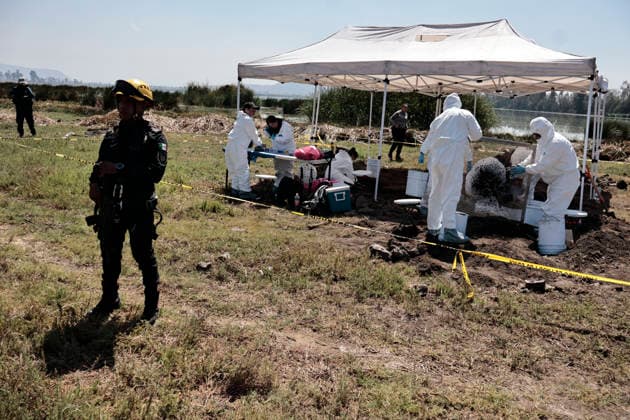
    April 14, 2026, Mexico City, Cdmx, Mexico: Between the borders of the Tlahuac region of Mexico City and Chalco, State of Mexico, lie the lagoons that divide these areas. Within a particular zone known as Lagunas de La Habana (Havana Lagoons), more than 500 human skeletal remains (teeth and bones from different parts of the body) have been found to date, buried in the mud at a very shallow depth. This is because it is a chinampa (floating garden) area, making it impossible that this area was used as a cemetery. The remains are found at a very shallow depth; after only 20 centimeters, the water reaches the lagoon. The search continues, carried out by personnel from the Attorney General s Offices, police, the National Guard, and the State - ZUMAp204 20260414_zip_p204_009 Copyright: xJosuexPerezx

  • April 14, 2026, Mexico City, Cdmx, Mexico: Between the borders of the Tlahuac region of Mexico City and Chalco, State of Mexico, lie the lagoons that divide these areas. Within a particular zone known as Lagunas de La Habana (Havana Lagoons), more than 500 human skeletal remains (teeth and bones from different parts of the body) have been found to date, buried in the mud at a very shallow depth. This is because it is a chinampa (floating garden) area, making it impossible that this area was used as a cemetery. The remains are found at a very shallow depth; after only 20 centimeters, the water reaches the lagoon. The search continues, carried out by personnel from the Attorney General s Offices, police, the National Guard, and the State - ZUMAp204 20260414_zip_p204_008 Copyright: xJosuexPerezx
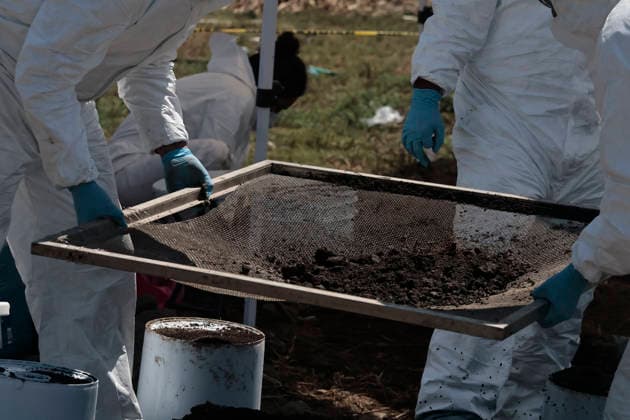
    April 14, 2026, Mexico City, Cdmx, Mexico: Between the borders of the Tlahuac region of Mexico City and Chalco, State of Mexico, lie the lagoons that divide these areas. Within a particular zone known as Lagunas de La Habana (Havana Lagoons), more than 500 human skeletal remains (teeth and bones from different parts of the body) have been found to date, buried in the mud at a very shallow depth. This is because it is a chinampa (floating garden) area, making it impossible that this area was used as a cemetery. The remains are found at a very shallow depth; after only 20 centimeters, the water reaches the lagoon. The search continues, carried out by personnel from the Attorney General s Offices, police, the National Guard, and the State - ZUMAp204 20260414_zip_p204_008 Copyright: xJosuexPerezx

  • April 14, 2026, Mexico City, Cdmx, Mexico: Between the borders of the Tlahuac region of Mexico City and Chalco, State of Mexico, lie the lagoons that divide these areas. Within a particular zone known as Lagunas de La Habana (Havana Lagoons), more than 500 human skeletal remains (teeth and bones from different parts of the body) have been found to date, buried in the mud at a very shallow depth. This is because it is a chinampa (floating garden) area, making it impossible that this area was used as a cemetery. The remains are found at a very shallow depth; after only 20 centimeters, the water reaches the lagoon. The search continues, carried out by personnel from the Attorney General s Offices, police, the National Guard, and the State - ZUMAp204 20260414_zip_p204_007 Copyright: xJosuexPerezx
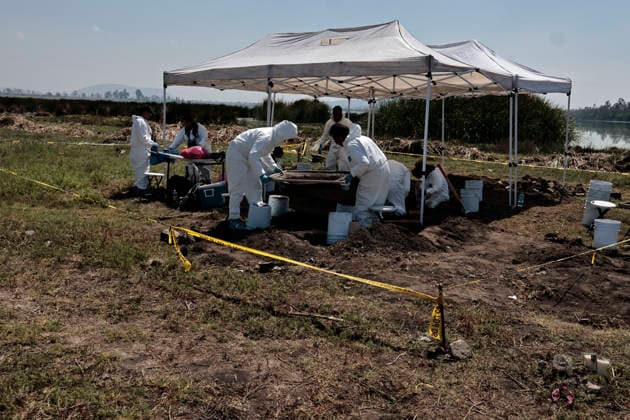
    April 14, 2026, Mexico City, Cdmx, Mexico: Between the borders of the Tlahuac region of Mexico City and Chalco, State of Mexico, lie the lagoons that divide these areas. Within a particular zone known as Lagunas de La Habana (Havana Lagoons), more than 500 human skeletal remains (teeth and bones from different parts of the body) have been found to date, buried in the mud at a very shallow depth. This is because it is a chinampa (floating garden) area, making it impossible that this area was used as a cemetery. The remains are found at a very shallow depth; after only 20 centimeters, the water reaches the lagoon. The search continues, carried out by personnel from the Attorney General s Offices, police, the National Guard, and the State - ZUMAp204 20260414_zip_p204_007 Copyright: xJosuexPerezx

  • April 14, 2026, Mexico City, Cdmx, Mexico: Between the borders of the Tlahuac region of Mexico City and Chalco, State of Mexico, lie the lagoons that divide these areas. Within a particular zone known as Lagunas de La Habana (Havana Lagoons), more than 500 human skeletal remains (teeth and bones from different parts of the body) have been found to date, buried in the mud at a very shallow depth. This is because it is a chinampa (floating garden) area, making it impossible that this area was used as a cemetery. The remains are found at a very shallow depth; after only 20 centimeters, the water reaches the lagoon. The search continues, carried out by personnel from the Attorney General s Offices, police, the National Guard, and the State - ZUMAp204 20260414_zip_p204_005 Copyright: xJosuexPerezx
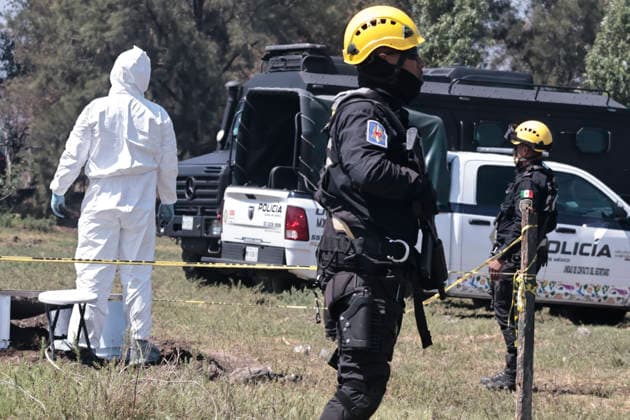
    April 14, 2026, Mexico City, Cdmx, Mexico: Between the borders of the Tlahuac region of Mexico City and Chalco, State of Mexico, lie the lagoons that divide these areas. Within a particular zone known as Lagunas de La Habana (Havana Lagoons), more than 500 human skeletal remains (teeth and bones from different parts of the body) have been found to date, buried in the mud at a very shallow depth. This is because it is a chinampa (floating garden) area, making it impossible that this area was used as a cemetery. The remains are found at a very shallow depth; after only 20 centimeters, the water reaches the lagoon. The search continues, carried out by personnel from the Attorney General s Offices, police, the National Guard, and the State - ZUMAp204 20260414_zip_p204_005 Copyright: xJosuexPerezx

  • April 14, 2026, Mexico City, Cdmx, Mexico: Between the borders of the Tlahuac region of Mexico City and Chalco, State of Mexico, lie the lagoons that divide these areas. Within a particular zone known as Lagunas de La Habana (Havana Lagoons), more than 500 human skeletal remains (teeth and bones from different parts of the body) have been found to date, buried in the mud at a very shallow depth. This is because it is a chinampa (floating garden) area, making it impossible that this area was used as a cemetery. The remains are found at a very shallow depth; after only 20 centimeters, the water reaches the lagoon. The search continues, carried out by personnel from the Attorney General s Offices, police, the National Guard, and the State - ZUMAp204 20260414_zip_p204_004 Copyright: xJosuexPerezx
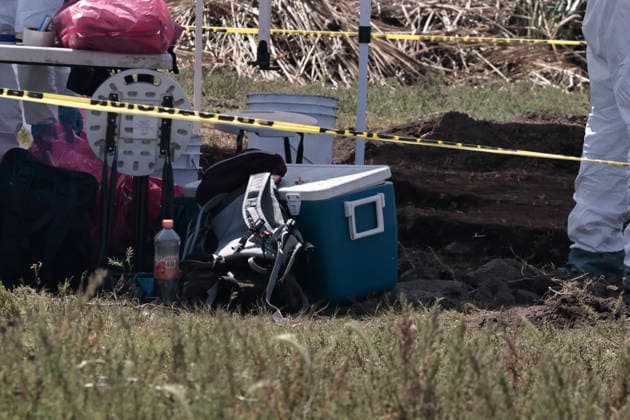
    April 14, 2026, Mexico City, Cdmx, Mexico: Between the borders of the Tlahuac region of Mexico City and Chalco, State of Mexico, lie the lagoons that divide these areas. Within a particular zone known as Lagunas de La Habana (Havana Lagoons), more than 500 human skeletal remains (teeth and bones from different parts of the body) have been found to date, buried in the mud at a very shallow depth. This is because it is a chinampa (floating garden) area, making it impossible that this area was used as a cemetery. The remains are found at a very shallow depth; after only 20 centimeters, the water reaches the lagoon. The search continues, carried out by personnel from the Attorney General s Offices, police, the National Guard, and the State - ZUMAp204 20260414_zip_p204_004 Copyright: xJosuexPerezx

  • April 14, 2026, Mexico City, Cdmx, Mexico: Between the borders of the Tlahuac region of Mexico City and Chalco, State of Mexico, lie the lagoons that divide these areas. Within a particular zone known as Lagunas de La Habana (Havana Lagoons), more than 500 human skeletal remains (teeth and bones from different parts of the body) have been found to date, buried in the mud at a very shallow depth. This is because it is a chinampa (floating garden) area, making it impossible that this area was used as a cemetery. The remains are found at a very shallow depth; after only 20 centimeters, the water reaches the lagoon. The search continues, carried out by personnel from the Attorney General s Offices, police, the National Guard, and the State - ZUMAp204 20260414_zip_p204_001 Copyright: xJosuexPerezx

    April 14, 2026, Mexico City, Cdmx, Mexico: Between the borders of the Tlahuac region of Mexico City and Chalco, State of Mexico, lie the lagoons that divide these areas. Within a particular zone known as Lagunas de La Habana (Havana Lagoons), more than 500 human skeletal remains (teeth and bones from different parts of the body) have been found to date, buried in the mud at a very shallow depth. This is because it is a chinampa (floating garden) area, making it impossible that this area was used as a cemetery. The remains are found at a very shallow depth; after only 20 centimeters, the water reaches the lagoon. The search continues, carried out by personnel from the Attorney General s Offices, police, the National Guard, and the State - ZUMAp204 20260414_zip_p204_001 Copyright: xJosuexPerezx

Collections
News