EditorialCreativeSportsCollectionsVideos
Prices
0Log in

Visual content for professionals.
800M+ images and videos.

Content Hub

  • Current Events
  • Pictures of the Year
  • Sports
  • Editorial
  • Creative
  • Collections
  • Videos

Offers

  • Prices & Packages
  • Promotions
  • Enterprise
  • Newsletter
  • Blog
  • The Game Magazine

Services

  • Content Research
  • Contract Photography
  • API & FTP Push
  • my-picturemaxx
  • Become a Partner

Company

  • About IMAGO
  • Careers
  • News

Help Center

  • FAQ
  • Contact Us
Legal NoticeTerms & ConditionsLicense InformationData PrivacyPrivacy Settings
© 2026 IMAGO
CEPICBAPLABVPA
Back to collections

IMAGO International History, Archive, Great Inventors, Heinrich Hertz 1857–1894

Jun 23, 2026

The following photos have been selected for you by the IMAGO picture desk on this topic. For more pictures please use the search function.
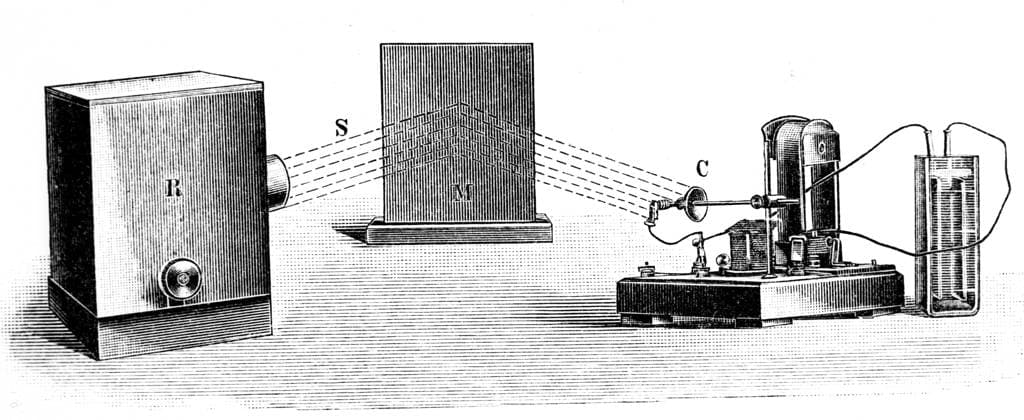
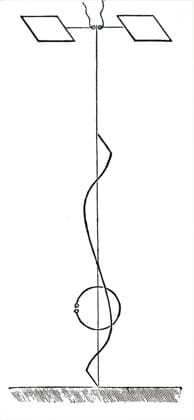
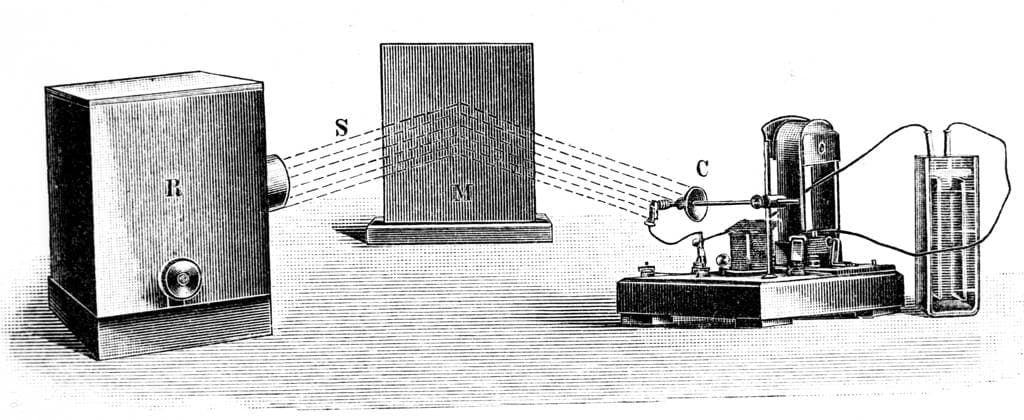
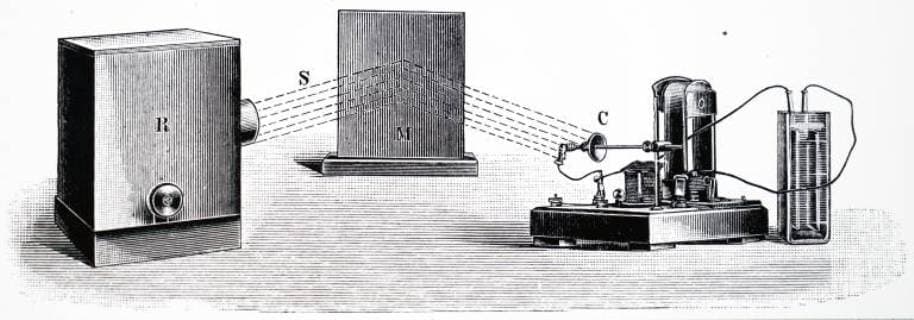
  • RECORD DATE NOT STATED Engraving depicting Heinrich Hertz s experiments of electromagnetic waves Engraving depicting Heinrich Hertz s experiments of electromagnetic waves: demonstration proves James Clerk Maxwell s contention that a metallic surface should reflect electromagnetic waves. Resonator at R) sends out waves, S), which are reflected by mirror at M), and received by resonator at C). Heinrich Hertz (1857-1894) a German physicist. James Clerk Maxwell (1831-1879) a Scottish scientist in the field of mathematical physics. Dated 20th Century Editorial use only. All other uses to be cleared with the copyright owner (World History Archive), in advance., WHA_099_0133.jpg, Engraving; Heinrich Hertz; electromagnetic waves; experiments; demon Copyright: xWorldxHistoryxArchivex
  • Heinrich Hertz s oscillator, right, showing path of wave reflected from metal surface at left Illustration depicting Heinrich Hertz s oscillator, right, showing path of wave reflected from metal surface at left. Heinrich Hertz (1857-1894) a German physicist who first conclusively proved the existence of the electromagnetic waves theorised by James Clerk Maxwell s electromagnetic theory of light. Dated 20th century Copyright: xPhoto12 AnnxRonanxPicturexLibraryx ARP23A18250 !ACHTUNG AUFNAHMEDATUM GESCHÄTZT!
  • Heinrich Hertz s experiments of electromagnetic waves: demonstration proves James Clerk Maxwell s contention that a metallic surface should reflect electromagnetic waves Engraving depicting Heinrich Hertz s experiments of electromagnetic waves: demonstration proves James Clerk Maxwell s contention that a metallic surface should reflect electromagnetic waves. Resonator at R) sends out waves, S), which are reflected by mirror at M), and received by resonator at C). Heinrich Hertz (1857-1894) a German physicist. James Clerk Maxwell (1831-1879) a Scottish scientist in the field of mathematical physics. Dated 20th Century Copyright: xPhoto12 AnnxRonanxPicturexLibraryx ARP23A15263 !ACHTUNG AUFNAHMEDATUM GESCHÄTZT!
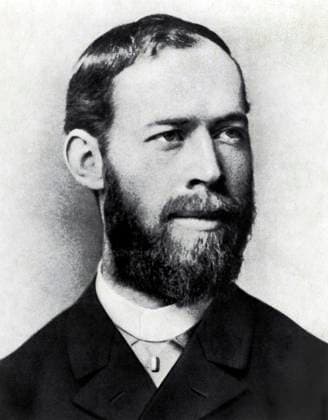
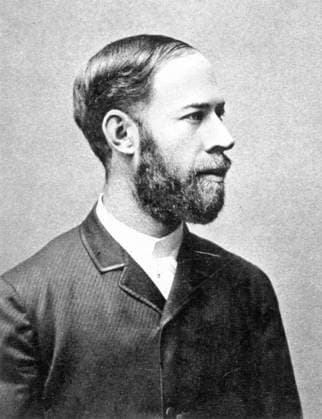
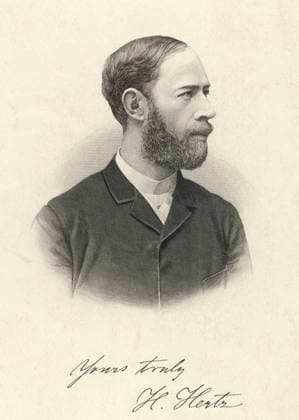
  • Heinrich Hertz (1857-94), German Physicist, Proved the existence of Electromagnetic Waves, Head and Shoulders Portrait, 1890 s  Copyright: xABxArchivex jtv010418
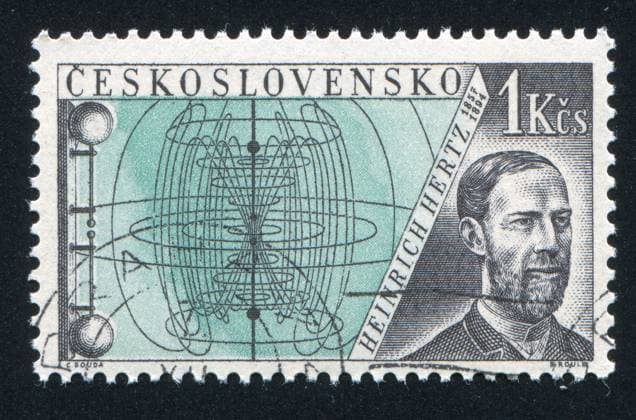
  • RECORD DATE NOT STATED CZECHOSLOVAKIA - CIRCA 1959: stamp printed by Czechoslovakia, shows Heinrich Hertz, drawing, circa 1959 , 11270258.jpg, 1959, CZECHOSLOVAKIA, Heinrich, Hertz, Physicist, Seal, aged, ancient, antique, beard, brow, chart, cheek, chin, diagram, ear, electricity, electromagnetic, envelope, eye, eyelid, face, famous, forehead, hair, head, historic, invention, layout, letter, lip, mail, message, moustache, mouth, nose, old, philately, postage, postcard, postmark, prominent, retro, scheme, scientist, stamp, vintage, wrinkle,
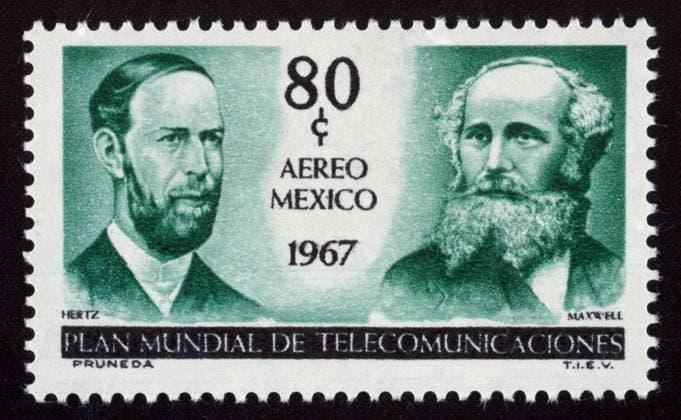
  • HEINRICH HERTZ (1857-1894). German physicist. With Scottish physicist James Clerk Maxwell (right) on a Mexican airmail stamp, 1967.  Copyright: xGRANGERx xGRANGERx 0022126
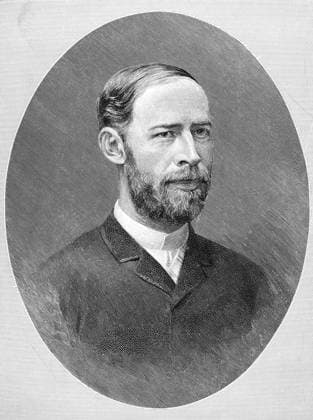
  • HEINRICH HERTZ (1857-1894). German physicist. Line engraving, 1894.  Copyright: xGRANGERx xGRANGERx 0012363
  • HEINRICH RUDOLPH HERTZ (1857-1894). German physicist.  Copyright: xGRANGERx xGRANGERx 0004552
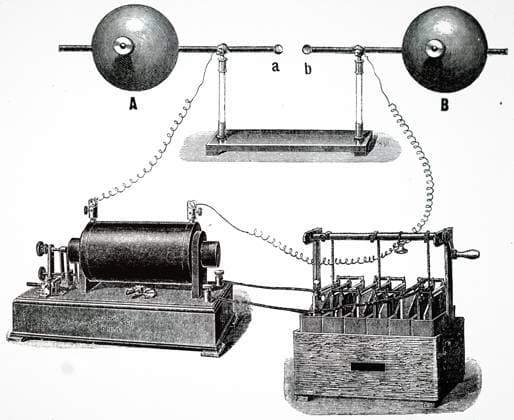
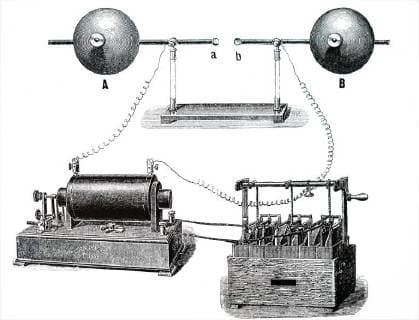
  • Illustration depicting Heinrich Hertz s experiment on electromagnetic waves: Hertz s oscillator. Terminals of an induction coil (bottom left) were connected to condenser A, B. Initial spark passing between metal balls at centre, A,B, formed a path for subsequent oscillations which were measured. Heinrich Hertz (1857-1894) a German physicist who conclusively proved the existence of the electromagnetic waves theorised by James Clerk Maxwell s electromagnetic theory of light. Dated 20th century, Copyright: xUnitedxArchivesx xWorldxHistoryxArchivex WHA_106_0034 !ACHTUNG AUFNAHMEDATUM GESCH TZT!
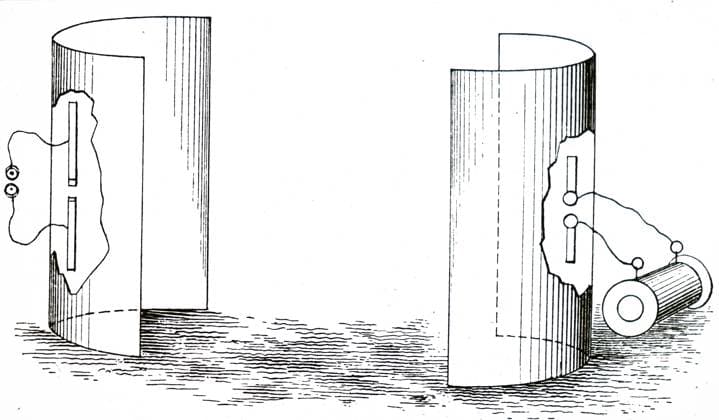
  • Illustration depicting Heinrich Hertz s oscillator and reflecting metal sheets to show outward and return paths of electromagnetic (radio) waves. Heinrich Hertz (1857-1894) a German physicist who first conclusively proved the existence of the electromagnetic waves theorised by James Clerk Maxwell s electromagnetic theory of light. Dated 20th century, Copyright: xUnitedxArchivesx xWorldxHistoryxArchivex WHA_102_0876 EDITORIAL USE ONLY
  • Illustration depicting Heinrich Hertz s oscillator, right, and reflecting metal sheet left, showing the outward and return paths of reflected wave. Heinrich Hertz (1857-1894) a German physicist who first conclusively proved the existence of the electromagnetic waves theorised by James Clerk Maxwell s electromagnetic theory of light. Dated 20th century, Copyright: xUnitedxArchivesx xWorldxHistoryxArchivex WHA_102_0875 EDITORIAL USE ONLY
  • Heinrich Rudolf Hertz HEINRICH RUDOLF HERTZ German scientist Date: 1857 - 1894  Copyright: Copyrightx(c)Geminix2023.xCredit:xGemini 12007483
  • HERTZ Machine d oscillation qui permit a Heinrich HERTZ (1857-1894) de produire des ondes electromagnetique en 1887. Photographie anonyme de 1894. Credit : Collection CL KHARBINE-TAPABOR. *** HERTZ Oscillation machine which allowed Heinrich HERTZ 1857 1894 to produce electromagnetic waves in 1887 Anonymous photograph of 1894 Credit Collection CL KHARBINE TAPABOR  KH32979
  • Illustration depicting Heinrich Hertz s oscillator and reflecting metal sheets to show outward and return paths of electromagnetic (radio) waves. Heinrich Hertz (1857-1894) a German physicist who first conclusively proved the existence of the electromagnetic waves theorised by James Clerk Maxwell s electromagnetic theory of light. Dated 20th century 917_05_WHA_102_0877
  • Illustration depicting Heinrich Hertz s experiment on electromagnetic waves: demonstration to prove Maxwell s contention that a metallic surface should reflect electromagnetic waves. Resonator at R sends out waves, S, which are reflected by mirror at M, and received by resonator at C. Heinrich Hertz (1857-1894) a German physicist who conclusively proved the existence of the electromagnetic waves theorised by James Clerk Maxwell s electromagnetic theory of light. Dated 20th century 917_05_WHA_106_0035
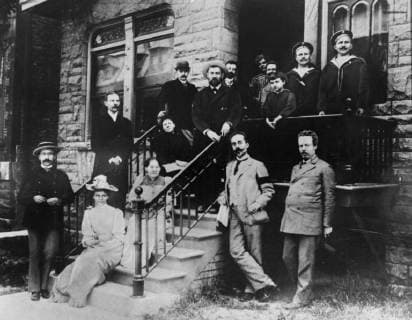
  • In Kronstadt Popov conducts research in electricity and builds original installations to repeat Heinrich Hertz s experiments. In 1889 the scientist expresses the opinion that electromagnetic waves might be employed for the transmission of signals. Popov gained renown in scientific circles, and in 1883 he visits the Chicago World Fair as a member of the Russian delegation. Photo shows: A. Popov (extreme right) in Chicago with other members of the Russian delegation to the fair. Next to Popov and is M.O. Dolivo - Dobrovolsky, the well-known Russian electrical engineer. 1893 Supplied By: SCRSS - Society for Co-operation in Russian & Soviet Studies, Chicago Illinois United States Copyright: Topfoto  !ACHTUNG AUFNAHMEDATUM GESCHÄTZT! UnitedArchivesScrss000952
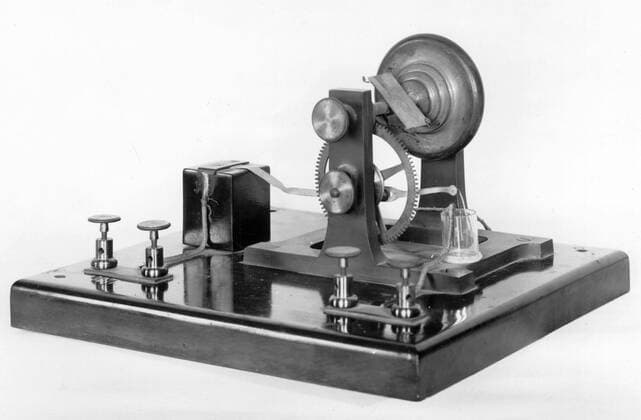
  • Drehspiegel zur Zerlegung des elektrischen Funkens von Heinrich Hertz 1886 88 Mono Print !AUFNAHMEDATUM GESCHÄTZT! UnitedArchives0840539