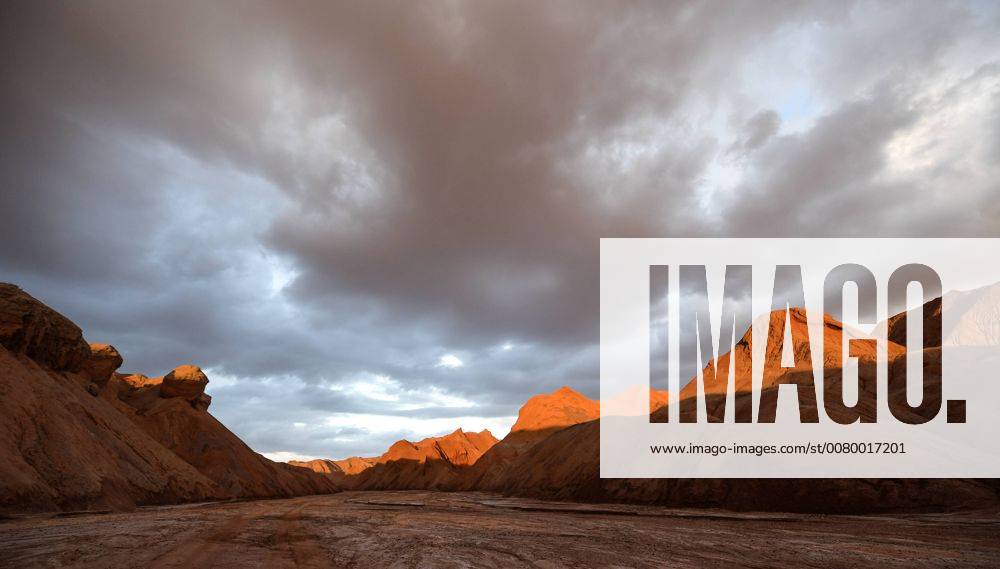
IMAGO Creative: Planeten im Sonnensystem Mars - Symbolbilder (170906) -- HAIXI, Sept. 6, 2017 -- Photo taken on Aug. 18, 2017 shows China s future Mars simulation base in Hongya (Red Cliff) region of Haixi Mongolian and Tibetan Autonomous Prefecture in northwest China s Qinghai Province. About 400 million yuan (61 million U.S. dollars) are expected to invest in the Mars scientific research base and eco-tourism site. The red rock area in Qaidam basin in western Qinghai has been called the most Martian place on Earth, with its natural features, landscape and climate all similar to those on the red planet. The base is expected to consist of a Mars community and a Mars campsite. The campsite will have a number of experimental module-like accommodations. It will be built as a one-stop base for experiential learning in aerospace, astronomy, geography and new energy. ) (lfj) CHINA-QINGHAI-MARS SIMULATION BASE (CN) WuxGang
Choose your license
Rights Managed:
One-time editorial use in an online article, social media channels, internal presentation, website, newsletter, or blog.
One-time editorial use in a book, newspaper or magazine (excluding cover page), external presentation. Limited to 5,000 circulation. This includes the rights available in the Standard license.
Media Info
Credit: Xinhua
Media ID:
Recording Date: Sep 6, 2017
Media Size: 3,500×1,992 Pixels
IMAGO Creative: Planeten im Sonnensystem Mars - Symbolbilder (170906) -- HAIXI, Sept. 6, 2017 -- Photo taken on Aug. 18, 2017 shows China s future Mars simulation base in Hongya (Red Cliff) region of Haixi Mongolian and Tibetan Autonomous Prefecture in northwest China s Qinghai Province. About 400 million yuan (61 million U.S. dollars) are expected to invest in the Mars scientific research base and eco-tourism site. The red rock area in Qaidam basin in western Qinghai has been called the most Martian place on Earth, with its natural features, landscape and climate all similar to those on the red planet. The base is expected to consist of a Mars community and a Mars campsite. The campsite will have a number of experimental module-like accommodations. It will be built as a one-stop base for experiential learning in aerospace, astronomy, geography and new energy. ) (lfj) CHINA-QINGHAI-MARS SIMULATION BASE (CN) WuxGang
Restrictions: This image can not be published in China.
Release Info: Do I need a release?
Captions may have been translated or enriched by an AI system.
For more information about AI-assisted captions, see AI-assisted captions.
Need a custom license?
If your intended use isn't covered by the available options (such as non-editorial purposes or specific distribution needs), contact us. Our team will be happy to provide a tailored offer based on your requirements.